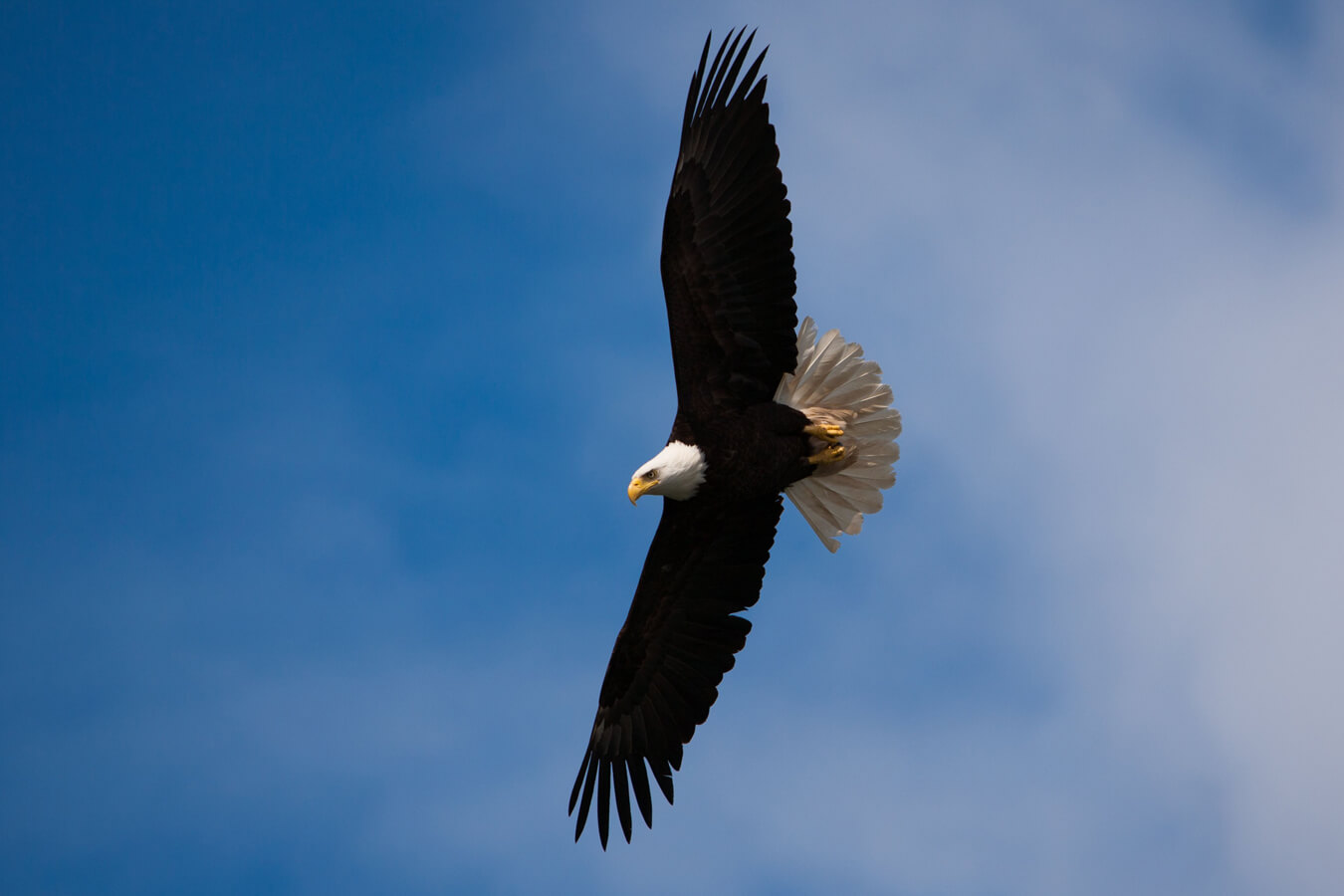
The bald eagle (Haliaeetus leucocephalus) is America’s national bird and ranks among the continent’s biggest raptors. With its bright white head and tail, heavy yellow beak, and wings that can stretch seven feet or more, it’s hard to mistake. Congress named it the national symbol in 1782, and today you can watch it fish Alaska’s coastal waters, perch in Voyageurs’ tall pines, and nest in the Cuyahoga Valley outside Cleveland.
That last sight would have been unthinkable not long ago. By the 1960s, the bald eagle was close to vanishing from the Lower 48, poisoned by DDT and persecuted by people. Its comeback is one of America’s great conservation stories, and National Parks played a part. Bald eagles can be seen in parks such as Glacier Bay, Katmai, Lake Clark, Voyageurs, Cuyahoga Valley, New River Gorge, and Channel Islands.
Learning about animals like bald eagles can significantly enhance wildlife photography skills by providing valuable insights into animal behavior, habitat, and physical characteristics. Understanding an animal’s habits can allow photographers to better anticipate and capture unique and authentic moments. Knowledge of an animal’s habitat may also help in selecting the best locations and times for wildlife viewing and photography, while familiarity with physical characteristics is essential for accurately identifying wildlife in the field. If wildlife photography or simply wildlife viewing are of interest to you, then you’ve come to the right place! Together, let’s learn more about what makes bald eagles so special.
Physical Characteristics
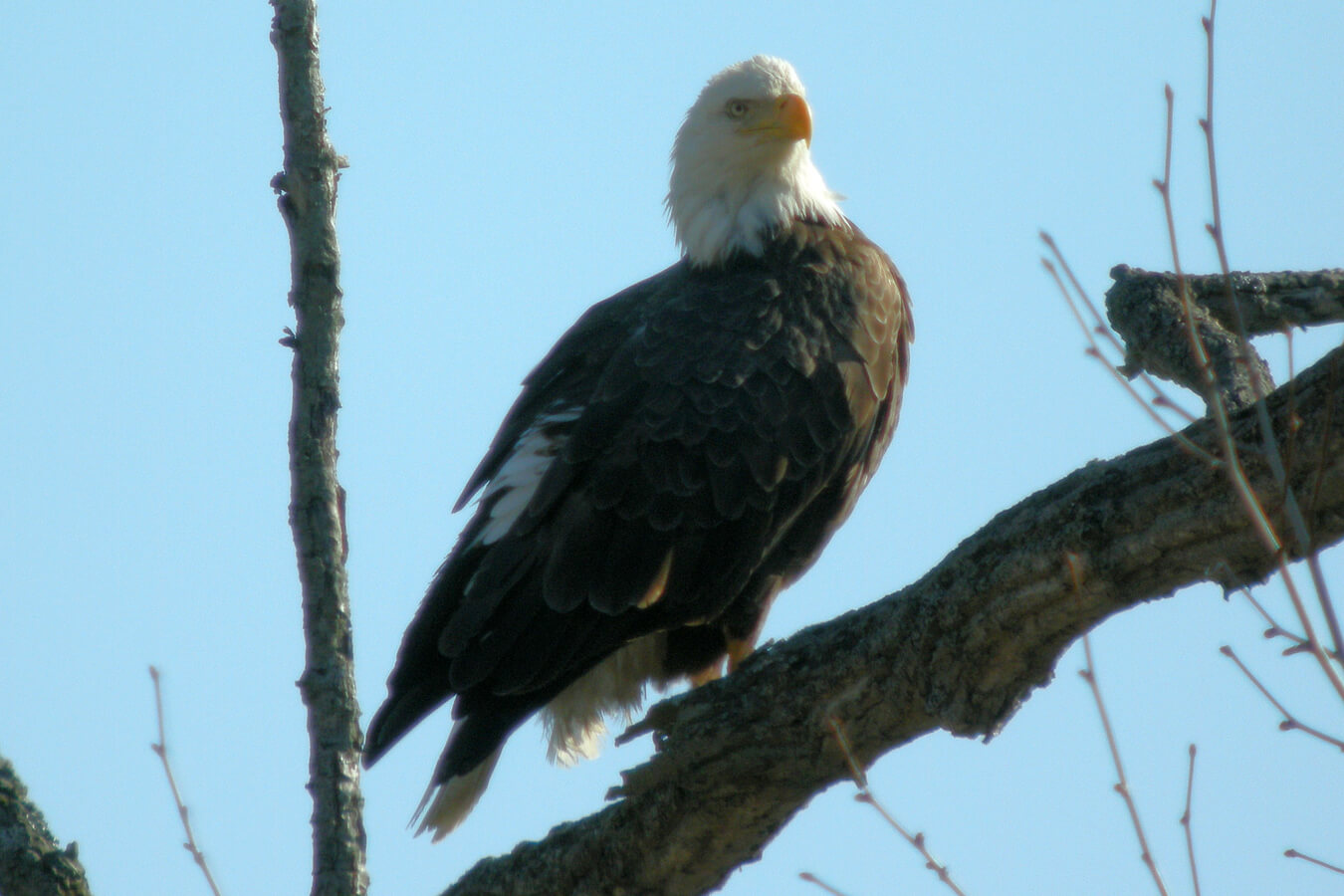
Bald eagles are big. Measurements vary by source. The heaviest reach about 14 pounds, with wings spanning six to eight feet, and at Cuyahoga Valley National Park, eagles measure 30 to 43 inches long with wings spanning seven feet. In Voyageurs, no raptor is bigger; a bald eagle there stands roughly 35 inches tall. As with many birds of prey, females are larger than males. Females are about 25 percent larger, even though males and females have identical plumage.
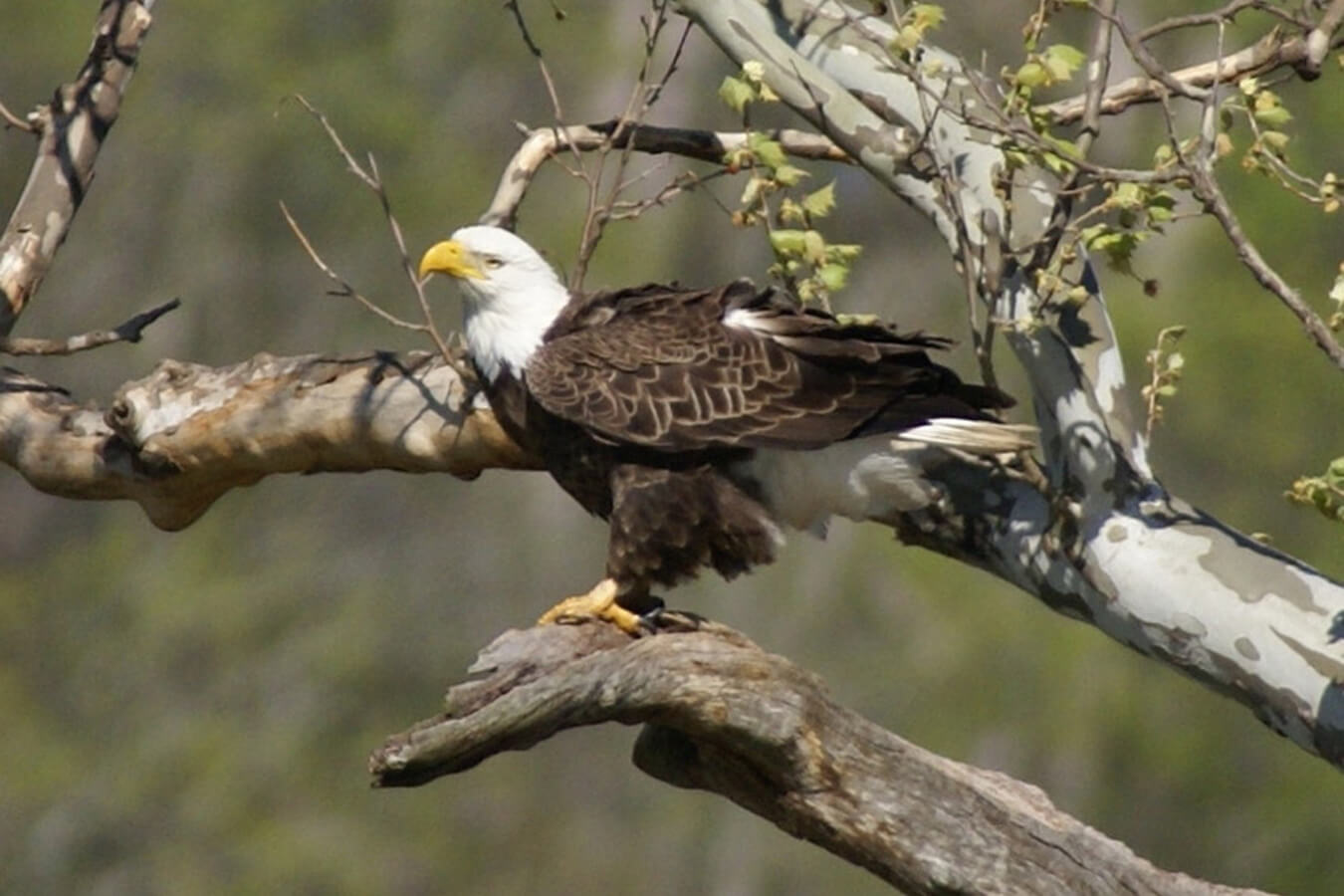
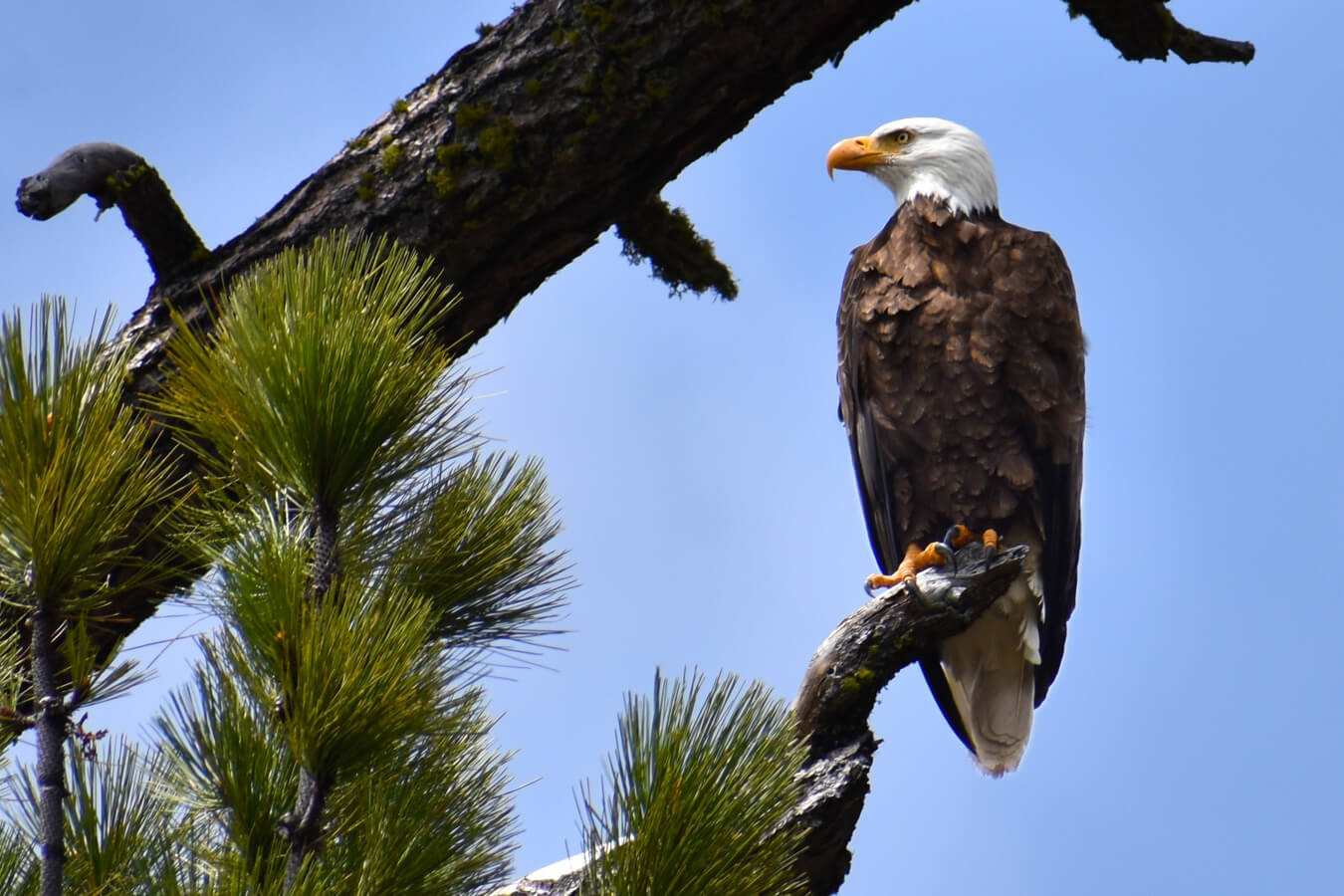
An adult’s body is a uniform brown, capped by a white head and finished with a white tail. The tail is of medium length and tapers slightly to a wedge. The beak, feet, and eyes are bright yellow, and the large, hooked beak has a yellow cere at its base. The lower legs are bare, and the short, strong toes carry big talons. The talon on the hind toe pierces vital areas while the front toes hold prey still. Those talons are about four inches long.
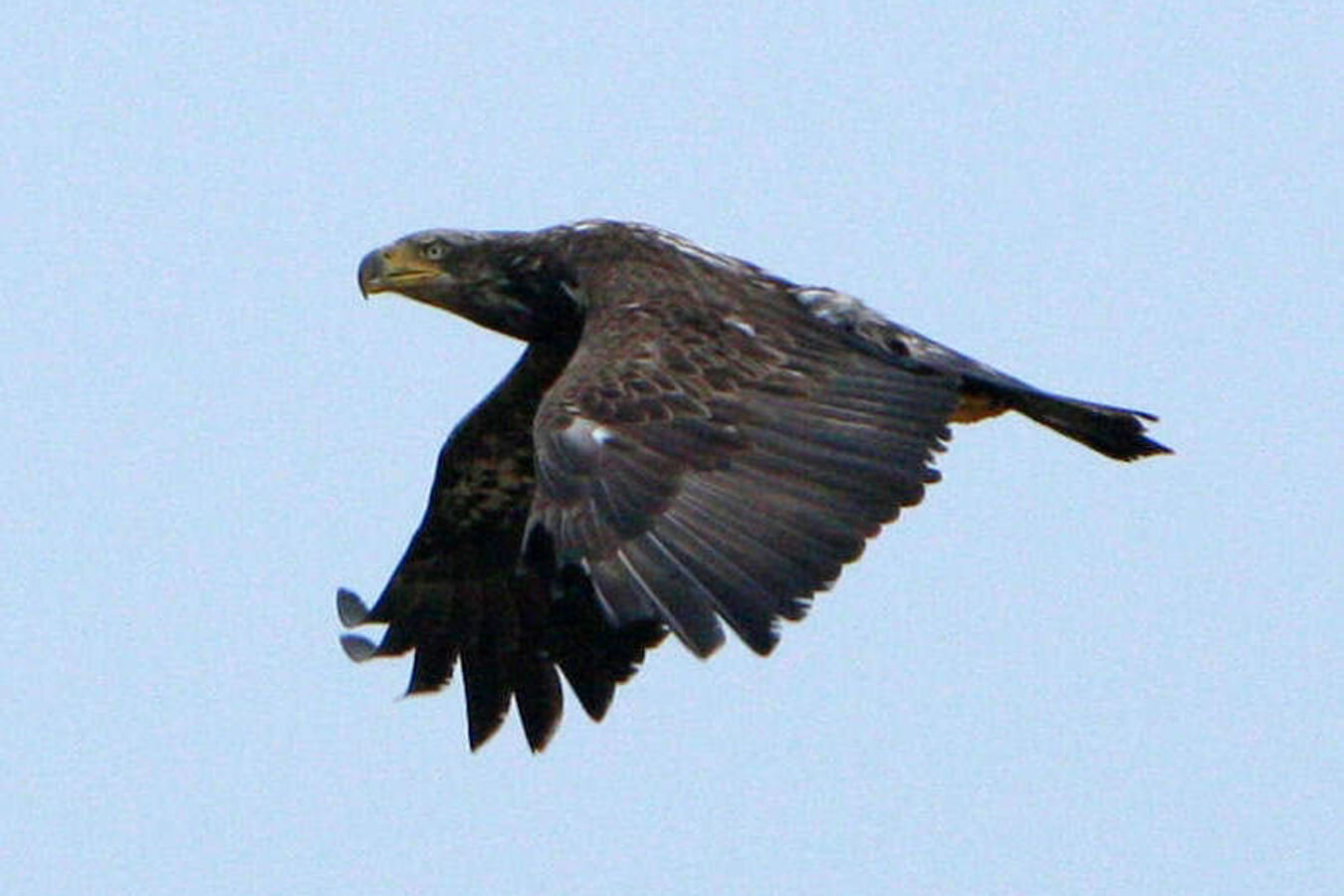
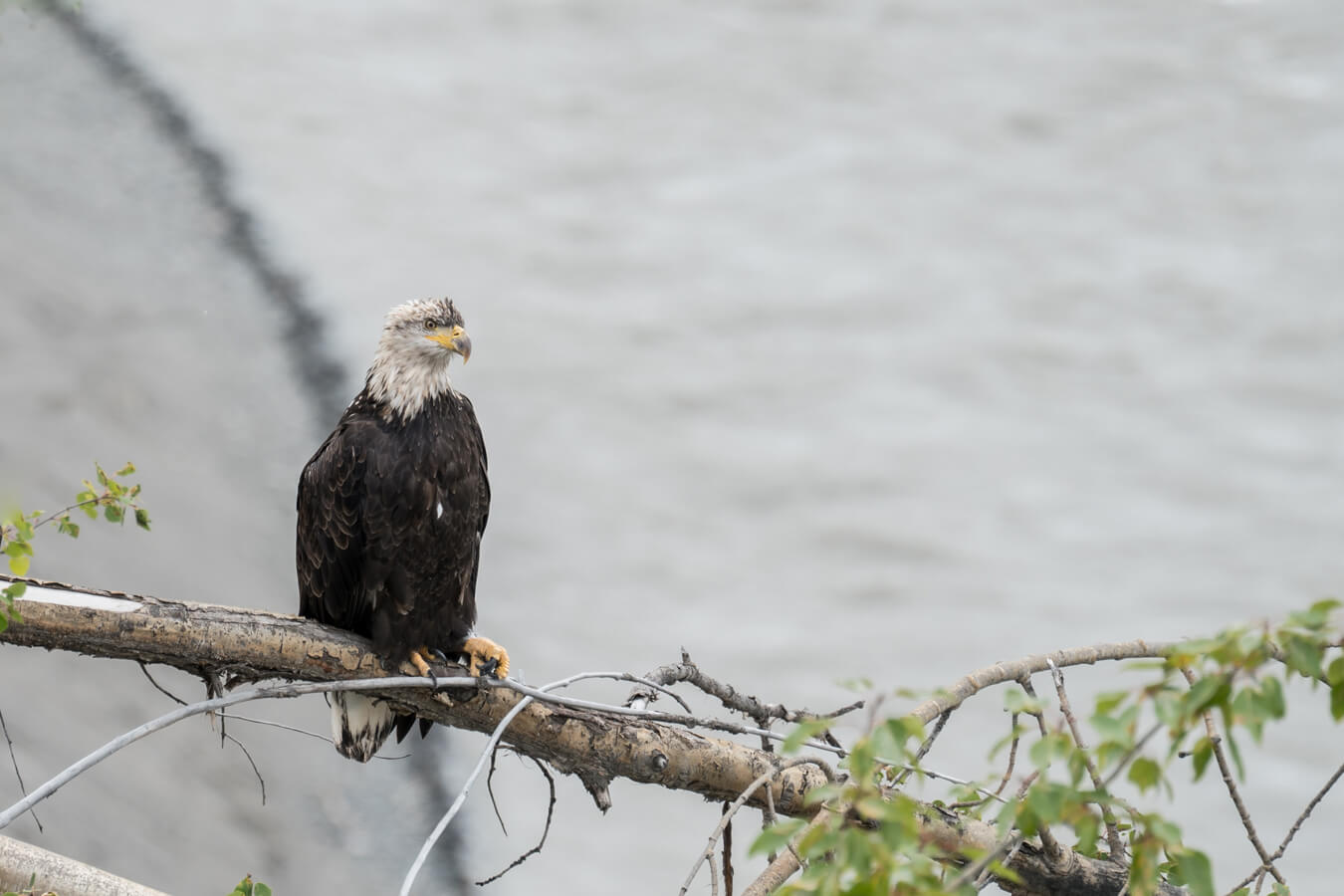
Young eagles look very different. Immature birds are mostly dark brown, with white on the underside of the wings close to the body, and they gain the white head and tail gradually. Estimates for how long that takes vary: four or five years in Yellowstone, and five to six years in Cuyahoga Valley. Because of all that brown, immature bald eagles are often mistaken for golden eagles. In flight, there is another clue: a soaring bald eagle holds its wings almost level, while a turkey vulture tips its wings up in a shallow V.
Their eyesight is legendary. A bald eagle can spot a fish breaking the surface as far as two miles off.
Bald eagles can live a long time. The oldest known wild bald eagle lived to 28, and a captive bird reached 36.
Habitat and Distribution
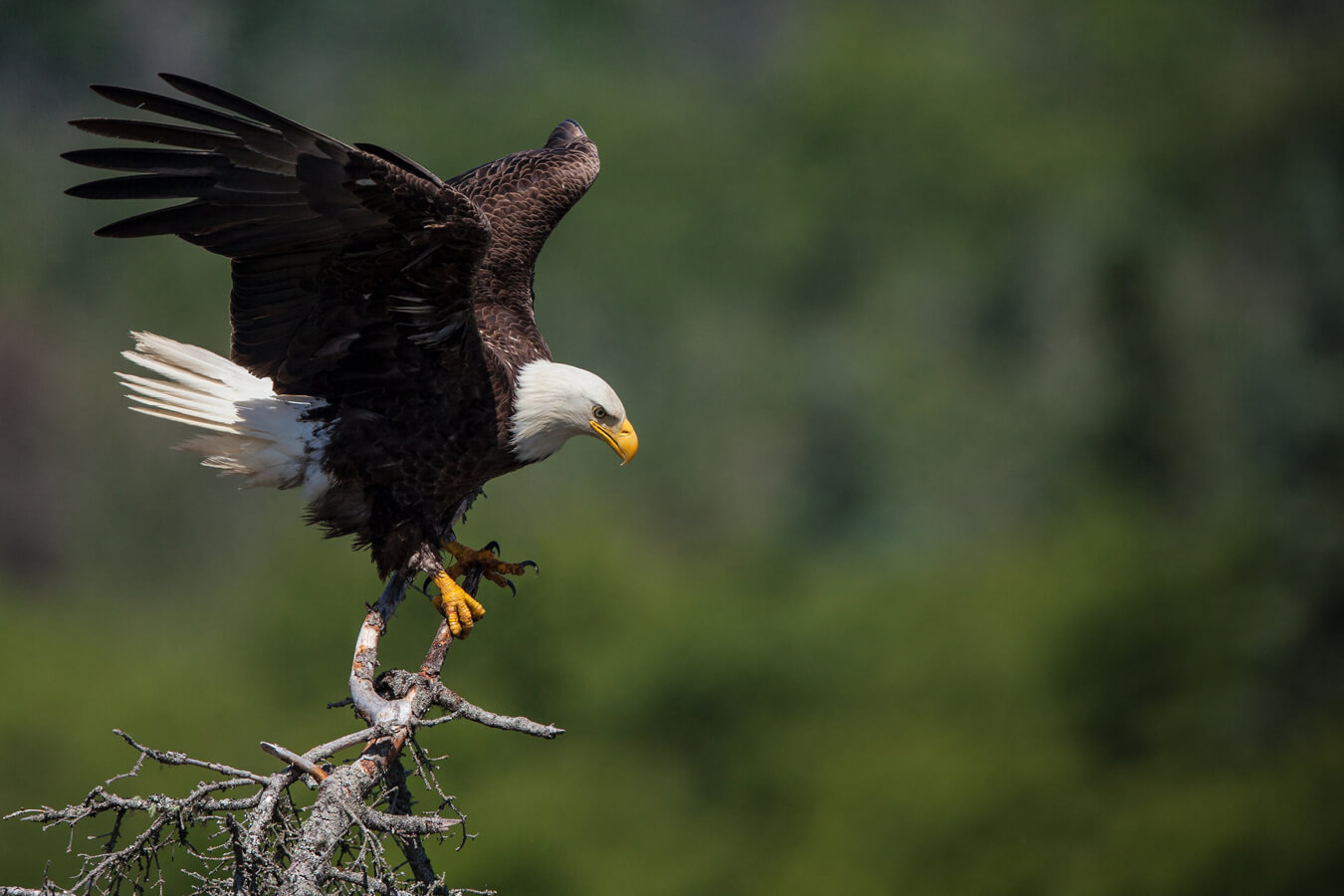
Of all the sea eagles, the bald eagle is the one species unique to North America. They range across the entire Lower 48, most of Alaska and Canada, and into northern Mexico. They live near sea coasts, rivers, large lakes, and other open water with plenty of fish. For perching, roosting, and nesting, they favor mature and old-growth forest, either conifer or hardwood.
Voyageurs National Park is a textbook example, one of the few parks in the continental U.S. with just the right mix of big, old white pines standing beside deep lakes rich in fish. Bald eagles live there year-round. In Yellowstone, eagles are usually found near water and nest in large trees close to it. The eagles of northwestern Wyoming belong to a larger Rocky Mountain breeding population that also reaches into Montana and Idaho.
Some eagles stay put, while others move. In Ohio’s Cuyahoga Valley, adults usually remain near their nesting area all year, while young birds wander off irregularly between October and March. In Yellowstone, some adults stay year-round, and others drop down to lower country such as Paradise Valley when winters turn harsh. Some of Yellowstone’s young eagles fly west each fall to Washington, Oregon, and California. Young eagles can spend their first four years wandering vast territories. Young California eagles have turned up as far away as Alaska.
Bald eagles also tend to come home. They typically return to nest near where they fledged, and most settle down to breed no more than 100 miles from their birthplace.
Behavior and Nesting
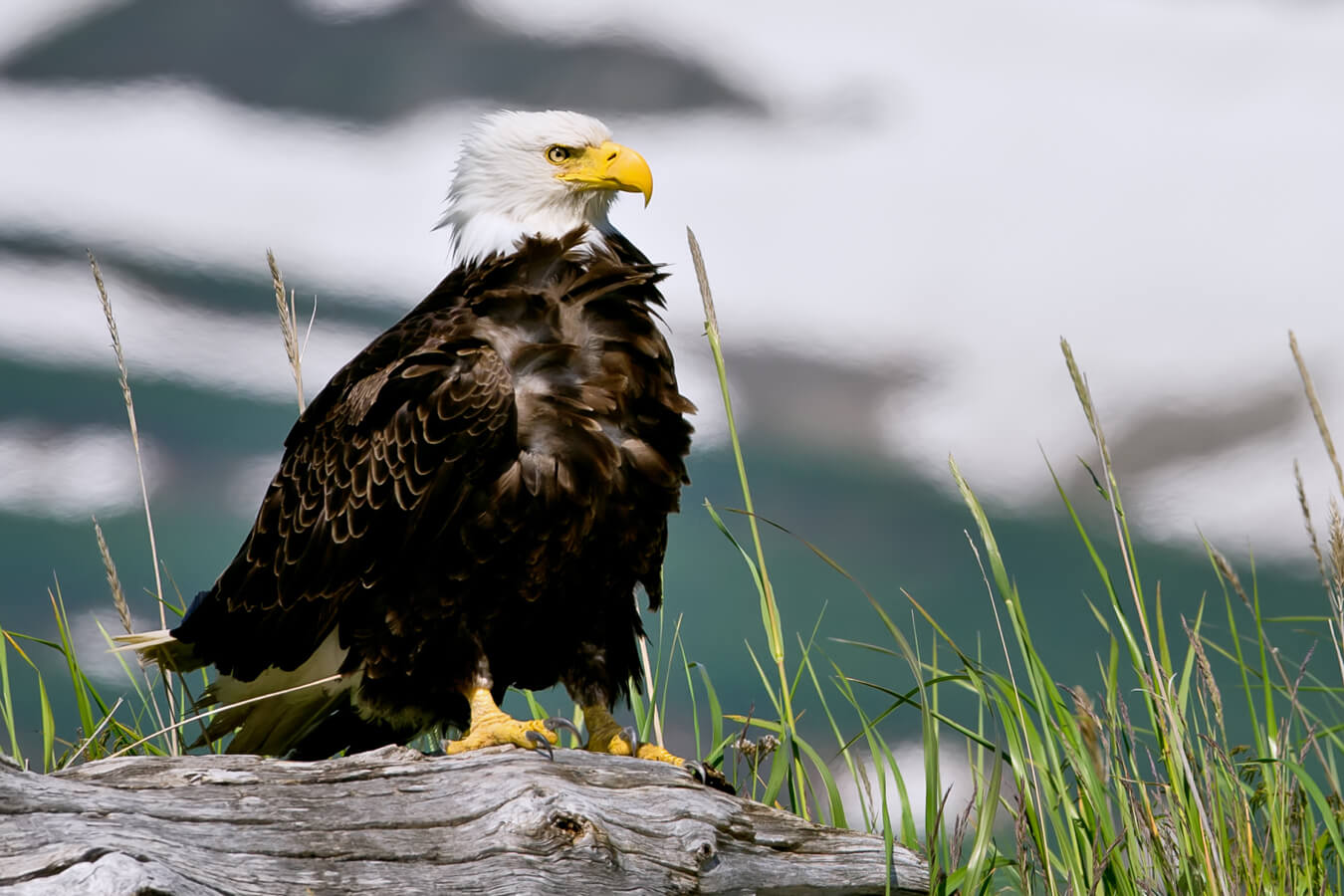
Pairs stay together, and biologists believe most bald eagles keep the same mate for life. Courtship is spectacular. In Cuyahoga Valley, nest work starts in the fall, pauses, and picks up again in late January. Pairs plunge through the air in high dives, lock talons, and break apart just before it seems they will hit the ground. Building the nest together may matter even more for the pair bond.
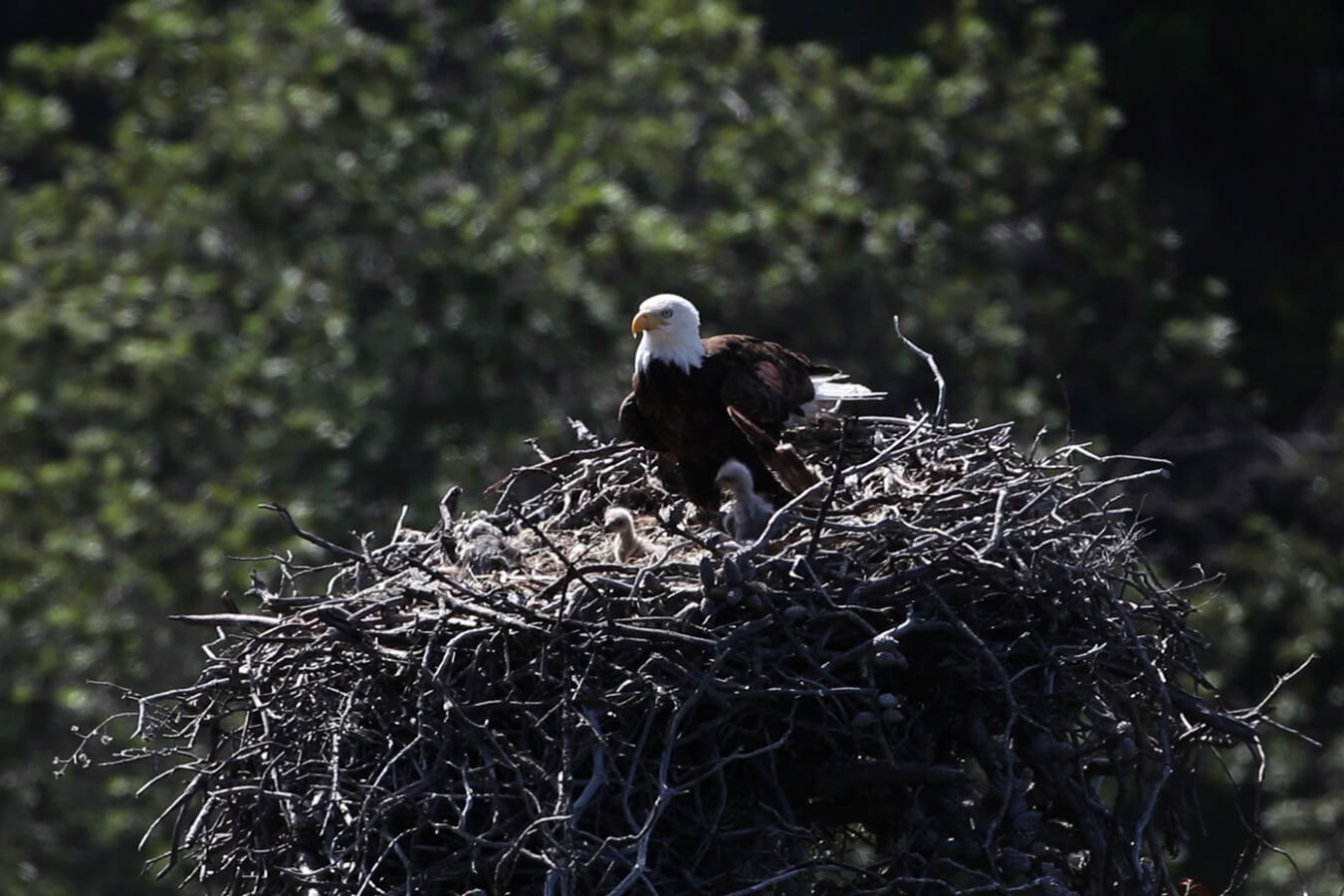
Bald eagles build some of the largest bird nests in the world. Size figures vary. At Channel Islands National Park, a typical nest is five to six feet across and two to four feet tall, while in Cuyahoga Valley nests typically span three to five feet and stand three to six feet deep, often 50 to 100 feet up in large trees near water, and some can weigh as much as a ton. The record nest, found in St. Petersburg, Florida, was a full 20 feet tall and 10 feet across. Pairs often reuse and add to the same nest each year. Where big trees are scarce, as on the Channel Islands, bald eagles have nested on cliffs and rock shelves, and one Santa Cruz Island pair even attempted a nest out in open grassland.
Females lay one to three eggs, usually two. They are laid about 36 hours apart, which increases the chance that one hatches when conditions are best. In Yellowstone, eggs are laid from February to mid-April. Both parents incubate the eggs for about 35 days, and both raise the young. Eggs and chicks are very sensitive to cold, so an adult must stay on the nest almost constantly. That is why human disturbance can cause a nest to fail.
Eaglets are downy, immobile, and completely dependent at hatching. They stay in the nest for about 10 to 12 weeks before they fly, or 10 to 14 weeks by Yellowstone’s count. Even after their first flight, young eagles often return to the nest for nearly two months to be fed.
Diet and Hunting
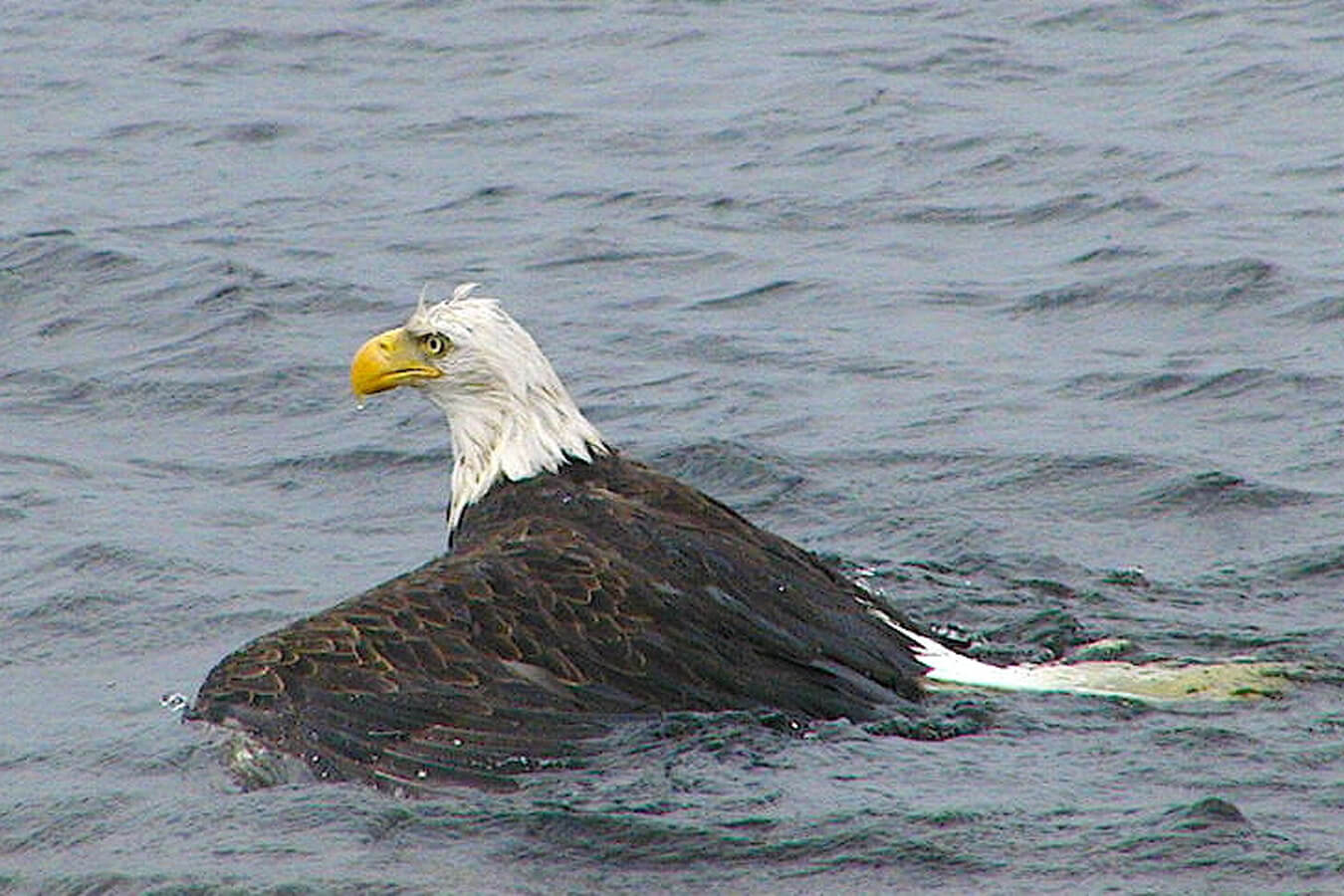
Fish are the bald eagle’s main food. In Yellowstone, eagles feed mainly on fish and waterfowl, and they eat more waterfowl in winter, when fish move deeper and lakes freeze. Small mammals, birds, and sometimes carrion serve as backup foods, and eagles will also eat reptiles, amphibians, and crustaceans, crabs most of all, when they can get them.
Bald eagles are opportunists. When fish aren’t available, they lean on carrion, especially in winter, and will feed on anything from small carcasses to dead whales. They are also notorious thieves. An eagle will hound an osprey until it lets go of its fish, then snatch the meal out of the air. Now and then, two eagles hunt as a team, one driving prey toward its partner.
Fishing doesn’t come naturally. Eagles have to learn to fish, so young birds live largely on carrion through much of their first year while they build the skill. Diets can vary by place. On Santa Catalina Island, prey remains in nests were almost 90 percent fish, but an older nest on San Miguel Island, dating from before the eagles disappeared, held more bird remains than fish.
Their scavenging habit has a long history of critics. The NPS species spotlight quotes Benjamin Franklin, who wrote to his daughter in 1784, “I wish the bald eagle had not been chosen the representative of our country. He is a bird of bad moral character. He does not get his living honestly.”
Role in the Ecosystem
As top predators and scavengers, bald eagles are a good indicator of ecosystem health. In Voyageurs, the eagle population reflects air and water quality, since eagles are sensitive to pollutants. Because they feed high in the food chain, contaminants in fish and other prey can build up in their bodies.
Parks keep a close watch. No wildlife study in Voyageurs has run longer than its bald eagle research. Park biologists and the Minnesota DNR have surveyed from the air since 1973, mapping nests and estimating how many eagles there are. In Yellowstone, staff monitored 31 bald eagle territories in 2023, and eight young fledged from five occupied nests. Around Yellowstone Lake, home to roughly half of the park’s known nests over the years, eagles tend to raise far fewer young than they do in other parts of the park.
Before they vanished, bald eagles were the top aerial predator over the Channel Islands’ waters, likely hunting seabirds and fish. Bringing them back was also meant to help a smaller neighbor. In the 1990s, golden eagles preying on island foxes caused fox numbers on the northern islands to crash, and biologists hoped that nesting bald eagles, which are strongly territorial, would keep golden eagles from setting up breeding territories there.
Decline and Recovery
Bald eagles were once common across North America, but by the mid-to-late 1900s they had grown scarce. Trapping, shooting, poisoning, and habitat loss all played a role. The worst threat was DDT. Through biomagnification, eagles absorbed the chemical from their prey, and it caused them to lay thin-shelled eggs that broke or dried out in the nest. By 1963, the count across most of the Lower 48 had fallen below 490 nesting pairs.
Protection came in stages. The first step came in 1967, when the U.S. Fish and Wildlife Service declared the bird endangered in 43 states. A ban on DDT followed in 1972, and Endangered Species Act protection in 1978. Habitat protection, restrictions on killing, and pesticide limits led to a dramatic recovery, and the bald eagle was delisted in 2007. Two federal laws still shield the species: the Bald and Golden Eagle Protection Act and the Migratory Bird Treaty Act.
Parks show the recovery up close. In 1975, Voyageurs’ six breeding pairs raised just one fledgling between them. By 2015, there were 42 breeding pairs. In Ohio, only four eagle nests remained in 1979, and today there are nearly 1,000. For Cuyahoga Valley, the turning point came in 2006, when eagles began nesting near Station Road Bridge. A citizen scientist determined that no eagle nest had ever been documented in the valley before.
Channel Islands had perhaps the hardest road. Early in the 20th century, at least two dozen pairs nested across the eight Channel Islands. Persecution and DDT and PCB contamination then took their toll: the last successful nest on the northern islands for decades came in 1950, and the eagles were gone by the early 1960s. Between 2002 and 2006, biologists raised 61 young eagles in hack towers on Santa Cruz Island and let them go once they could fly. In 2006, a chick known as A-49 hatched at Pelican Harbor, the first eagle in more than 50 years to hatch on the islands without human help. More than 40 bald eagles lived on the northern Channel Islands by 2013. In 2026, the park counted 14 breeding pairs that hatched at least 16 chicks, including the first eaglets to fledge from San Miguel Island since the early 1950s, and nesting eagles are now found on every island in the park except one.
Nationally, the U.S. Fish and Wildlife Service’s 2007 delisting rule estimated that the Lower 48 population had grown from about 487 breeding pairs in 1963 to 9,789 breeding pairs. When the species came off the list, Minnesota led the Lower 48 with 1,312 pairs.
Bald Eagle Safety
Bald eagles aren’t dangerous to people, but people can be dangerous to eagles, especially at nests. Disturbance can pull adults off their eggs or chicks, leading to breeding failure or the loss of a future nesting site. Respect every posted closure and the distance rules of the park you are in.
Cuyahoga Valley asks visitors to keep at least 200 yards from nesting eagles, view them quietly through binoculars or a spotting scope, respect posted trail limits, and keep out of closed areas. Voyageurs closes land and water areas around active nests from early May until mid-August, when young eaglets fledge. Any campsite or day-use site within 500 meters of an active nest may be closed for the season. Yellowstone decides how to handle each nest individually and may close the area around one to visitors.
Never approach a nest, flush a perched eagle for a flight shot, or use drones near eagles. If an eagle changes its behavior because of you, back off.
National Park Presence
Bald eagles are found in nearly every corner of the National Park System. For photographers visiting the 63 designated U.S. National Parks, bald eagles can be found in the following parks:
According to National Park Service NPSpecies records, bald eagles are Common in parks such as Glacier Bay, Lake Clark, Wrangell-St. Elias, Kenai Fjords, Voyageurs, Yellowstone, Grand Teton, Acadia, Everglades, Olympic, North Cascades, Wind Cave, and Badlands. Cuyahoga Valley’s record still lists them as Rare, even with a nesting pair since 2006. Channel Islands is included because a reintroduced population breeds there.
Bald Eagle Photography Tips
Start near water. Scan the tops of tall trees along shorelines and rivers, and watch the sky. In Voyageurs, eagles are common throughout the park, and nests have long been most concentrated along the shores and islands of West Rainy Lake, North and East Kabetogama Lake, and West Namakan Lake. In Cuyahoga Valley, the best place to see eagles is the Station Road Bridge area, where the Towpath Trail offers a view of the Pinery Narrows nest. Eagles also forage along the Cuyahoga River between Canal Exploration Center and Bath Road, and in winter they gather near open water.
Behavior makes the best images. Look for an eagle dropping toward water to fish, carrying sticks to a nest, or chasing an osprey. In late winter and spring, watch for courtship flights. In summer, fledglings may perch near the nest as they learn to fly. In Cuyahoga Valley, local photographers have documented eagles in every season without breaking the rules that protect nesting birds.
White heads and dark bodies make exposure tricky. Expose for the white feathers so they keep their detail, and use a fast shutter speed for flight shots.
A telephoto lens is essential for photographing bald eagles responsibly. If you already own or want to own a professional-grade mirrored camera like the Canon EOS 5D Mark IV Full Frame Digital SLR, we recommend using a Canon EF 100-400mm f/4.5-5.6L IS II USM Lens zoom lens for wildlife photography. If you have or are interested in a newer mirrorless model like the Canon EOS R5 Full-Frame Mirrorless Camera, we recommend using a Canon RF100-400mm F5.6-8 IS USM for long-distance shots.
Not quite ready to invest in traditional professional-grade camera equipment but want to enhance the quality of your cell phone photographs? Consider using a Moment Tele 58mm Mobile Lens II for improved reach, and use a Moment camera case with a lens mount to attach it to your phone. Since cell phones generally cannot provide the same reach as a dedicated telephoto camera lens, never compensate by moving dangerously close to wildlife.
No photograph is worth disturbing an animal or putting yourself or others at risk.
Why Are They Called Bald Eagles?
Bald eagles aren’t bald. The name refers to the white head and traces “bald” to balled, a Middle English word for shining white. The Latin name translates to “white-headed sea eagle,” built from the Greek halos (sea), aetos (eagle), leukos (white), and kephalus (head).
And if Benjamin Franklin had gotten his way, the national emblem might have been the wild turkey.
A Note About Bald Eagle Taxonomy
Readers researching bald eagles may encounter more than one scientific name for the same animal. This page uses:
Haliaeetus leucocephalus
Subspecies names also turn up in older literature and in some National Park Service records:
Haliaeetus leucocephalus leucocephalus and Haliaeetus leucocephalus alascanus
The bald eagle has two known subspecies and that its closest counterpart is Eurasia’s white-tailed eagle, with which it forms a species pair. NPSpecies records for Katmai, Olympic, and Mount Rainier list alascanus, the northern bald eagle. Records for Lassen Volcanic and Shenandoah list leucocephalus, the southern bald eagle. Acadia’s record also uses the common name “Northern Bald Eagle.”
For consistency throughout National Park Photographer, this page uses Haliaeetus leucocephalus while recognizing the subspecies names visitors may encounter.
Final Thoughts
Bald eagles are one of the most rewarding birds to see in our National Parks. A white head flashing above a lake, a pair locking talons in a courtship flight, or a parent returning to the nest with a fish never gets old.
Their story is also a reminder of what recovery takes. Bald eagles came back because people banned DDT, protected habitat, and in places like the Channel Islands, raised young eagles by hand and released them. Parks like Voyageurs and Cuyahoga Valley still monitor nests and close areas so eagles can raise young in peace.
Seeing a bald eagle in the wild is a highlight of any park visit, and it comes with responsibility. By respecting nest closures, keeping our distance, and using telephoto lenses instead of moving closer, photographers and visitors can enjoy bald eagles while keeping them wild.
Want more information about the amazing wildlife that call our National Parks home? Take a look at our National Park Wildlife page to explore the various parks and the animals in them. Planning on visiting a National Park in the near future? Be sure to follow park regulations, practice Leave No Trace principles, and prioritize both your safety and the well-being of wildlife while exploring.
Joyful Journeys!
Bonnie, Co-Owner, National Park Photographer
Want to learn more about bald eagles? Check out the additional resources below!
Bald Eagle Books & Field Guides
- The Bald Eagle: The Improbable Journey of America’s Bird
- Inside a Bald Eagle’s Nest
- Isle Royale National Park Map (National Geographic Trails Illustrated)
- The Sibley Guide to Birds, 2nd Edition
- 10×42 Binoculars for Wildlife Viewing
- Monocular for Wildlife Viewing
- Camera Bean Bag for Wildlife Photography
Please note, by making purchases through our affiliate links, you are supporting our mission to celebrate and showcase our National Parks and the photographers who frequent them. As an Amazon Associate, National Park Photographer earns from qualifying purchases at no cost to you. We appreciate your support.
References & Additional Resources
- National Park Service — Channel Islands National Park: Bald Eagle
- National Park Service — New Milestone Reached in Channel Islands Bald Eagle Recovery
- National Park Service — Bald Eagles Continue Recovery at Channel Islands National Park
- National Park Service — Observing Bald Eagles in Cuyahoga Valley
- National Park Service — Cuyahoga Valley National Park: Bald Eagles
- National Park Service — Yellowstone National Park: Bald Eagle
- National Park Service — Voyageurs National Park: Bald Eagle
- National Park Service — Voyageurs National Park: About Bald Eagle Closures
- National Park Service — Northeast Coastal and Barrier Network Species Spotlight: Bald Eagle
- U.S. Fish & Wildlife Service — Bald Eagle
- U.S. Fish & Wildlife Service — Federal Register: Removing the Bald Eagle in the Lower 48 States From the List of Endangered and Threatened Wildlife (2007)
- National Park Service — NPSpecies Species Search
Do you want to be featured on National Park Photographer?
Why wait! Contact us today at nationalparkphoto@gmail.com for a chance to be a Featured National Park Photographer!