Caribou are travelers. Every spring and fall, hundreds of thousands of them cross mountains, rivers, and tundra in northern Alaska, in some of the longest land migrations on the planet. For thousands of years, people have waited along their routes, and many Alaska Natives in the region still call themselves “caribou people.”
Caribou (Rangifer tarandus) are members of the deer family and the same species as the reindeer of Eurasia. Within the National Park System, caribou live today only in Alaska’s parks, which protect key parts of their range. You can find them in parks such as Gates of the Arctic, Kobuk Valley, Denali, Lake Clark, and Wrangell-St. Elias.
Learning about animals like caribou can significantly enhance wildlife photography skills by providing valuable insights into animal behavior, habitat, and physical characteristics. Understanding an animal’s habits can allow photographers to better anticipate and capture unique and authentic moments. Knowledge of an animal’s habitat may also help in selecting the best locations and times for wildlife viewing and photography, while familiarity with physical characteristics is essential for accurately identifying wildlife in the field. If wildlife photography or simply wildlife viewing are of interest to you, then you’ve come to the right place! Together, let’s learn more about what makes caribou so special.
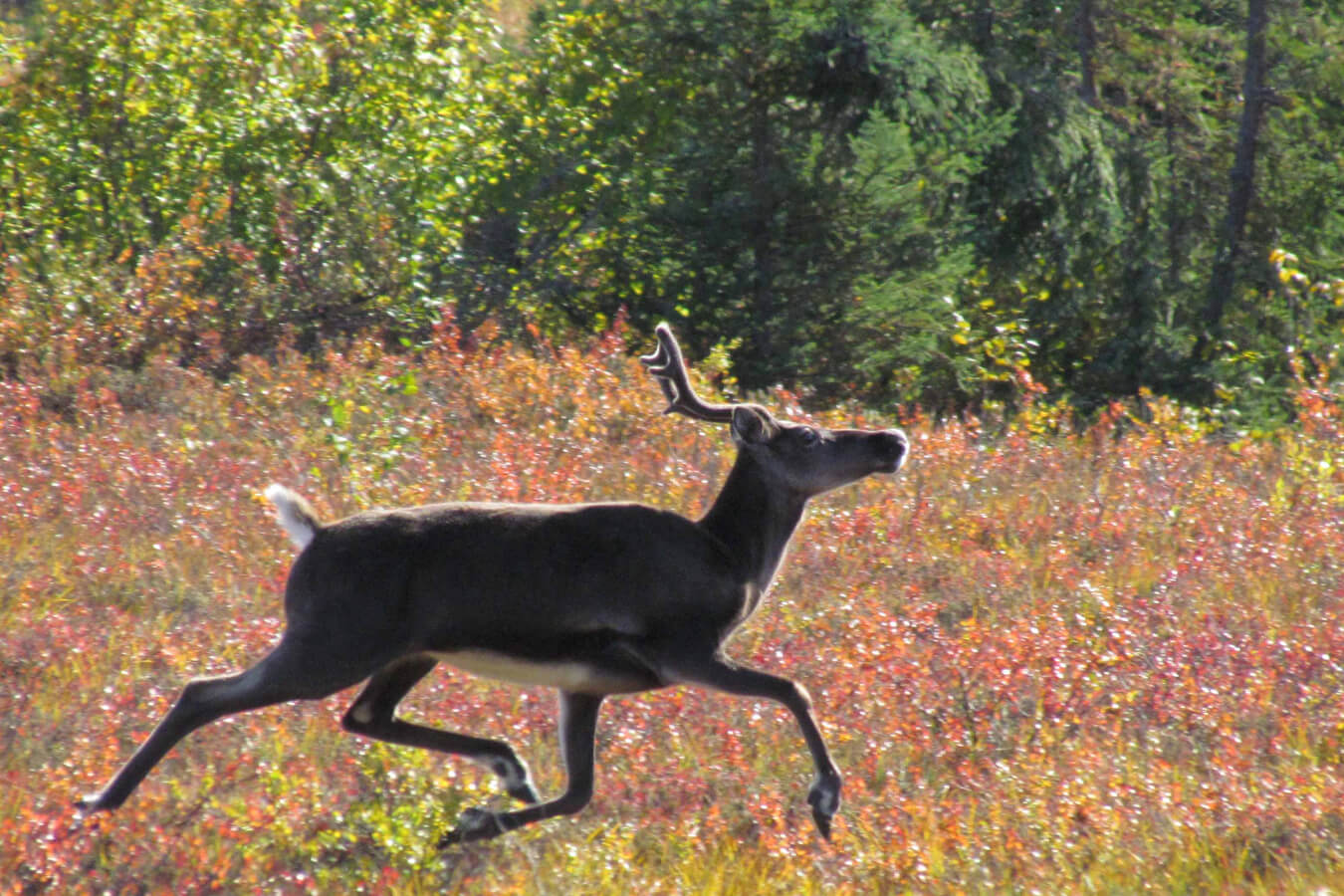
Physical Characteristics
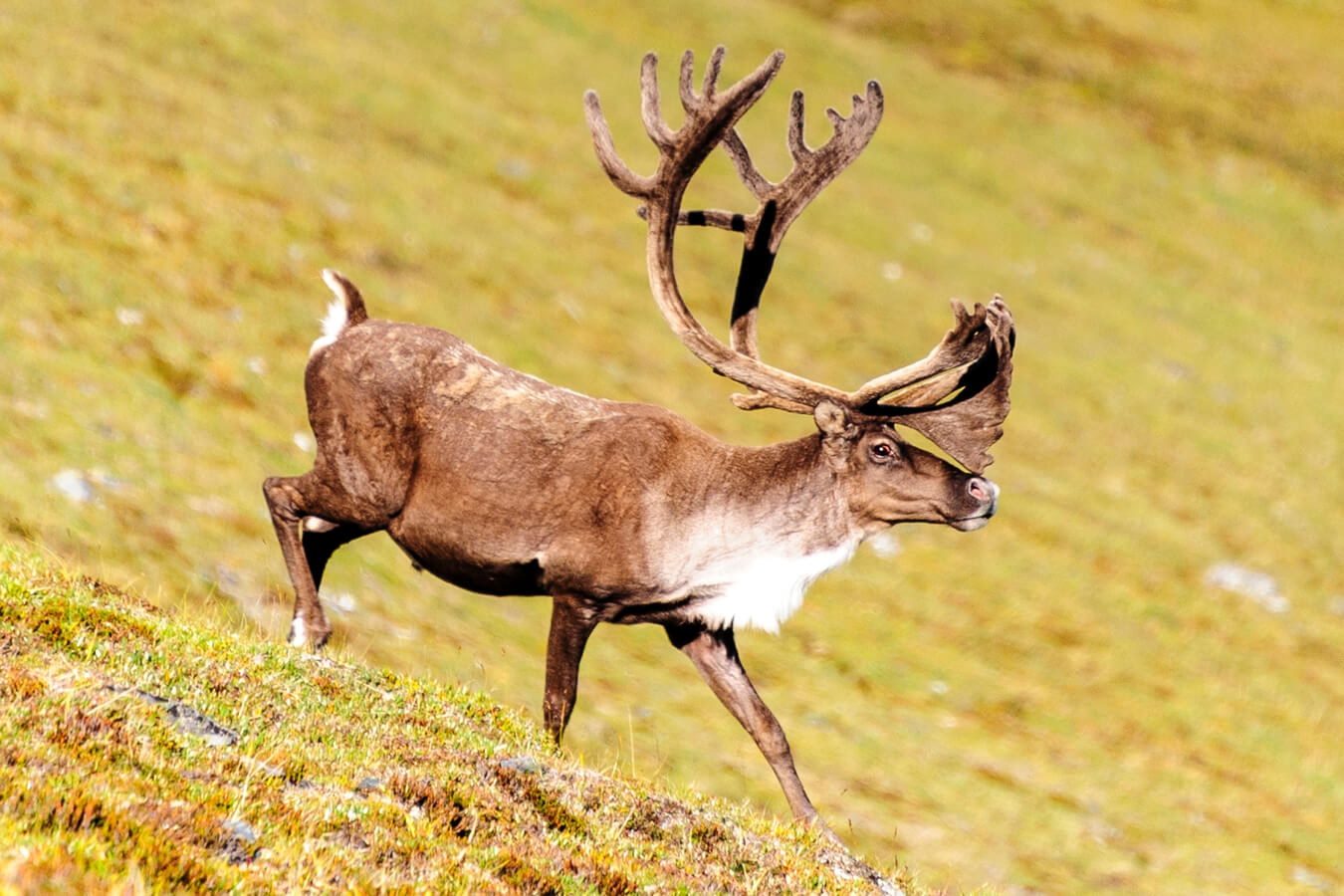
Caribou are deer built for cold. Size estimates vary from park to park. In Denali National Park and Preserve, a grown caribou is roughly four feet high at the shoulder and eight feet long, and it can weigh anywhere from 130 pounds to more than 350. Figures for Bering Land Bridge National Preserve cover a wider span: 130 to 600 pounds, a length of five to six and a half feet, and a shoulder height of two and a half to five feet.
Their coats change with the seasons. In summer, the body is generally covered in brown fur, though individuals range from nearly white to tan to a deep grayish brown, with paler bellies and rumps. Winter brings a longer, heavier coat that fades to gray or nearly white. The coat is built in two layers, a woolly underfur beneath long, straight, hollow guard hairs. Hollow hairs trap heat, and all that thick fur also helps keep caribou afloat when they swim.
Caribou have several other cold-weather adaptations. Inside the nose, a curved nasoturbinal bone covered in a thin, blood-rich tissue heats the icy air on its way to the lungs. Their hooves are very large and make a nearly circular print. They work much like snowshoes, and the underside is hollowed like a scoop, which helps caribou dig through snow for food and paddle through water.
Caribou also make a distinctive sound as they walk. Tendons snapping past small bones in the foot produce a clicking noise, which Denali recorded at its Fang Mountain sound station.
Antlers are one of the caribou’s most unusual features. Caribou are unusual among deer because females as well as males can grow them, though not every female does. Antlers can stand three feet or more. A male’s antlers average 17 pounds and can weigh as much as 29, while captive female reindeer antlers average 3 pounds. Bulls drop their antlers once the fall rut is over, while cows may carry theirs through the winter.
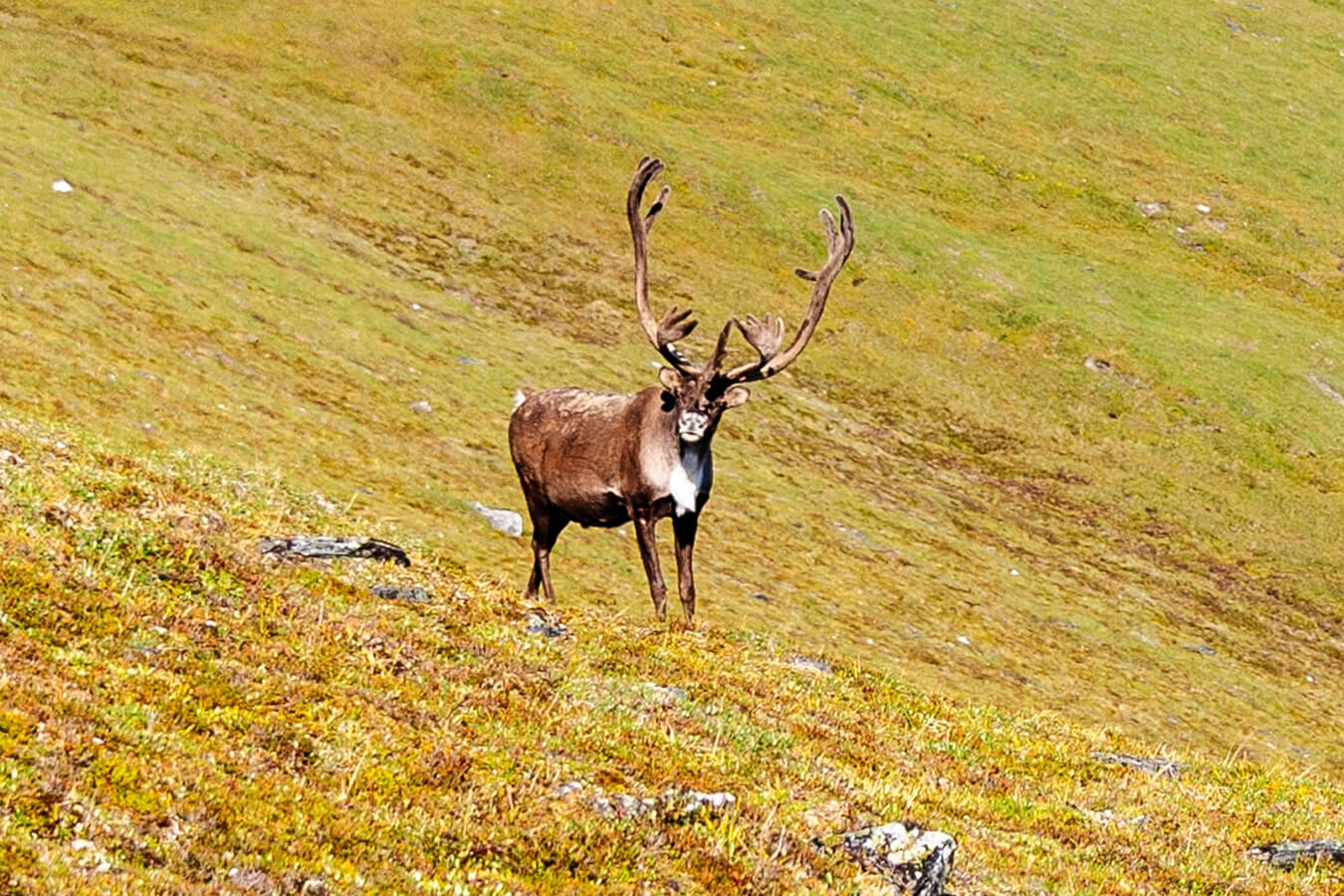
Habitat and Range
Caribou live across the far north. The species is native to the northern reaches of North America, Europe, and Asia, mostly in tundra and boreal forest. Its range runs from temperate rain forest to polar desert, a sign of how adaptable it is.
Alaska’s caribou live in separate herds, and several of them depend on park land:
- Western Arctic Herd: Alaska’s biggest herd. It uses all five Arctic Network parklands, including Gates of the Arctic and Kobuk Valley, and its range covers more than 360,000 square kilometers of northwest Alaska.
- Denali Herd: Its range lies almost entirely within Denali National Park and Preserve, mainly on the north side of the Alaska Range, east of the Foraker River.
- Mulchatna Herd: Uses the tundra flats and lake-dotted foothills in the western part of the preserve at Lake Clark National Park and Preserve.
- Chisana and Mentasta Herds: Monitored in Wrangell-St. Elias. The small, international Chisana herd ranges across the Klutlan Plateau and the upper White River, on both sides of the Alaska and Yukon border.
The Brooks Range is another crossroads. Caribou from the Western Arctic, Teshekpuk, Central Arctic, and Porcupine herds, together more than 500,000 animals, pass through the central Brooks Range on their migrations.
Caribou once lived farther south in the lower 48. They are gone now from Glacier, Isle Royale, and Voyageurs, where NPSpecies carries them only as historical.
The Great Migration
Caribou seem never to stop moving. Some herds make a round trip of more than 930 miles between where they winter and where they calve. An average Western Arctic caribou covers about 2,000 miles in a year on foot, and GPS tracking has recorded individuals covering up to 2,737 miles in a single year.
Some herds spend the summer on the North Slope and head back south of the Brooks Range for the winter. On the way to its calving grounds each spring, the Western Arctic Herd usually passes north through Kobuk Valley and Noatak National Preserve. Its spring departure tends to happen at the same time as those of other herds across the North American Arctic.
Kobuk Valley National Park calls this “one of the last great migrations left on the planet.” Every spring and fall, the Western Arctic Herd passes through the valley on a 600-mile trek between summer and winter grounds, and caribou are often seen trotting across the Great Kobuk Sand Dunes and swimming the Kobuk River. In the fall, they typically cross the river at Onion Portage. In recent years, though, far fewer caribou have been crossing the Kobuk River southward, and biologists are still working out why.
Hollow, buoyant hair and broad hooves make caribou excellent swimmers. An adult can reach six miles per hour in the water. On one spring migration, Western Arctic caribou were recorded walking 35 miles over the sea ice of Kotzebue Sound, from the Seward Peninsula to Cape Krusenstern National Monument.
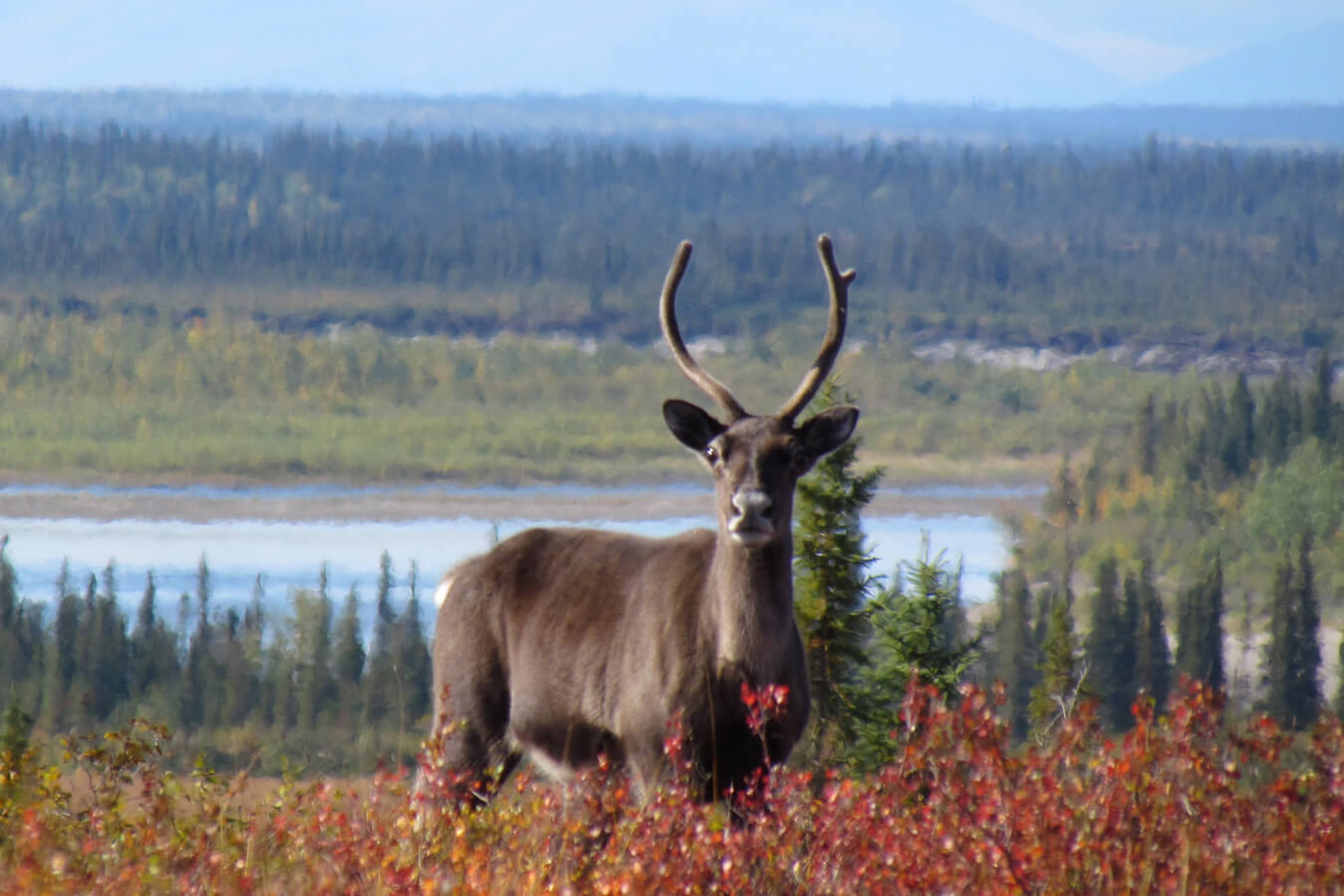
Diet and Summer Insects
Their food comes from the ground layer: lichens, mosses, grasses, and other short plants. Winter meals are mostly lichens and dry sedges, and in summer the menu widens to willows, grasses, and wildflowers. Because lichens are the main winter food, more frequent wildfires in a warming Arctic could shrink that supply.
Summer in the Arctic is short, and insects make it harder. NPS figures estimate 17 trillion mosquitoes in Alaska, weighing about 96 million pounds, compared with about 230 million pounds of caribou. Over a year, mosquitoes can drain roughly 4.4 pounds of blood from a single caribou. Warble flies deposit eggs on caribou, and the hatching larvae dig into the hide.
To get away from insects, caribou shake themselves, keep moving, or break into a run. They often move to places with little vegetation, such as river gravel bars and snowfields, and crowd together in groups called aggregations that can number in the hundreds of thousands. Many caribou also spend the summer up in the high alpine, where there are fewer mosquitoes and parasitic flies to contend with.
That relief comes at a cost. Time spent avoiding insects is time not spent feeding. If caribou don’t eat enough during summer, fewer calves may survive, and cows may stay too light to conceive in the fall. Because the Arctic is heating up at twice the rate of other places, NPS scientists expect insects to take a growing toll on caribou.
Calving and the Rut
The breeding season starts in late summer. Large bulls shed the velvet from their antlers in late August and early September, a sign that the rut is close. In Denali, caribou breed from late September into October. Bulls spar for access to females, charging each other with heads lowered, crashing antlers first, rearing up, and pawing with their front hooves. Injuries are rare, but bulls sometimes lock antlers, which can kill both animals.
Cows begin breeding at about two and a half years old, and gestation lasts 225 to 235 days. In spring, pregnant females migrate to calving grounds. Calving areas hold fewer predators than the winter range, and the drive to reach them is so strong that caribou push through deep snow, steep mountains, and icy rivers.
Most calves arrive within about three weeks, between late May and mid-June. Each cow has one calf a year. Newborns are brown without spots and weigh an average of 13 pounds. Calves can often stand within a few minutes of birth and travel with their mothers by the next day. By two days old, a calf can cover more than 10 miles a day, and their antlers begin to grow within six weeks.
Caribou feed many predators. Wolves and grizzly bears are the primary predators of the Western Arctic Herd, and caribou are also food for golden eagles, wolverines, and people. Foxes and ravens scavenge their carcasses. In Denali, biologists value the herd because no other barren-ground herd of its size in North America goes unhunted and shares its range with a natural set of large predators.

The Caribou People
Caribou are a lifeline for people in Arctic Alaska. They are a staple of the subsistence diet for Native residents, and many identify themselves as “caribou people.” The Iñupiaq name for caribou is tuttu. Rural residents harvest approximately 15,000 caribou from the Western Arctic Herd each year.
Onion Portage, known in Iñupiaq as Paatitaaq, is one of the most important places in this story. Along the Kobuk River in Kobuk Valley, the Iñupiat and their ancestors have met to harvest migrating caribou for well over 8,000 years. The name means “onion,” for the wild onions found on the riverbanks, and the English name also reflects a portage that cuts off about 10 miles of river travel.
In Kobuk Valley, hunters kept watch from a high vantage point for caribou coming from the north. Once the animals entered the river and their route was established, hunters in boats moved in with spears. The tradition continues today with modern tools. A single caribou represented food, clothing, tools, and thread: antler and bone became spear points and knife handles, sinew became thread, and hides became clothing, bedding, and tents.
Herd Cycles and Conservation
Caribou herds rise and fall naturally. The Western Arctic Herd’s crashes and booms have been tied to the Pacific Decadal Oscillation, a long-lasting climate cycle, and caribou numbers tend to swing on cycles of 40 to 70 years. The herd fell to 75,000 animals in 1976, rebounded to nearly 500,000 by 2003, and has since declined. By 2025 it was down to about 121,000 animals, which led to restrictions on sport and subsistence harvest.
Other herds have had similar swings. Denali’s herd numbered over 20,000 in the 1920s and 1930s and fell to about 1,000 in the 1970s, when hunting was stopped. It grew about 10 percent a year from 1977 to 1990, then lost as much as 30 percent after the record snows of 1990 to 1991. In 1999 the Mulchatna Herd was estimated at 200,000 animals; recent surveys put it near 30,000. Farther east, the Chisana herd near Wrangell-St. Elias National Park and Preserve was estimated at about 582 animals in fall 2022.
Climate change and development add new pressures. Warmer temperatures could bring more wildfires that reduce lichens, more shrubs and moose, and more wolves. Dust from the Red Dog Mine road has been carried for miles, and that one road can hold up migrating caribou for over a month in the fall. The NPS has monitored Western Arctic caribou since the 1980s and has deployed over 300 GPS collars since 2009, many of them put on caribou as they swim the Kobuk River at Onion Portage.
National Park Presence
Caribou live in several of the 63 designated U.S. National Parks, all in Alaska. For photographers, caribou can be found in the following parks:
| Park Name | Occurrence | Abundance |
| Denali National Park and Preserve | Present – Native | Unknown |
| Gates of the Arctic National Park and Preserve | Present – Native | Abundant |
| Katmai National Park and Preserve | Present – Native | Unknown |
| Kobuk Valley National Park | Present – Native | Abundant |
| Lake Clark National Park and Preserve | Present – Native | Common |
| Wrangell-St. Elias National Park and Preserve | Present – Native | Common |
According to National Park Service NPSpecies records, caribou are listed as abundant in Gates of the Arctic and Kobuk Valley and common in Lake Clark and Wrangell-St. Elias. The Wrangell-St. Elias entry shown is the barren-ground caribou record, which covers the Mentasta and Nelchina herds. A separate record lists the Chisana herd as adjacent to the park. Kenai Fjords lists caribou as probably present.
Caribou Photography Tips
Most caribou photos in the parks come down to timing and distance. In Denali, summer caribou usually travel in small bands of one to six, feeding in brushy country, though herds of 100 or more sometimes gather. Good places to look along the Denali park road include Sable Pass, the East Fork of the Toklat River, and the high passes between Toklat and Eielson Visitor Center, where caribou travel frequently.
In the Arctic parks, migration is the moment. Kobuk Valley’s herd passes through each spring and fall, and Onion Portage is a traditional crossing point. Remember that this is an active subsistence area, so respect hunters and local residents. Summer insect season can bring large aggregations on gravel bars and snowfields.
Keep your distance. Denali asks visitors to stay at least 25 yards from all animals other than bears, and at least 300 yards from bears, which also hunt caribou. Any change in an animal’s behavior because of you means you are too close. Animals there are often spotted at great distance, so a telephoto lens and binoculars are essential. Don’t approach or follow wildlife, either; let a moving herd pass rather than chasing it.
A telephoto lens is essential for photographing caribou responsibly. If you already own or want to own a professional-grade mirrored camera like the Canon EOS 5D Mark IV Full Frame Digital SLR, we recommend using a Canon EF 100-400mm f/4.5-5.6L IS II USM Lens zoom lens for wildlife photography. If you have or are interested in a newer mirrorless model like the Canon EOS R5 Full-Frame Mirrorless Camera, we recommend using a Canon RF100-400mm F5.6-8 IS USM for long-distance shots.
Not quite ready to invest in traditional professional-grade camera equipment but want to enhance the quality of your cell phone photographs? Consider using a Moment Tele 58mm Mobile Lens II for improved reach, and use a Moment camera case with a lens mount to attach it to your phone. Since cell phones generally cannot provide the same reach as a dedicated telephoto camera lens, never compensate by moving dangerously close to wildlife.
No photograph is worth disturbing an animal or putting yourself or others at risk.
Caribou or Reindeer?
Caribou and reindeer belong to one species, known to science as Rangifer tarandus. Caribou is the North American name, and reindeer is the Eurasian one. Caribou are always wild animals; reindeer can be wild too, or they can live under partial or full domestication.
Reindeer were domesticated in Eurasia about 2,000 years ago and were introduced to western Alaska from Siberia in 1892. Herding peaked in the 1930s and has since declined. A handful of herders now manage the free-ranging reindeer of the Seward Peninsula, and they sometimes run off with wild caribou herds.
Compared with reindeer, caribou are usually longer-legged and slimmer. Reindeer usually stay in one area more, carry denser fur, and can show white or mottled patches. Caribou calves are reddish-brown and born in late May or early June, while reindeer calves are dark chocolate brown and can arrive as early as mid-April.
A Note About Caribou Taxonomy
Readers researching caribou may encounter several scientific names. This page uses:
Rangifer tarandus
In older references and some National Park Service records, caribou appear under names such as:
Rangifer tarandus granti, Rangifer tarandus groenlandicus, Rangifer tarandus caribou, and Rangifer arcticus
An NPS article from Bering Land Bridge National Preserve names Rangifer tarandus granti as Alaska’s most common subspecies, the barren-ground caribou. In NPSpecies, Wrangell-St. Elias lists its barren-ground herds as R. t. groenlandicus and the Chisana herd as woodland or mountain caribou (R. t. caribou), with granti as a synonym. Denali’s record gives Rangifer arcticus as a synonym. Voyageurs’ historical record is woodland caribou.
For consistency throughout National Park Photographer, this page uses Rangifer tarandus while recognizing the other names visitors may encounter.
Final Thoughts
Caribou connect Alaska’s wildest parks. A single herd can link Gates of the Arctic, Kobuk Valley, and the Arctic coast in one year’s journey, feeding wolves, bears, and people along the way.
Their numbers rise and fall over decades, and NPS scientists are still learning how climate, insects, wildfire, and roads shape those cycles. As an Inuit saying quoted by the NPS goes, “No one knows the way of the wind and the caribou.”
If you are lucky enough to watch a herd on the move, keep your distance, let them pass, and enjoy one of the last great migrations on Earth.
Want more information about the amazing wildlife that call our National Parks home? Take a look at our National Park Wildlife page to explore the various parks and the animals in them. Planning on visiting a National Park in the near future? Be sure to follow park regulations, practice Leave No Trace principles, and prioritize both your safety and the well-being of wildlife while exploring.
Joyful Journeys!
Bonnie, Co-Owner, National Park Photographer
Want to learn more about caribou? Check out the additional resources below!
Caribou Books & Field Guides
- Being Caribou: Five Months on Foot with an Arctic Herd
- Peterson Field Guide to Mammals of North America
- Mammal Tracks & Sign: A Guide to North American Species
- 10×42 Binoculars for Wildlife Viewing
- Monocular for Wildlife Viewing
- Camera Bean Bag for Wildlife Photography
Please note, by making purchases through our affiliate links, you are supporting our mission to celebrate and showcase our National Parks and the photographers who frequent them. As an Amazon Associate, National Park Photographer earns from qualifying purchases at no cost to you. We appreciate your support.
References & Additional Resources
- National Park Service — Gates of the Arctic National Park and Preserve: Caribou
- National Park Service — Kobuk Valley National Park: Mammals
- National Park Service — Kobuk Valley National Park: All About Caribou
- National Park Service — Kobuk Valley National Park: Paatitaaq-Onion Portage
- National Park Service — Kobuk Valley National Park: Traditional Knowledge and Cultural Significance of Paatitaaq
- National Park Service — Denali National Park and Preserve: Caribou
- National Park Service — Denali National Park and Preserve: Wildlife Viewing
- National Park Service — Denali National Park and Preserve: Wildlife Safety
- National Park Service — Lake Clark National Park and Preserve: Caribou
- National Park Service — Wrangell-St. Elias: 2026 Federal Subsistence Hunt of Chisana Caribou Herd
- National Park Service — Arctic Network Inventory and Monitoring: Caribou
- National Park Service — Caribou Resource Brief for the Arctic Network
- National Park Service — Central Alaska Network: Caribou
- National Park Service — Caribou: Did You Know?
- National Park Service — Alaska Park Science: Caribou, Nomads of the North
- National Park Service — Insects and Caribou
- National Park Service — Bering Land Bridge National Preserve: Caribou
- National Park Service — Reindeer vs. Caribou
- National Park Service — NPSpecies Species Search
Do you want to be featured on National Park Photographer?
Why wait! Contact us today at nationalparkphoto@gmail.com for a chance to be a Featured National Park Photographer!