Few animals have adapted to people as well as the coyote (Canis latrans). Coyotes survived decades of efforts to wipe them out in the West, and they now live across North and Central America, from remote wilderness to big cities. In our National Parks, they hunt voles in Yellowstone’s snowy meadows, trot across Death Valley’s salt flats, and fill Saguaro’s desert nights with yips and howls.
That adaptability is also their biggest problem in parks. Coyotes learn quickly, and a coyote that learns to beg from cars rarely lives long. Coyotes can be found in parks such as Yellowstone, Death Valley, Joshua Tree, Saguaro, Sequoia, Mesa Verde, Capitol Reef, and Wind Cave.
Learning about animals like coyotes can significantly enhance wildlife photography skills by providing valuable insights into animal behavior, habitat, and physical characteristics. Understanding an animal’s habits can allow photographers to better anticipate and capture unique and authentic moments. Knowledge of an animal’s habitat may also help in selecting the best locations and times for wildlife viewing and photography, while familiarity with physical characteristics is essential for accurately identifying wildlife in the field. If wildlife photography or simply wildlife viewing are of interest to you, then you’ve come to the right place! Together, let’s learn more about what makes coyotes so special.

Physical Characteristics
Coyotes are medium-sized canines. In Yellowstone they weigh 25 to 35 pounds and stand 16 to 20 inches tall at the shoulder, with males slightly larger than females. Desert coyotes are smaller. In Death Valley National Park, coyotes weigh 15 to 30 pounds, are generally smaller than eastern ones, and spend more time alone.
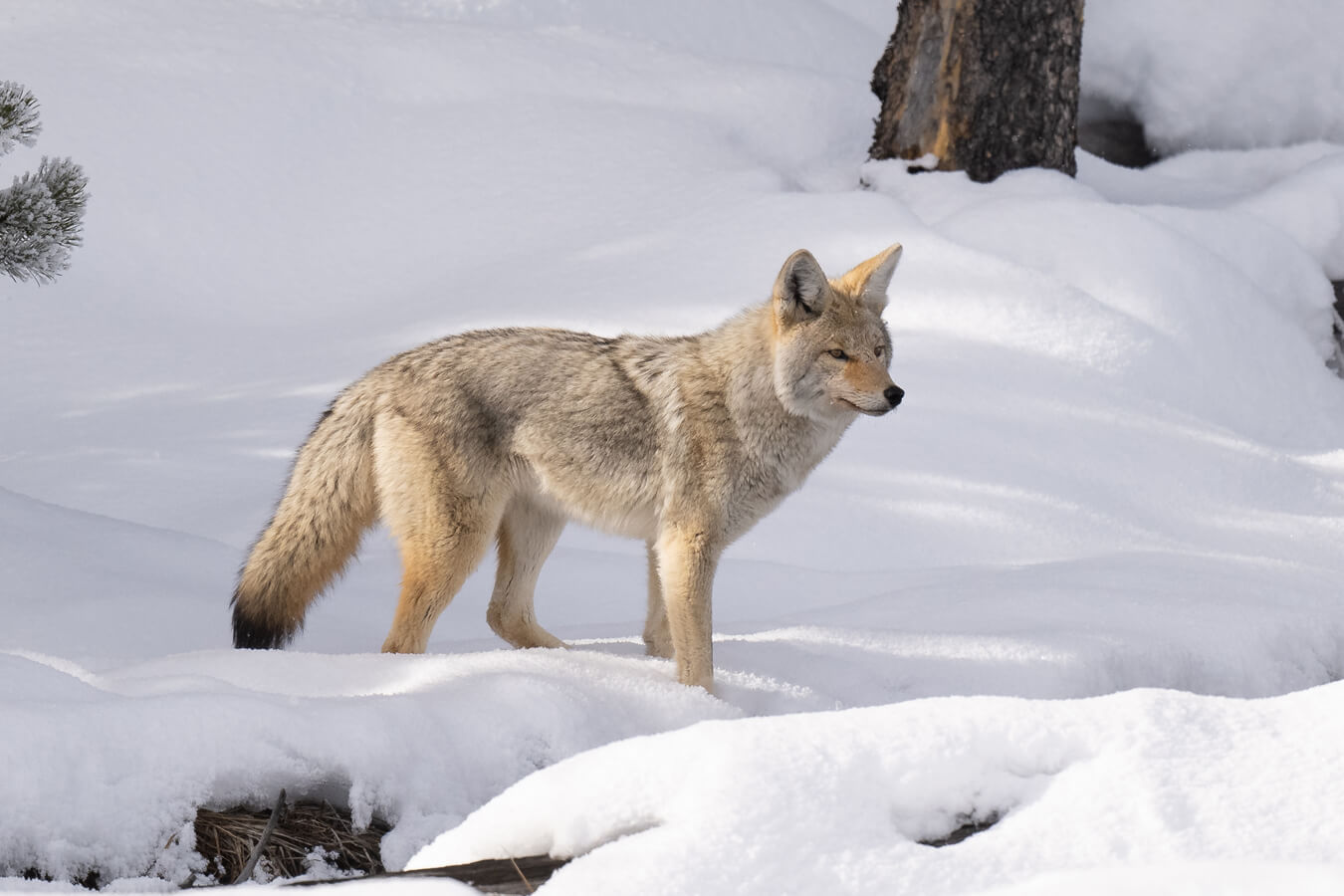
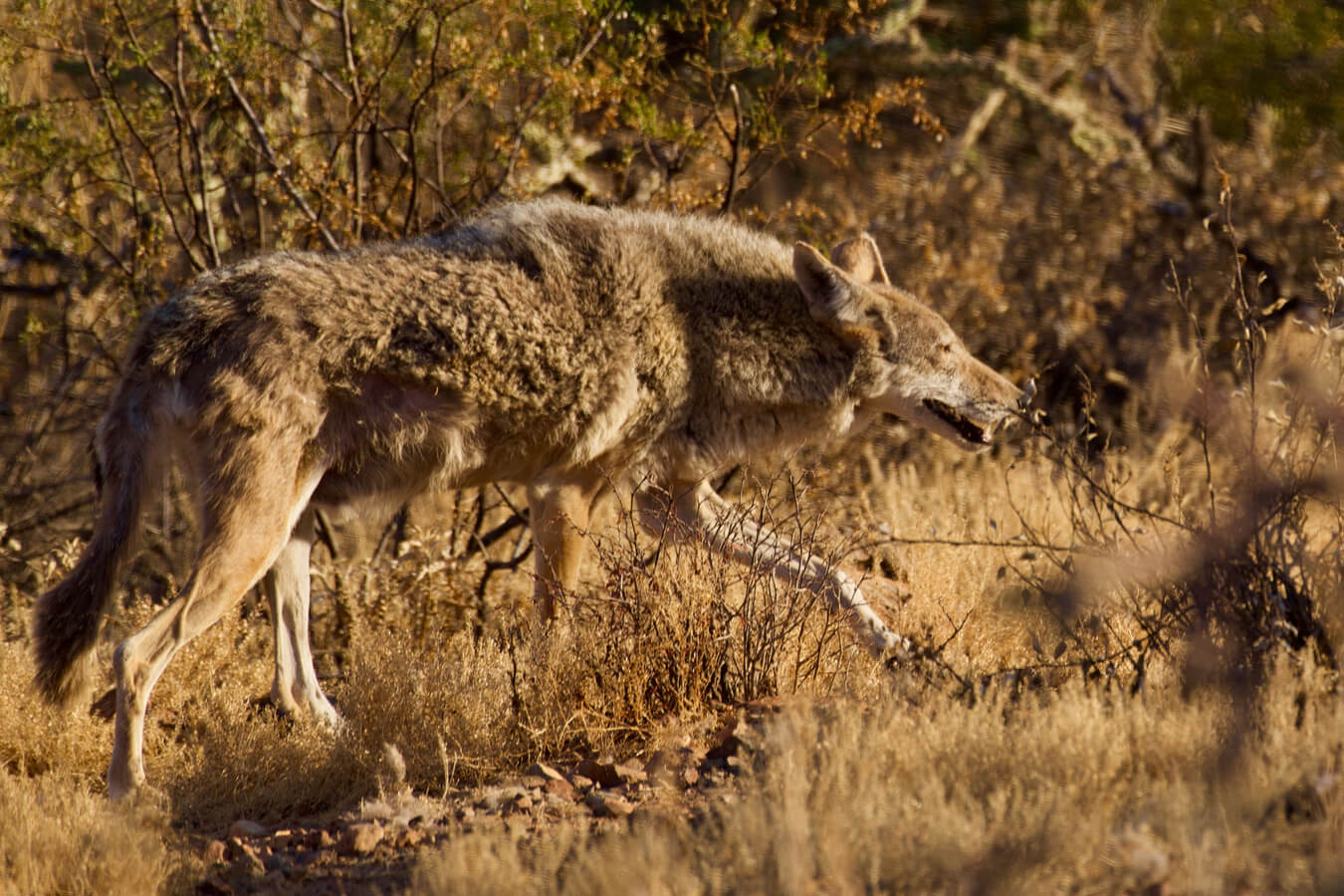
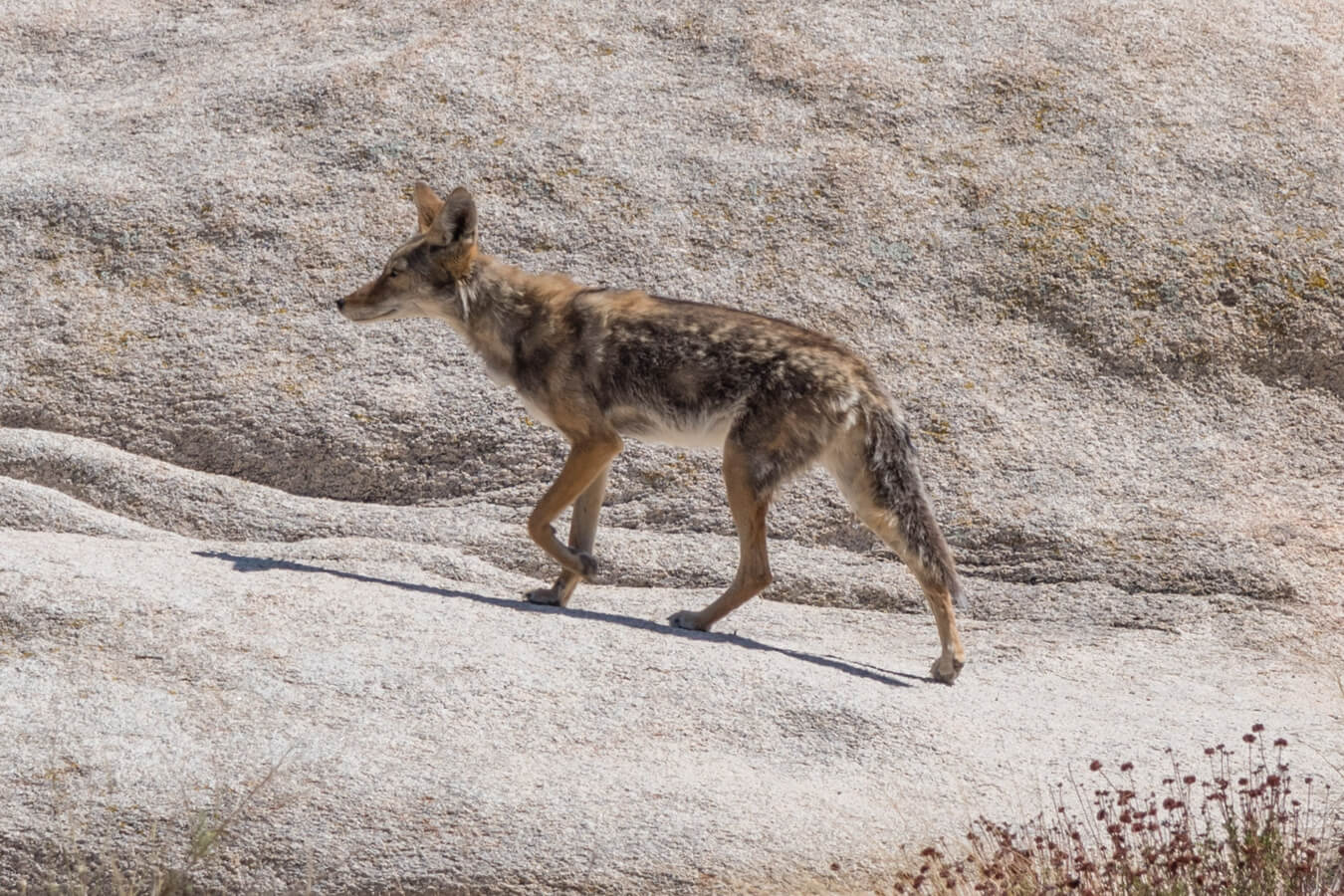
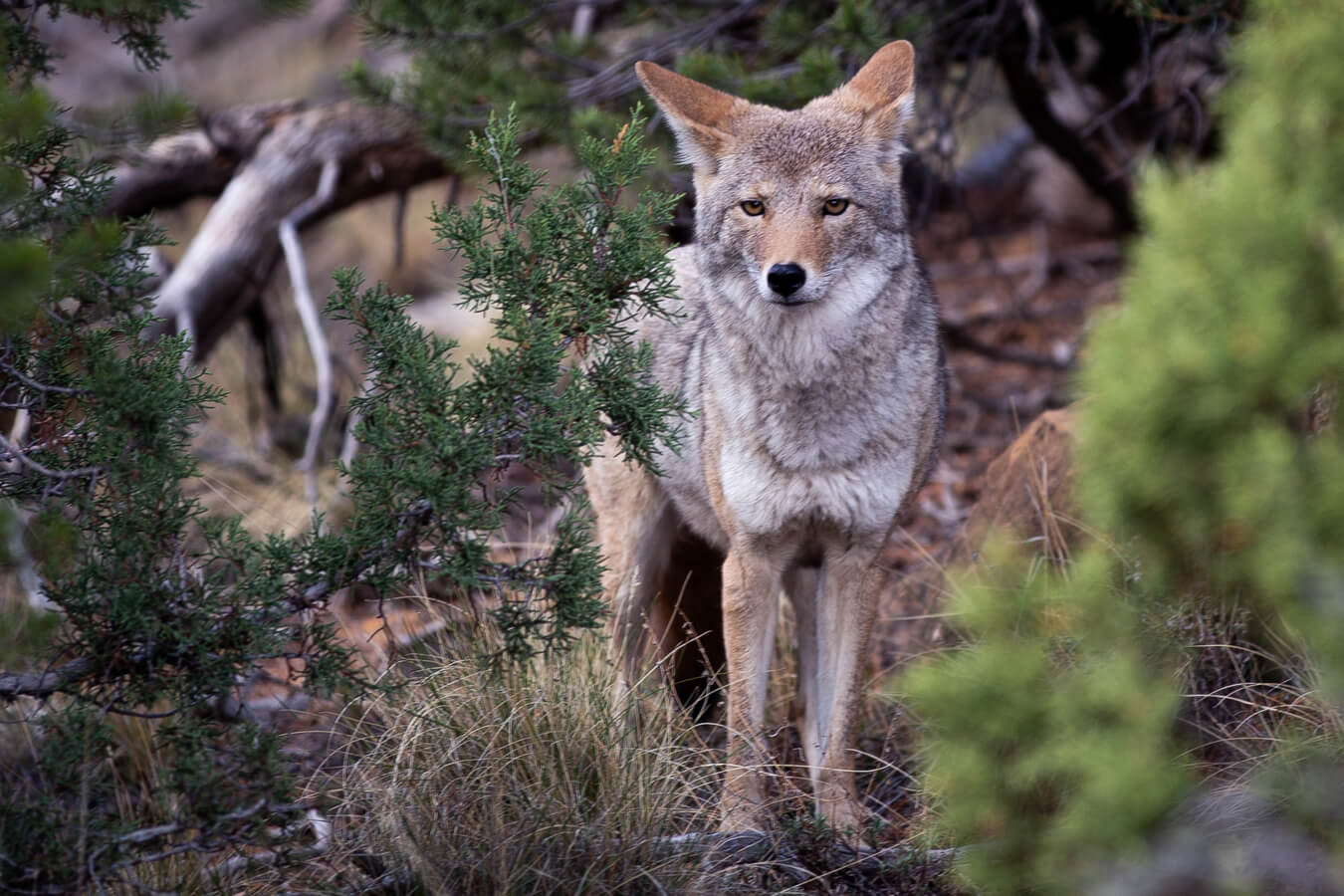
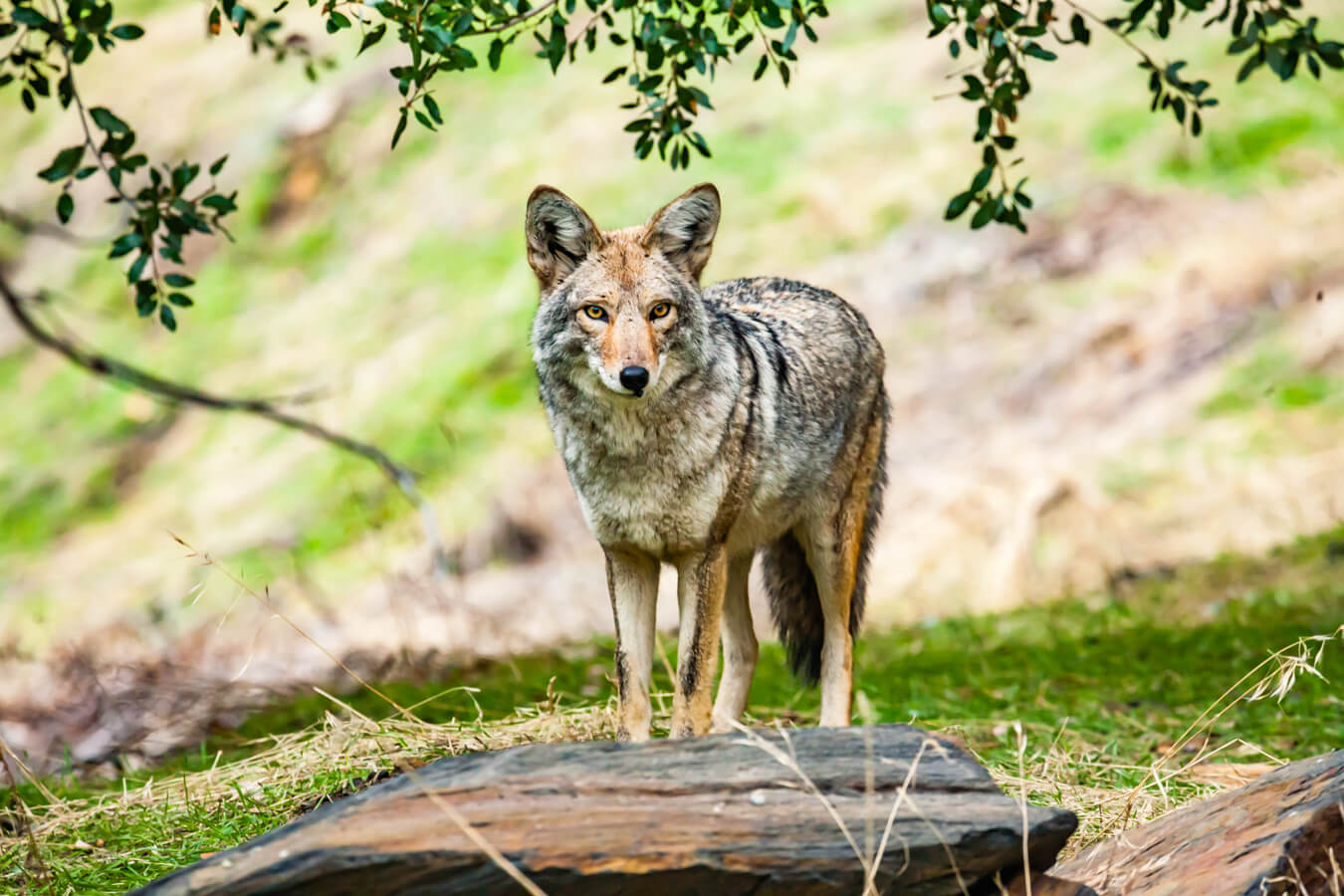
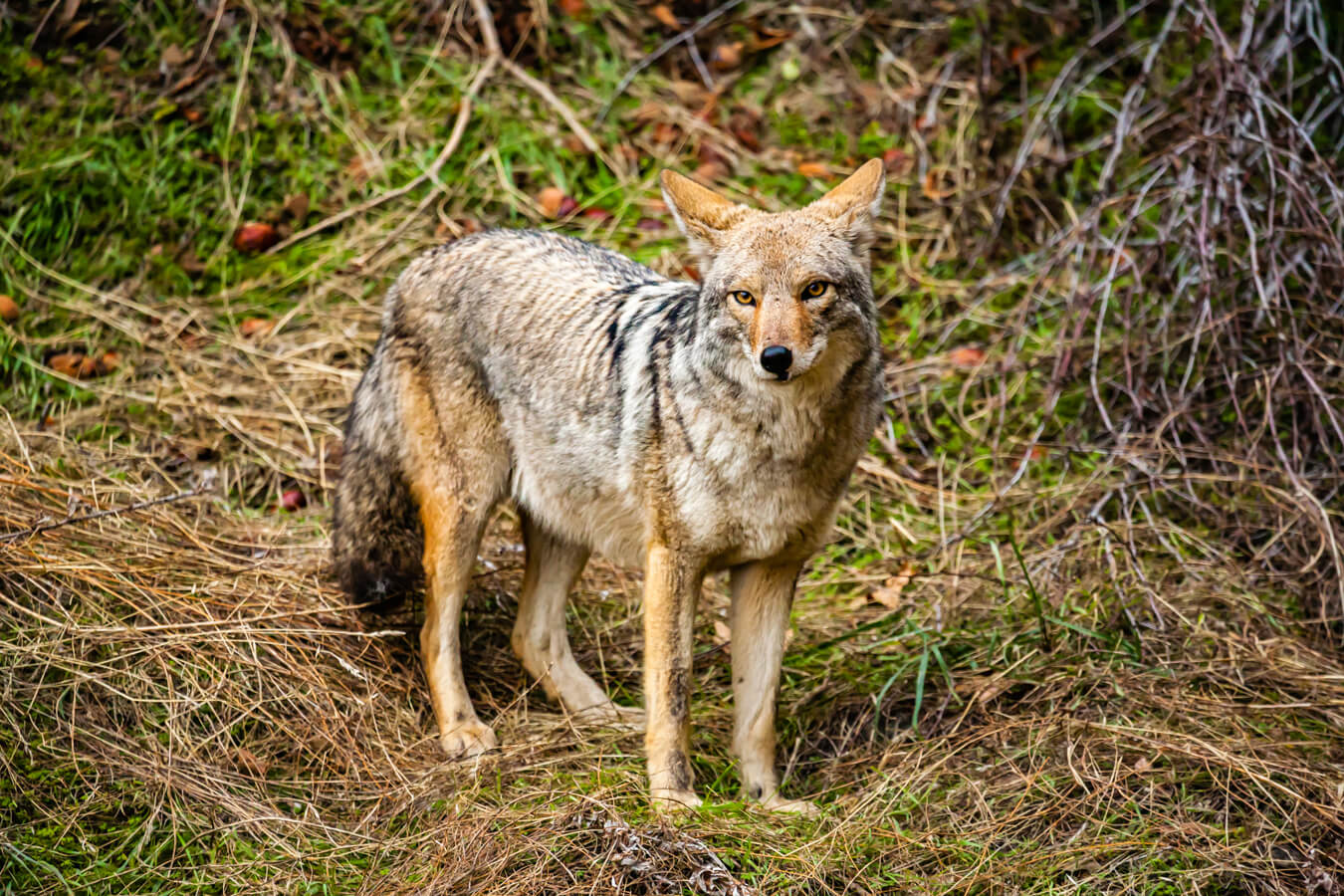
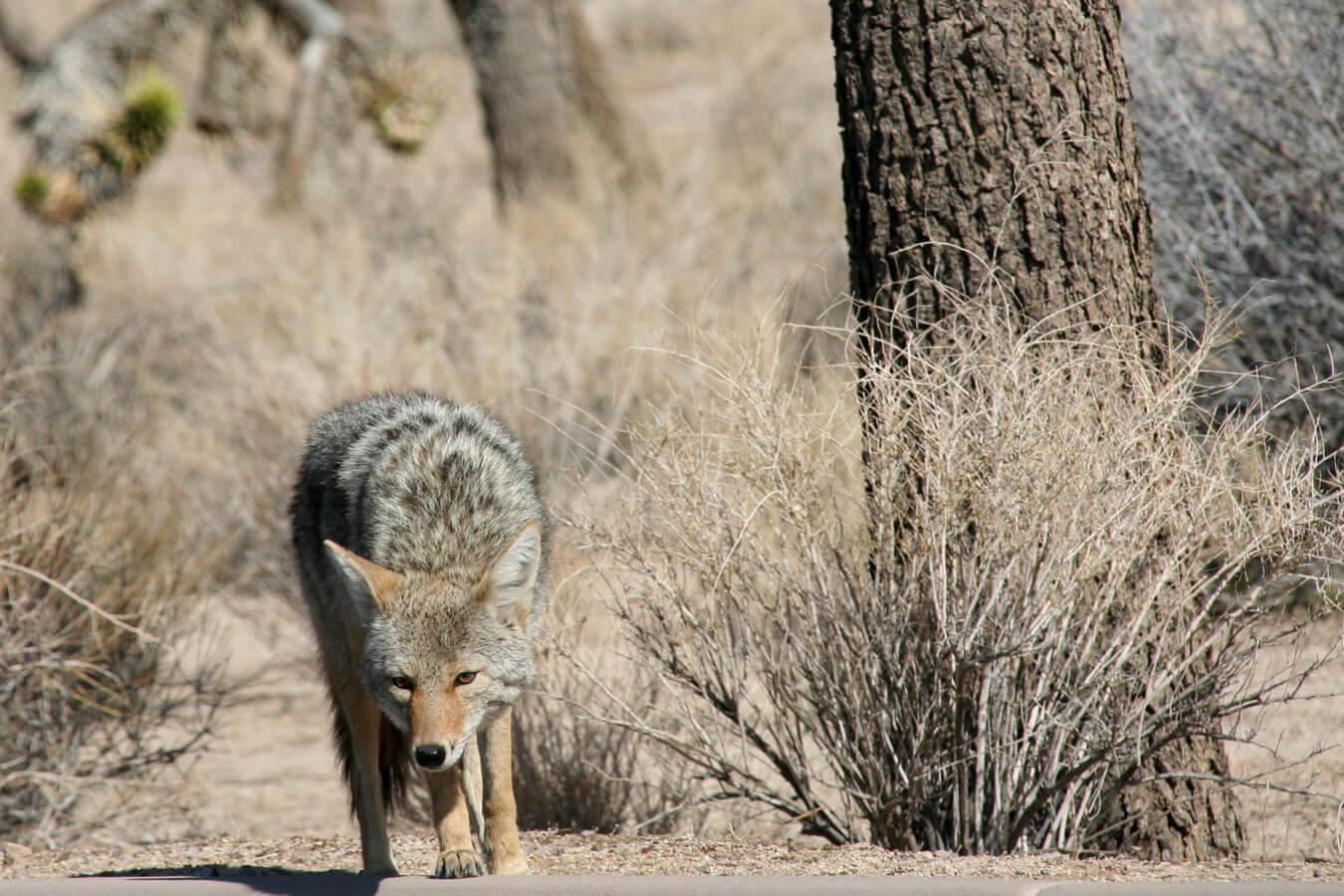
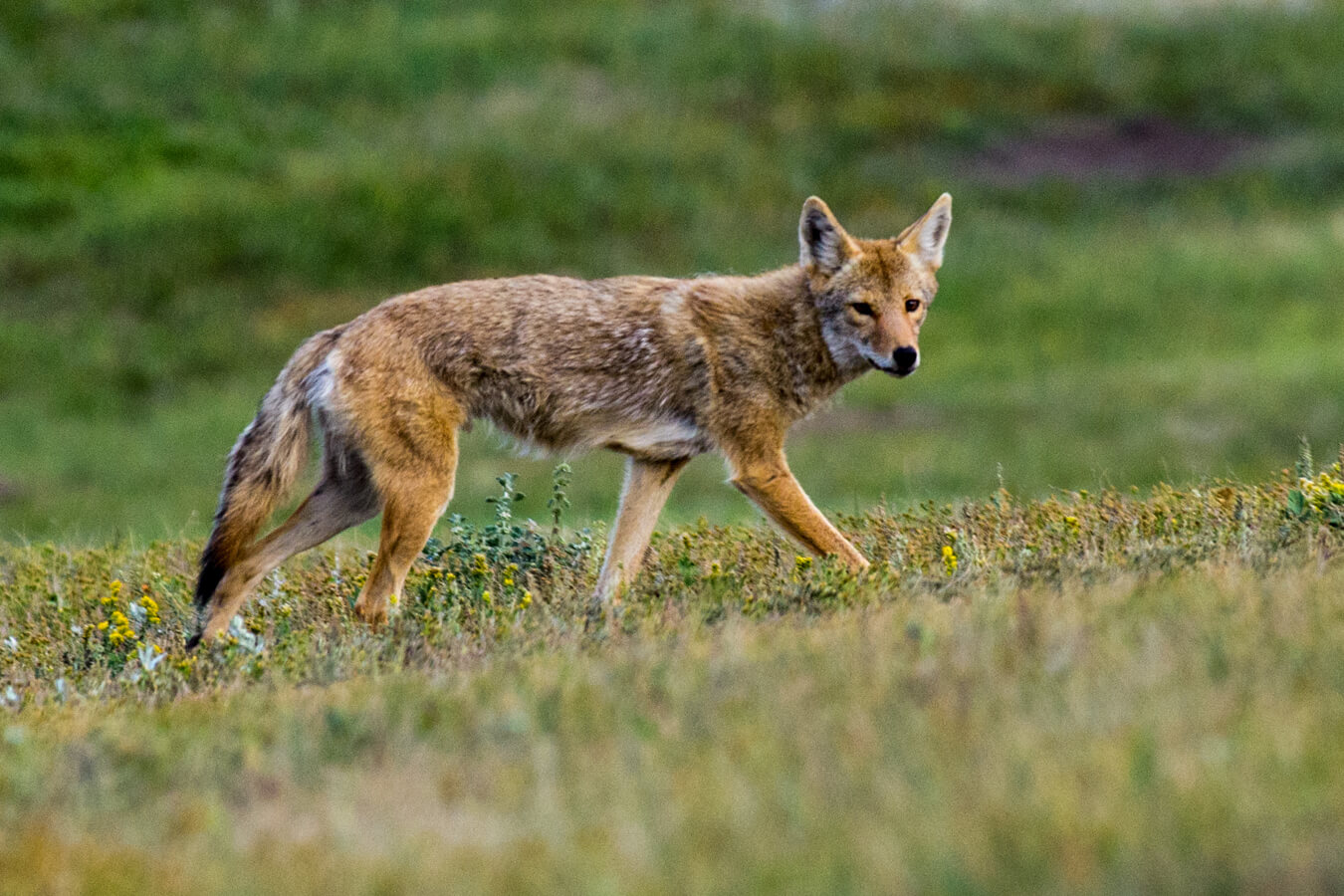
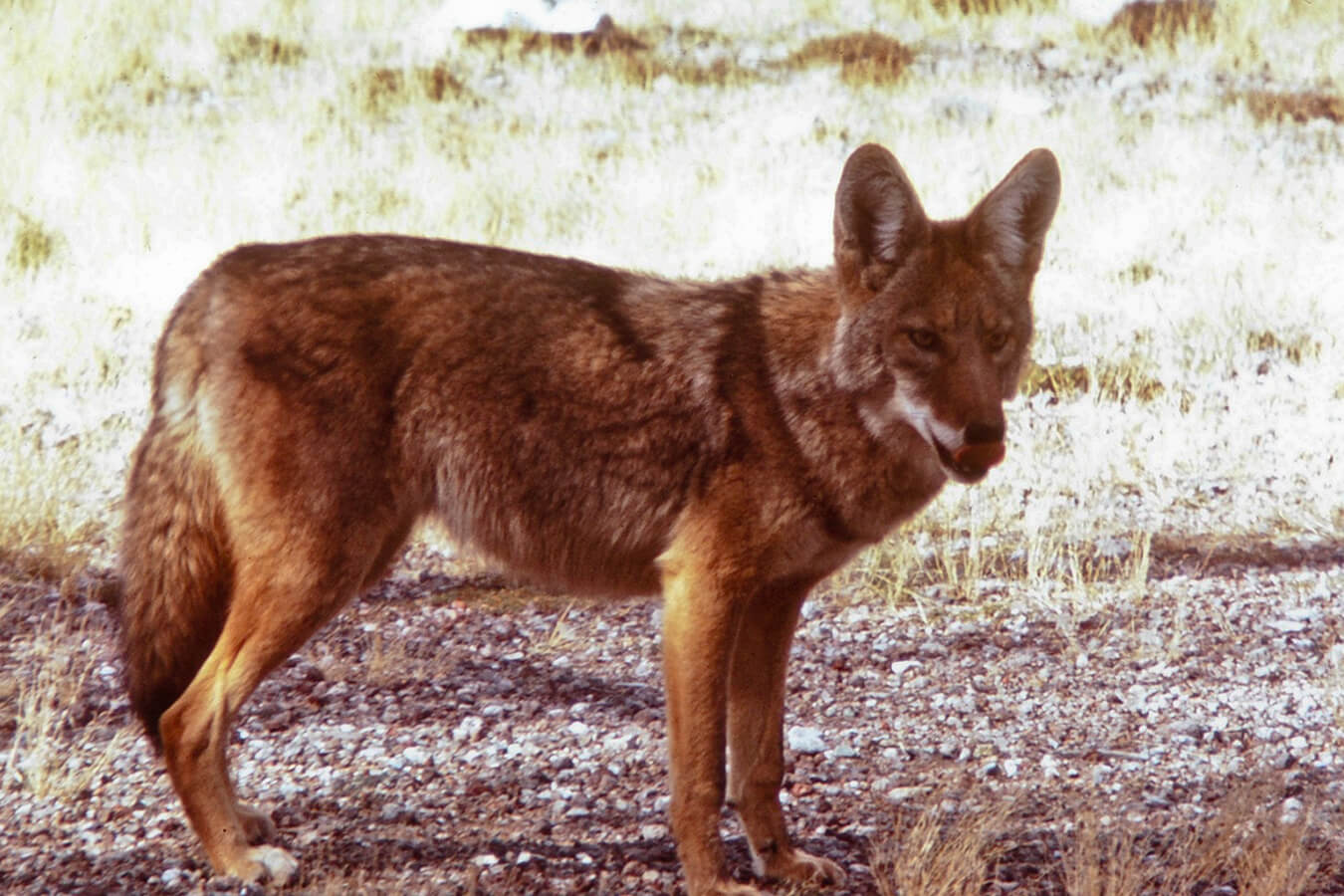
Coat color varies with habitat. Yellowstone’s coyotes are tan or buff, occasionally gray, with touches of orange on the ears and tail. At Mount Rainier National Park, the coat is grayish tan with lighter underparts. In Death Valley, light gray to reddish-brown fur blends with bare rock and sandy soil.
Size is one of the easiest clues in the northern Rockies. Coyotes are larger than red foxes and smaller than wolves, so a lone, mid-sized canine trotting through a meadow there is most likely a coyote.
Coyotes are often mistaken for wolves or dogs. A coyote is built lighter than a wolf and is only about a third of its size. It looks like a medium-sized dog, but the long, bushy, black-tipped tail gives it away. Watch the tail when the animal runs: a dog usually holds it high, a wolf keeps it level behind, and a coyote lets it hang low.
Tracks can help, too. Coyote tracks are usually laid out in a straight, direct line, while a dog’s path wanders. A coyote track is longer and narrower than a dog’s, and it often shows small, pointed claw marks. A dog’s prints are usually rounder, with larger, rounded nails.
Coyotes are fast. Chasing jackrabbits in Saguaro National Park, they can reach 40 miles per hour. In Yellowstone, the average lifespan is six years, with some coyotes living up to 13.
Habitat and Distribution
Coyotes live almost everywhere. Across North and Central America, their habitats run from tropical forest and coastline to the high plains, mountains, and frozen tundra. Within Death Valley, they turn up anywhere from the salt flats on the valley floor to the forested peaks.
Their range has grown alongside people. Coyotes are common in both wilderness and developed areas, and human changes have helped them in ways they haven’t helped many species. People wiped out many of the wolves that once competed with coyotes, and clear-cut forests opened up habitat for the small mammals coyotes prey on.
Yellowstone has plenty of coyotes, and they are commonly spotted crossing open valleys and meadows. Yellowstone coyotes typically roam a home range of 3 to 15 square miles. At Saguaro, their calls carry across both the east and west districts. At Capitol Reef National Park, they count among the large mammals, along with deer and cougars.
Behavior and Social Structure
Coyote social life depends on circumstances. Before wolves came back to Yellowstone, its coyotes formed packs or family groups of as many as seven. That kind of social organization is typical of coyotes living where people don’t hunt them. Once wolves were back, Yellowstone’s coyotes shifted to the more usual arrangement: a pair raising pups. Death Valley’s desert coyotes tend to be more solitary.
Coyotes are active both day and night. In Death Valley, activity peaks around sunrise and sunset, with most foraging after dark. Daytime activity increases during the mating season.
They are famous for their voices. Coyotes are sometimes called “song dogs.” Groups or lone coyotes howl, especially at dawn and dusk. They have around a dozen vocalization types, so a few coyotes calling to one another can sound like a much larger group. They bark and howl to communicate, and at times they seem to call simply because they enjoy it. Scent marks of urine and feces tell other coyotes where an animal is, whether it is breeding, and where its territory ends.
Coyotes are smart, social animals, and parents invest heavily in their young.
Coyotes are attentive parents. In Death Valley, pairs start courting months ahead of time, and breeding runs from late winter to a peak in mid-spring. Most coyotes don’t breed until their second year. Yellowstone litters of four to eight pups arrive in April and first leave the den in May. Young coyotes usually disperse alone at six to nine months, though some wait until their second year. In Death Valley, young coyotes may move as far as 100 miles from home, though most settle 5 to 30 miles away.
Diet and Hunting
Coyotes eat almost anything. In Yellowstone, coyotes live mostly on carrion and small prey such as voles, mice, and rabbits, and in spring they also take newborn elk calves. At Mount Rainier, the menu includes squirrels, mice, hares, birds, amphibians, reptiles, and carrion, along with occasional berries and other plants.
Desert coyotes have their own menu. Death Valley’s coyotes eat mainly rabbits and rodents, along with carrion, birds, reptiles, and prickly pear fruit when it’s available. They have also eaten domesticated fruit such as dates and grapes. At Saguaro, summer coyotes eat a lot of fruit from saguaro and prickly pear cactus.
The menu stretches further still: fish, frogs, insects, snakes, deer, fruit, even grass. A diet that broad lets coyotes thrive almost anywhere. Lots of pups and a willingness to eat almost anything have kept coyotes thriving, however hard people have tried to control them.
Coyotes are clever hunters. Coyotes mostly move and hunt by themselves, though they sometimes team up in loose pairs. Coyotes have been watched hunting alongside badgers and tracking down food by listening for crows gathering.
Role in the Ecosystem
Coyotes are mid-sized predators and scavengers. They hunt rodents, rabbits, and other small animals, and they feed regularly on carrion, including the remains of kills made by wolves and cougars. Their place in the food web shifts depending on which larger predators are around.
Yellowstone shows this well. In the early 1900s, coyotes, wolves, and cougars were all targeted for destruction because they sometimes preyed on livestock. Wolves and cougars were eliminated from the park, but coyotes adapted and survived. Without wolves, coyotes partially filled the empty niche and reached high densities. Until 1995, cougars were their main predator, killing coyotes that fed on cougar kills.
When wolves returned, things changed quickly. Wolves killed dozens of coyote pups and adults, mostly at wolf-killed carcasses. On the northern range, the coyote population dropped by as much as 50 percent because of food competition, wolf attacks, and loss of territory. More recent trends in the Lamar Valley show coyote numbers rising again, and pup survival has increased. Fewer coyotes may help smaller predators like red foxes, which coyotes kept in check. Winter camera data show coyotes and red foxes keeping opposite schedules, each busiest when the other is quiet.
Coyotes shape the behavior of smaller animals, too. In Saguaro, the common gray fox is the one member of the dog family known to climb trees, which helps it get away from predators such as coyotes. Cameras there have even caught gray foxes perched among the spines of saguaro arms.
A Fed Coyote Is a Dead Coyote
Coyotes learn quickly, and in National Parks that can be fatal. Coyotes quickly pick up habits like roadside feeding, which can lead to aggressive behavior and increase their risk of being hit by a car. Yellowstone has recorded several incidents of coyotes acting aggressively toward people, and a few of them were attacks.
Feeding coyotes is a large problem in Death Valley. Once coyotes there link cars with handouts, they linger by the road and walk into traffic to beg. In 2019, an adult female coyote that habitually approached cars was struck and killed on Artists Drive. Rangers had tried to scare her off with noise and with rocks tossed near her, never at her. With 1.7 million visitors a year, educating everyone is difficult. Rangers prefer education but do occasionally issue citations for illegally feeding wildlife. “A fed animal is a dead animal,” Chief Ranger Rob Wissinger said. “Coyotes are smart. They know how to look pathetic and trick people into feeding them.”
Joshua Tree uses the same phrase. Begging animals spend more time on roads, where they are more likely to be struck. Animals fed regularly may stop foraging and starve, and those that lose their fear of people can become aggressive. In Yellowstone, staff haze coyotes away from visitor areas with cracker shells, bear spray, or other deterrents, and coyotes that continue to threaten people or property are killed.
Coyote Safety
There is no need to be afraid of coyotes, but they are still wild and can act unpredictably. Know the distance rules for the park you are visiting. In Yellowstone, stay at least 25 yards from coyotes. Death Valley asks visitors to stay at least 200 yards from wildlife.
Never feed a coyote, no matter how hungry or thin it looks. Death Valley reminds visitors that desert wildlife has managed without our help for ages and already knows where the food and water are. Store food in your car or a hard-sided container, put all garbage in bins, and don’t pile trash on top of full bins. Report any coyote that walks up to people to a ranger.
Crowding a wild animal stresses it and changes how it behaves. Federal law protects every animal in a national park, and breaking it can bring a fine. If you see a sick or injured coyote, don’t approach it. Contact a ranger instead.
Drive carefully, especially where coyotes beg along roads. Fed coyotes that hang around populated areas are especially dangerous for children and pets. Keep pets leashed.
National Park Presence
Coyotes are among the most widespread carnivores in our National Parks. For photographers visiting the 63 designated U.S. National Parks, coyotes can be found in the following parks:
According to National Park Service NPSpecies records, coyotes are Abundant in Yellowstone, Grand Teton, Death Valley, and Pinnacles, and Common in parks such as Joshua Tree, Mesa Verde, Wind Cave, Grand Canyon, Rocky Mountain, Badlands, Theodore Roosevelt, Mount Rainier, and Great Smoky Mountains. NPSpecies lists Acadia’s coyotes, which it also calls eastern coyotes, as non-native. NPSpecies lists coyotes as historical, no longer present, at Isle Royale.
Coyote Photography Tips
Coyotes are often easiest to see at dawn and dusk. In Yellowstone, look in meadows, fields, and grasslands, and along roadways where they hunt small mammals. In winter, a coyote’s tan coat stands out against Yellowstone’s snow. In Grand Teton, watch for coyotes along Mormon Row and Antelope Flats Road, where they hunt mice, Uinta ground squirrels, and grasshoppers. In desert parks, early mornings bring the best light and the most activity. Saguaro’s summer cactus fruit season offers a different kind of image.
Roadside coyotes are tempting subjects, but think before you stop. A coyote that walks up to your car is likely a fed animal, and stopping to photograph it can teach it that cars mean food. Photograph from a distance, never toss food or make noises to lure a coyote closer, and move on. Use pullouts rather than stopping in the road. The best coyote images show natural behavior, such as hunting, howling, or traveling across the landscape.
Night photographers should know the rules. Joshua Tree National Park prohibits spotlighting, or using artificial light to view wildlife, and in Rocky Mountain National Park, using artificial lights or calls to view or attract wildlife is illegal. A simple test for distance: if your presence causes an animal to move, you are too close. Shoot from far enough away that the coyote carries on as if you weren’t there.
Listen, too. You will probably hear a coyote long before you ever see one. A recorded chorus at dusk can be as memorable as a photograph.
A telephoto lens is essential for photographing coyotes responsibly. If you already own or want to own a professional-grade mirrored camera like the Canon EOS 5D Mark IV Full Frame Digital SLR, we recommend using a Canon EF 100-400mm f/4.5-5.6L IS II USM Lens zoom lens for wildlife photography. If you have or are interested in a newer mirrorless model like the Canon EOS R5 Full-Frame Mirrorless Camera, we recommend using a Canon RF100-400mm F5.6-8 IS USM for long-distance shots.
Not quite ready to invest in traditional professional-grade camera equipment but want to enhance the quality of your cell phone photographs? Consider using a Moment Tele 58mm Mobile Lens II for improved reach, and use a Moment camera case with a lens mount to attach it to your phone. Since cell phones generally cannot provide the same reach as a dedicated telephoto camera lens, never compensate by moving dangerously close to wildlife.
No photograph is worth disturbing an animal or putting yourself or others at risk.
Why Are They Called Coyotes?
The word “coyote” came into English through Mexican Spanish from the Nahuatl word coyotl. The scientific name Canis latrans means “barking dog,” a fitting name for an animal so well known for its voice. The “song dog” nickname fits too; Yellowstone has even recorded a group howling along the Gibbon River.
The Scotts Bluff article sums up the coyote’s reputation well. Coyotes are “more frequently heard than seen,” and they like to vocalize at dusk, dawn, or during the night. In many parks, the yips and howls are the first sign that coyotes are nearby.
A Note About Coyote Taxonomy
Readers researching coyotes may encounter more than one scientific name for the same animal. This page uses:
Canis latrans
Coyotes have been split into many subspecies, and some of those names still show up in NPS records and older references:
Canis latrans lestes, Canis latrans mearnsi, and Canis latrans texensis
NPSpecies records list several regional subspecies. C. l. lestes, the mountain coyote, appears for Lassen Volcanic, Yosemite, Zion, and Bryce Canyon. C. l. texensis appears for Big Bend, Carlsbad Caverns, and Guadalupe Mountains, and Joshua Tree lists C. l. mearnsi among its synonyms. Most parks record coyotes at the species level.
For consistency throughout National Park Photographer, this page uses Canis latrans while recognizing the subspecies names visitors may encounter.
Final Thoughts
Coyotes are survivors. They outlasted efforts to wipe them out, adjusted when wolves returned to Yellowstone, and found ways to live in every kind of habitat from desert salt flats to mountain meadows. Their howls are part of the soundtrack of the American West.
That same intelligence makes them vulnerable around people. A coyote that learns to beg from cars is far more likely to be hit or removed, as Death Valley and Yellowstone have seen.
Seeing a coyote in the wild is a highlight of any park visit, and it comes with responsibility. By keeping our distance, never feeding coyotes, driving slowly, and using telephoto lenses instead of moving closer, photographers and visitors can enjoy coyotes while keeping them wild.
Want more information about the amazing wildlife that call our National Parks home? Take a look at our National Park Wildlife page to explore the various parks and the animals in them. Planning on visiting a National Park in the near future? Be sure to follow park regulations, practice Leave No Trace principles, and prioritize both your safety and the well-being of wildlife while exploring.
Joyful Journeys!
Bonnie, Co-Owner, National Park Photographer
Want to learn more about coyotes? Check out the additional resources below!
Coyote Books & Field Guides
- Coyote: A Trickster Tale from the American Southwest
- There Was a Coyote Who Swallowed a Flea
- Wild Republic Coyote Plush
- Peterson Field Guide to Mammals of North America
- 10×42 Binoculars for Wildlife Viewing
- Monocular for Wildlife Viewing
- Camera Bean Bag for Wildlife Photography
Please note, by making purchases through our affiliate links, you are supporting our mission to celebrate and showcase our National Parks and the photographers who frequent them. As an Amazon Associate, National Park Photographer earns from qualifying purchases at no cost to you. We appreciate your support.
References & Additional Resources
- National Park Service — Yellowstone National Park: Coyote
- National Park Service — Death Valley National Park: Coyote
- National Park Service — Death Valley National Park: No Feeding Animals
- National Park Service — Death Valley: Coyote Fatally Struck by Vehicle
- National Park Service — Joshua Tree National Park: Keep Wildlife Wild
- National Park Service — Saguaro National Park: Desert Dogs (Coyote and Foxes)
- National Park Service — Mount Rainier National Park: Carnivores
- National Park Service — Capitol Reef National Park: Mammals
- National Park Service — The Coyote (Scotts Bluff National Monument)
- National Park Service — Yellowstone National Park: Safety
- National Park Service — NPSpecies Species Search
Do you want to be featured on National Park Photographer?
Why wait! Contact us today at nationalparkphoto@gmail.com for a chance to be a Featured National Park Photographer!