Few sights stop traffic in a national park the way a grizzly bear does. A humped shape moving across a distant meadow, a sow digging roots with her cubs close behind, or a big bear standing in a river waiting for salmon can turn an ordinary morning into the highlight of a trip. Grizzlies are powerful, intelligent, and unpredictable, and photographing them well means understanding them first.
The grizzly bear (Ursus arctos horribilis) is a North American subspecies of the brown bear, a species that also lives across Europe and Asia. In the lower 48 states, grizzlies survive mainly in a few large ecosystems in Montana, Wyoming, Idaho, and Washington, while Alaska holds most of the continent’s brown bears. NPSpecies records list brown bears, including grizzlies, as present in 12 National Parks, including Denali, Glacier, Grand Teton, Katmai, and Yellowstone.
Learning about animals like grizzly bears can significantly enhance wildlife photography skills by providing valuable insights into animal behavior, habitat, and physical characteristics. Understanding an animal’s habits can allow photographers to better anticipate and capture unique and authentic moments. Knowledge of an animal’s habitat may also help in selecting the best locations and times for wildlife viewing and photography, while familiarity with physical characteristics is essential for accurately identifying wildlife in the field. If wildlife photography or simply wildlife viewing are of interest to you, then you’ve come to the right place! Together, let’s learn more about what makes grizzly bears so special.
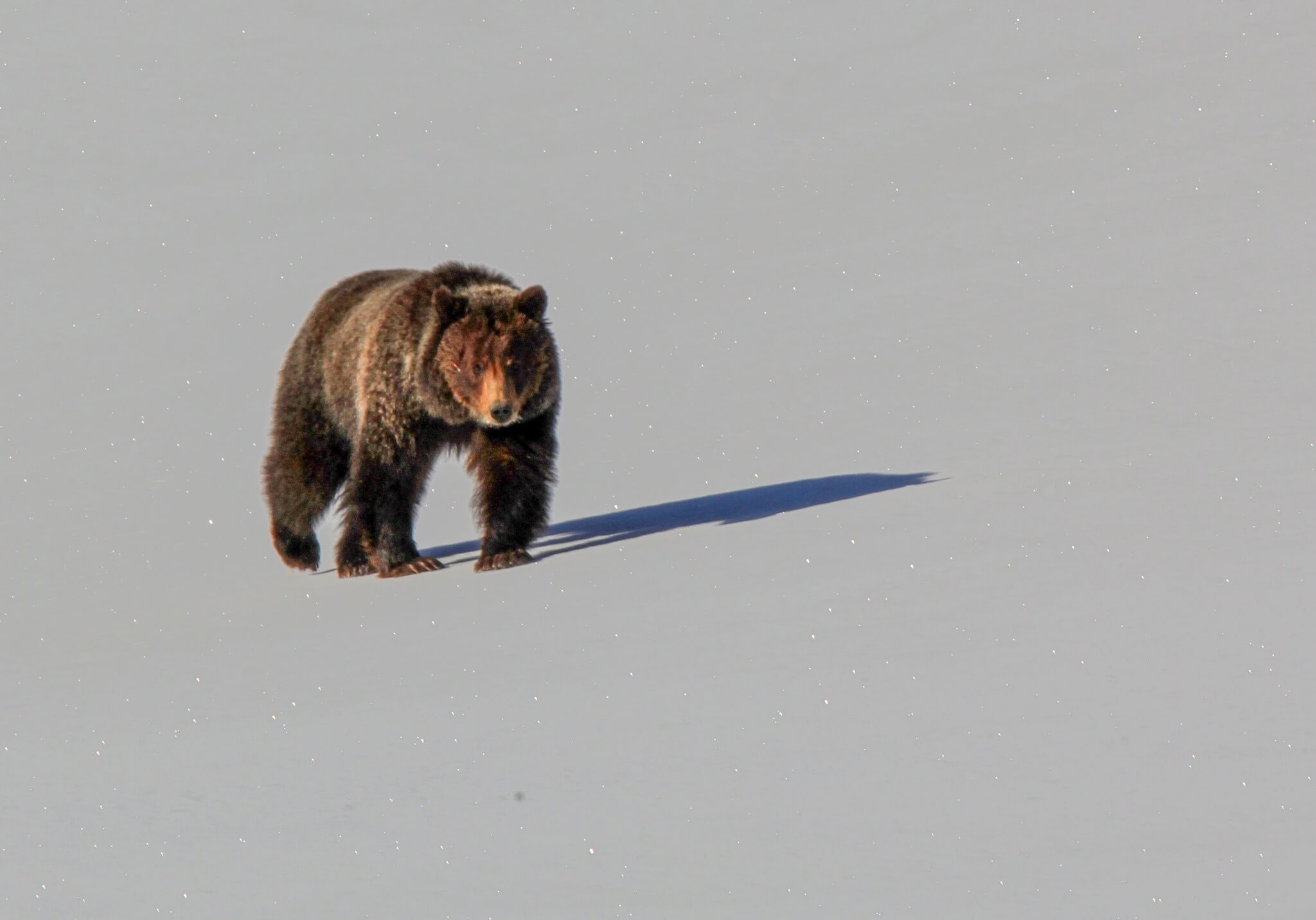
Physical Characteristics
Grizzlies are big, but size varies a great deal with food supply. In Yellowstone, males weigh about 200 to 700 pounds and females about 200 to 400 pounds, and adults stand roughly 3.5 feet tall at the shoulder on all fours. Standing upright, a large bear can reach about 8 feet. Grizzlies generally weigh 1.5 to 2 times as much as black bears of the same sex and age in the same region, and they can live 15 to 30 years.
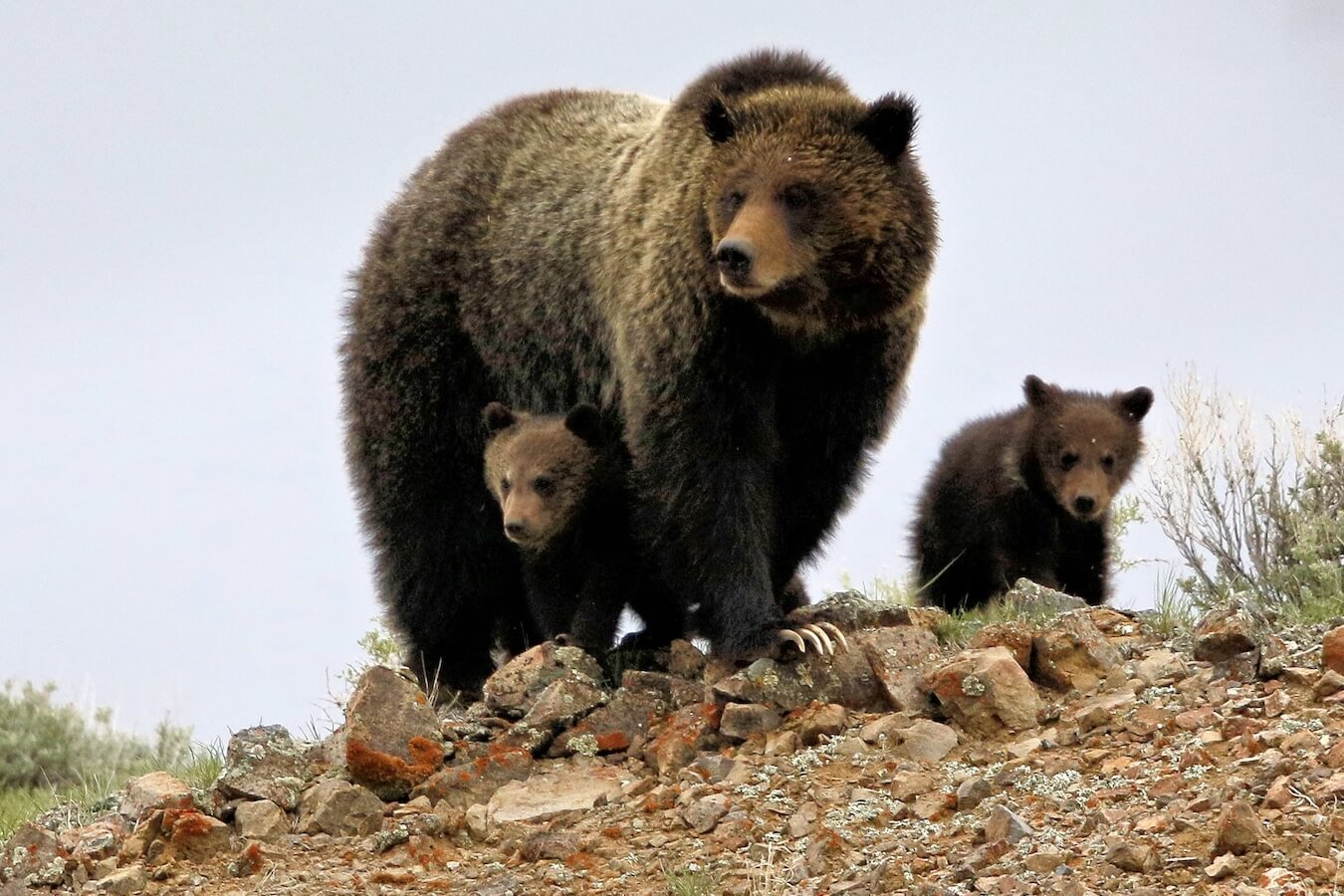
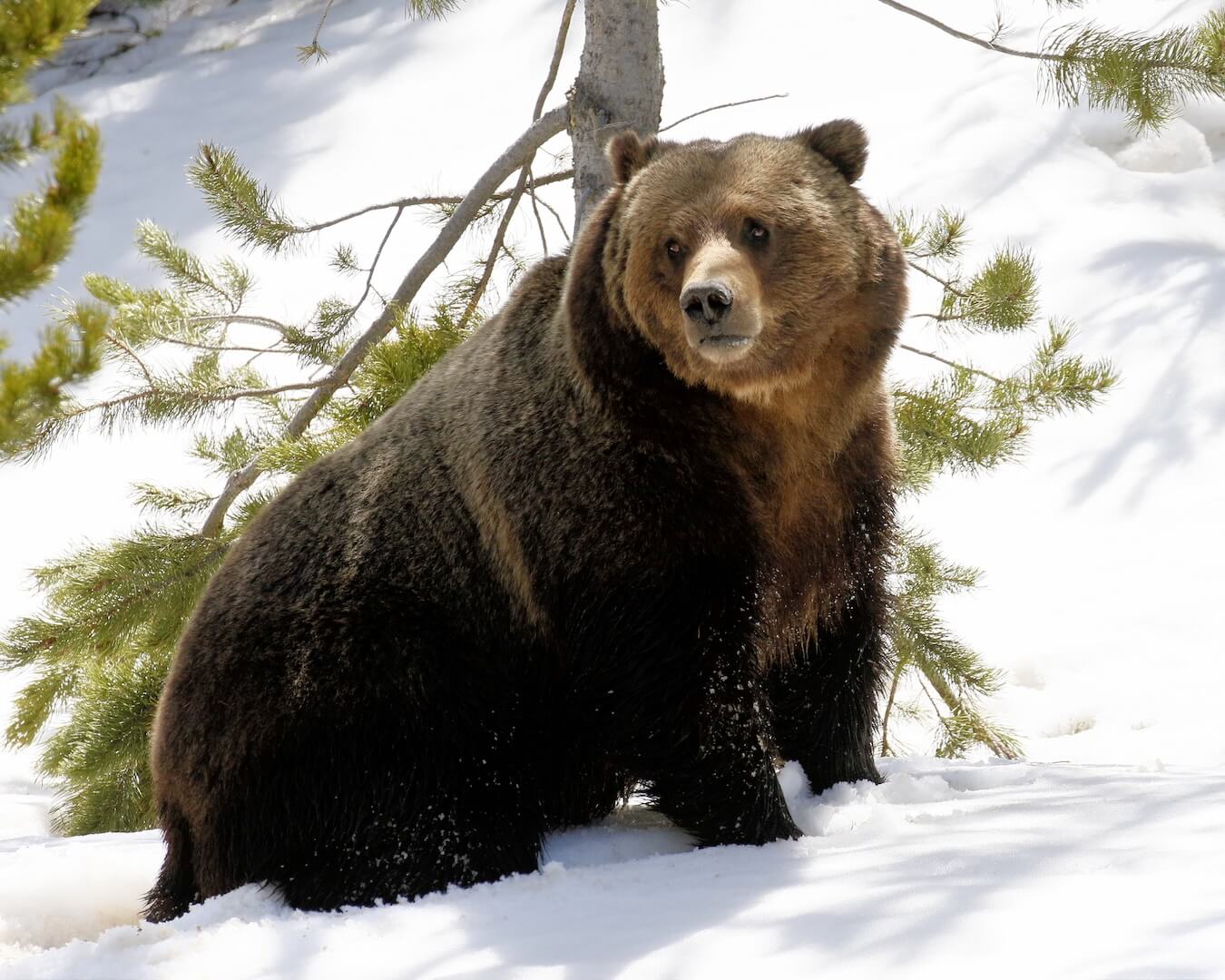
Color is not a reliable way to identify a grizzly. Their coats range from blond to nearly black, often with pale tips on the guard hairs that give the grizzled look behind the name. In greater Yellowstone, many grizzlies have a lighter brown band around the middle of the body. Black bears, meanwhile, can be brown, cinnamon, or even blond.
Instead, look at the shape of the bear:
- Shoulder hump: A large mound of muscle over the shoulders, which powers digging.
- Face: A dished, or concave, profile between the eyes and the end of the nose.
- Ears: Short and rounded, looking small for the size of the head.
- Claws: Long, light-colored, and only slightly curved, often more than 2 inches long on the front feet.
- Rump: Usually lower than the shoulders when the bear is standing on all fours.
Black bears, by contrast, have no hump, a straighter face profile, taller and more pointed ears, and short, curved claws suited to climbing. No single feature is foolproof, so it helps to look for several at once.
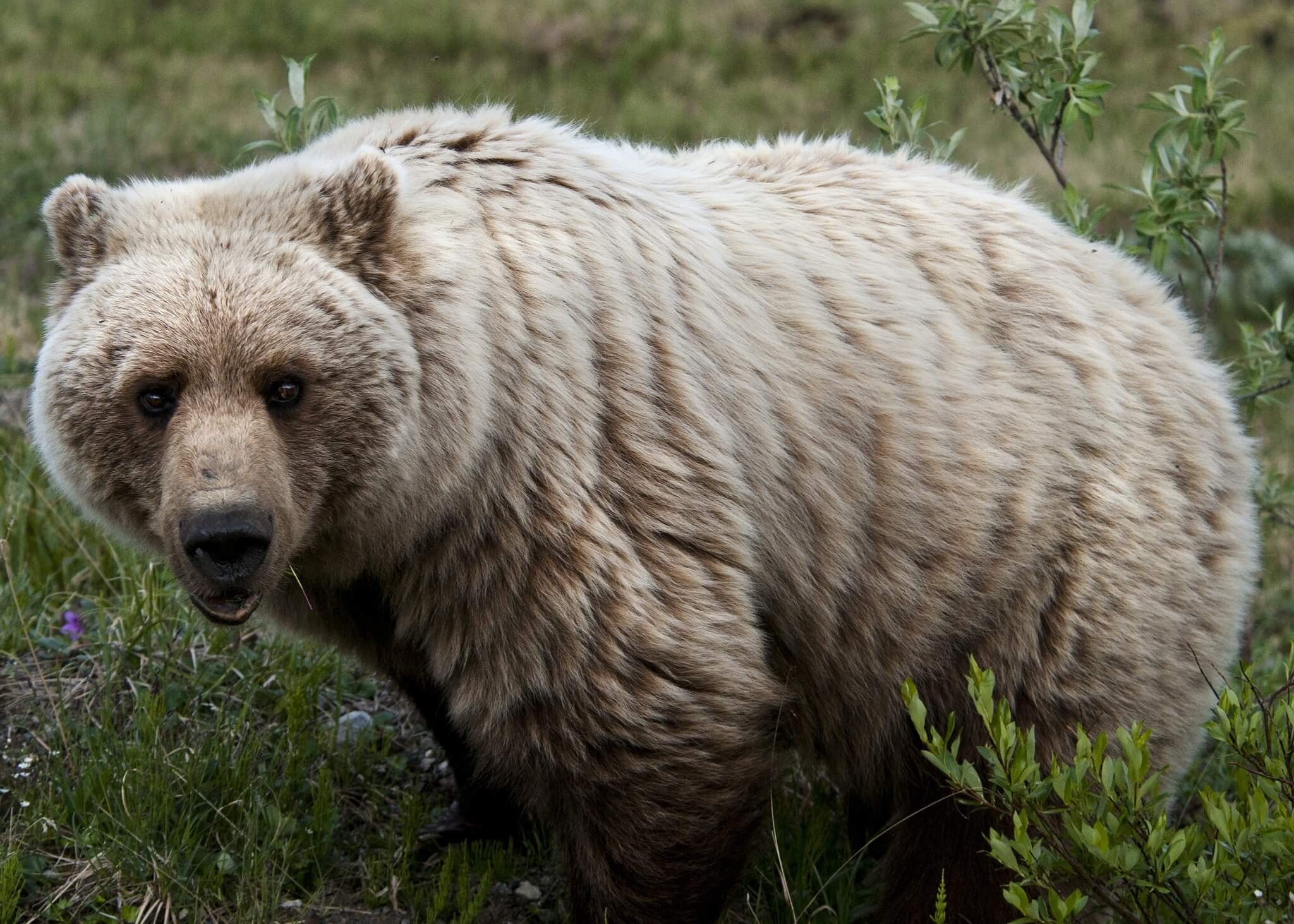
Grizzly or Brown Bear?
All grizzly bears are brown bears. The difference between the two names is mostly about place and diet rather than biology. In North America, “grizzly” usually refers to bears that live inland, in the mountains and interior, while “brown bear” usually refers to bears along the coast of southern Alaska. In Europe and Asia, the species is simply called the brown bear.
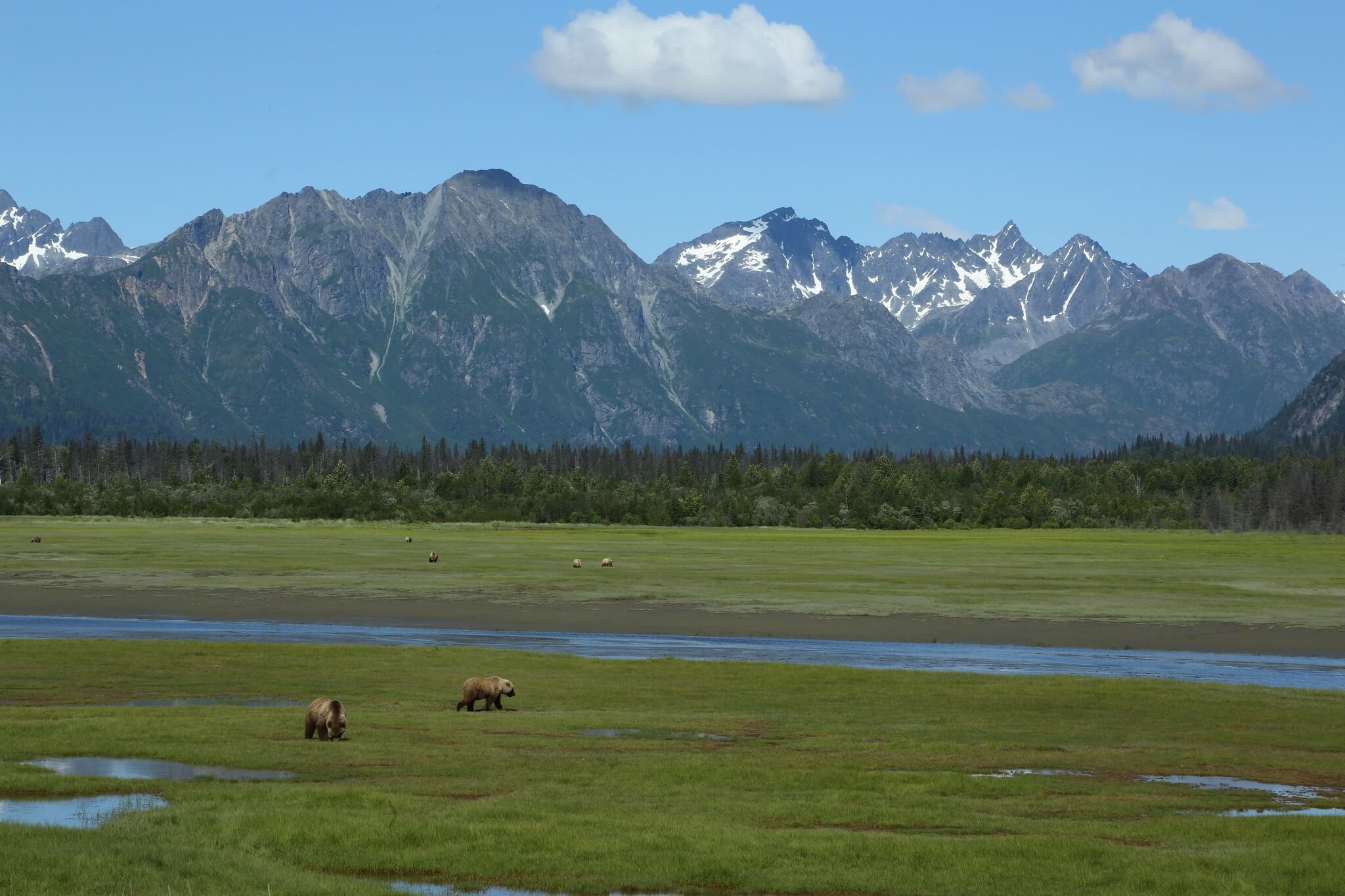
Coastal brown bears tend to be much larger than inland grizzlies. They feed on rich runs of salmon each summer and fall, and the extra fat and protein add up quickly. A coastal male in Katmai or Lake Clark can be far heavier than a grizzly of the same age in Yellowstone or Denali, where bears eat more plants, roots, and insects.
For park visitors, that difference shows up in the names on park pages. Denali, Glacier, Grand Teton, and Yellowstone usually call their bears grizzlies. Katmai, Lake Clark, and Kenai Fjords usually call them brown bears. They are the same species, and many park records simply list both names.
Habitat and Range
Grizzlies once lived across much of western North America, from the Great Plains to the Pacific coast and south into Mexico. Hunting, trapping, and settlement pushed them out of most of that range by the early 1900s. In the lower 48 states, they hold on in a handful of large areas:
- Greater Yellowstone Ecosystem: Yellowstone and Grand Teton National Parks and the surrounding national forests in Wyoming, Montana, and Idaho.
- Northern Continental Divide Ecosystem: Glacier National Park and the wild country to its south, home to the largest population in the lower 48.
- Smaller populations: The Cabinet-Yaak and Selkirk areas along the Canadian border, with very few bears.
Grizzlies use a wide range of habitats over the year. They feed in valley bottoms and on south-facing slopes in spring, move to high meadows and avalanche chutes in summer for plants and insects, and den on steep, often north-facing slopes where deep snow insulates them through winter. Home ranges can cover hundreds of square miles, especially for males.
The Greater Yellowstone population has grown from about 136 bears in 1975 to an estimated 1,030 in 2024, and occupied habitat has expanded by more than half. About 150 to 200 of those bears have home ranges partly or fully inside Yellowstone. In Alaska, brown bears are widespread and far more numerous, and they are found in every one of the state’s national parks.
Diet
Grizzlies are omnivores and opportunists. In greater Yellowstone alone, they are known to eat at least 266 kinds of plants and animals. Their diet shifts with the seasons:
- Spring: Elk, bison, and other animals that died over winter, plus roots, grasses, and newborn elk calves.
- Summer: Grasses, sedges, roots, thistle, ants, and army cutworm moths, which gather by the millions on high talus slopes.
- Late summer and fall: Berries such as huckleberry and buffaloberry, plus whitebark pine nuts that bears often take from red squirrel caches.
- Fish: Cutthroat trout in Yellowstone, and in Alaska, the huge salmon runs that support coastal brown bears.
Their long front claws and powerful shoulders make them very good diggers. A grizzly can tear up a hillside for roots, bulbs, and ground squirrels, leaving large patches of turned soil behind.
In late summer and fall, bears enter a period called hyperphagia, when eating becomes their main focus. They may gain more than 3 pounds a day as they build the fat reserves they need for winter. This is also the season when bears are most likely to be drawn to human food, so careful food storage matters more than ever.
Hibernation
Grizzlies spend the coldest months in dens. In greater Yellowstone, most bears enter their dens by mid-November, though some males stay active into December. Pregnant females den first and stay the longest. Females without cubs in greater Yellowstone average about five months in the den.
Dens are often dug on steep slopes where snow collects and insulates the chamber. A bear can finish digging a den in 3 to 7 days, moving as much as a ton of soil. Inside, the bear lines the floor with spruce boughs or other bedding.
During hibernation, a grizzly’s body slows dramatically:
- Heart rate: Drops from about 40 to 50 beats per minute in summer to 8 to 19 beats per minute.
- Breathing: Slows from 6 to 10 breaths per minute to about one breath every 45 seconds.
- Metabolism: Falls by roughly 50 to 60 percent.
- Body temperature: Stays within about 12°F of normal, so the bear can wake quickly if disturbed.
Bears usually do not eat, drink, urinate, or defecate during hibernation. They live on their fat and recycle the waste products of metabolism, which helps them keep their muscle and bone strength. Most come out of their dens from late March to early May, hungry and looking for winter-killed animals.
Mothers and Cubs
Grizzlies mate in late spring and early summer, but the fertilized egg does not implant right away. This delayed implantation means the pregnancy only continues in the fall if the female has built up enough fat. If she has, she gives birth in her den in mid-winter to one to three tiny cubs, which nurse and grow while she sleeps.
Cubs born that winter are called cubs of the year, or COYs. They come out of the den with their mother in spring, and she usually keeps them with her for two to three years. During that time she teaches them where to find food in each season and how to avoid danger, including other bears.
Female grizzlies reproduce slowly. Most do not have their first litter until they are 4 to 7 years old, and they may go three years or more between litters. That slow pace is one reason grizzly populations take so long to recover after a decline.
A sow with cubs is one of the most dangerous situations a visitor can face. Adult males sometimes kill cubs, and a mother will defend her young against any perceived threat, people included. Mothers with cubs often feed closer to roads and developed areas, possibly to avoid large males. That can make them easier to see, but it also means extra care is needed.
Recovery and Conservation
Grizzly bears in the lower 48 states have been listed as threatened under the Endangered Species Act since 1975. Recovery in greater Yellowstone and the Northern Continental Divide area has been a real success, and the U.S. Fish and Wildlife Service estimates that at least 1,923 grizzlies now live in the lower 48. Attempts to remove the Yellowstone population from the list in 2007 and 2017 were overturned in court, and federal rules for managing grizzlies are still under review.
The two largest populations carry most of that number. The Northern Continental Divide Ecosystem, which includes Glacier National Park, holds roughly 1,092 bears, and greater Yellowstone holds about 1,030. The smaller populations along the Canadian border remain fragile, and biologists watch closely for bears moving between ecosystems, since connected populations are healthier over the long run.
Alaska is a different story. Brown bears there were never listed, and the state is home to most of the brown bears in the United States. Large protected areas like Katmai, Lake Clark, and Denali give them room to live much as they always have.
Recovery has brought its own challenges. As grizzlies spread into places they have not lived in decades, they run into ranches, towns, and highways. Most bear deaths in greater Yellowstone are linked to people, through vehicle strikes, conflicts over livestock or food, and surprise encounters with hunters outside the parks.
Grizzlies and People
Most conflicts between bears and people start with food. A bear that gets human food or garbage can quickly learn to seek it out and may become aggressive. In greater Yellowstone, bears that become food-conditioned are removed from the wild. That is why parks require food, coolers, and scented items to be stored in bear-proof containers or vehicles.
Roadside bears bring their own problems. When a grizzly appears near a road, traffic can back up for miles, and people sometimes leave their vehicles and walk toward the bear. Rangers often manage these “bear jams” to keep both people and bears safe. Following their directions is part of the deal for a good view.
Bear spray is one of the most effective tools for preventing injury during a close encounter. It is recommended in grizzly country, and many park stores rent or sell it. Carry it where you can reach it quickly, and learn how to use it before you head out.
National Park Presence
Grizzly bears live in only a handful of the 63 designated U.S. National Parks. For photographers, grizzly and brown bears can be found in the following parks:
| Park Name | Occurrence | Abundance |
| Denali National Park and Preserve | Present – Native | Unknown |
| Gates of the Arctic National Park and Preserve | Present – Native | Common |
| Glacier Bay National Park and Preserve | Present – Native | Common |
| Glacier National Park | Present – Native | Uncommon |
| Grand Teton National Park | Present – Native | Common |
| Katmai National Park and Preserve | Present – Native | Unknown |
| Kenai Fjords National Park | Present – Native | Uncommon |
| Kobuk Valley National Park | Present – Native | Unknown |
| Lake Clark National Park and Preserve | Present – Native | Common |
| North Cascades National Park | Present – Native | Occasional |
| Wrangell-St. Elias National Park and Preserve | Present – Native | Unknown |
| Yellowstone National Park | Present – Native | Common |
According to National Park Service NPSpecies records, brown bears are listed as common in Gates of the Arctic, Glacier Bay, Grand Teton, Lake Clark, and Yellowstone and as uncommon in Glacier and Kenai Fjords. Denali, Katmai, Kobuk Valley, and Wrangell-St. Elias list abundance as unknown, even though Denali and Katmai are among the best places on the continent to see them. North Cascades National Park is listed as occasional, but it does not have a known resident population. The last confirmed grizzly sighting in the U.S. North Cascades was in 1996. A 2024 federal decision approved restoring grizzlies to the North Cascades Ecosystem, but as of this writing no bears have been moved there.

Grizzly Bear Photography Tips
Park pages and NPS photos point to several good places to look:
- Yellowstone: Hayden and Lamar Valleys at dawn and dusk, the north slopes of Mount Washburn, and the road from Fishing Bridge to the East Entrance.
- Grand Teton: The Oxbow Bend and Willow Flats areas, along with the park’s roadsides in spring and early summer.
- Denali: Open tundra along the park road, seen from a bus or other vehicle.
- Katmai: The Brooks Falls and Riffles platforms during the salmon runs of July and September.
- Lake Clark: Chinitna Bay and Silver Salmon Creek on the Cook Inlet coast, where bears graze sedges and dig clams.
Distance is not optional with grizzlies. Rules vary by park, so check before you go. Yellowstone and Grand Teton require you to stay at least 100 yards from bears. Denali requires 300 yards, and it prohibits photographing bears from closer than that unless you are in a vehicle or building. In Katmai, approaching any bear within 50 yards is prohibited except on designated viewing platforms. Never approach a bear for a better angle, and never get between a mother and her cubs. If a bear changes its behavior because of you, you are too close.
Timing matters. Early morning and evening are often the best times to find bears in the open, and the low light gives warmth to their coats. A long lens is essential, often 400 mm or more, and a teleconverter can help in places like Denali where bears are often far from the road. Shoot from a vehicle where it is legal and safe to stop, keep the engine off to reduce shake, and focus on behavior such as digging, fishing, or a mother leading her cubs. Watch the ears and posture. A bear that stares, huffs, or pops its jaws is stressed, and it is time to back away.
A telephoto lens is essential for photographing grizzly bears responsibly. If you already own or want to own a professional-grade mirrored camera like the Canon EOS 5D Mark IV Full Frame Digital SLR, we recommend using a Canon EF 100-400mm f/4.5-5.6L IS II USM Lens zoom lens for wildlife photography. If you have or are interested in a newer mirrorless model like the Canon EOS R5 Full-Frame Mirrorless Camera, we recommend using a Canon RF100-400mm F5.6-8 IS USM for long-distance shots.
Not quite ready to invest in traditional professional-grade camera equipment but want to enhance the quality of your cell phone photographs? Consider using a Moment Tele 58mm Mobile Lens II for improved reach, and use a Moment camera case with a lens mount to attach it to your phone. Since cell phones generally cannot provide the same reach as a dedicated telephoto camera lens, never compensate by moving dangerously close to wildlife.
No photograph is worth disturbing an animal or putting yourself or others at risk.
A Note About Grizzly Bear Taxonomy
Readers researching grizzly bears may encounter several scientific names. This page uses:
Ursus arctos horribilis
However, some National Park Service records and older references use the species name or other subspecies names, including:
Ursus arctos and Ursus arctos pruinosus
Glacier, North Cascades, and Yellowstone National Parks list grizzlies as Ursus arctos horribilis. Most Alaska parks use the species name Ursus arctos, and Katmai lists horribilis and pruinosus as synonyms. Older references once split North American brown bears into dozens of species and subspecies based on skull shape and size, but most of those names are no longer used. Today, most biologists recognize only a few North American subspecies, and the line between coastal brown bears and inland grizzlies is often drawn by habitat and diet rather than taxonomy.
For consistency throughout National Park Photographer, this page uses Ursus arctos horribilis for the grizzly while recognizing the other names visitors may encounter.
Final Thoughts
Grizzly bears are a sign of wild, healthy country. Where they live, there is still room for a large animal to wander, dig, fish, and raise its young over many square miles. Their slow return in places like Yellowstone and Glacier is one of the real conservation stories of the last 50 years.
Whether it’s a sow leading her cubs of the year across a Yellowstone meadow, a lone grizzly walking the tundra in Denali, or brown bears grazing the sedge flats at Chinitna Bay in Lake Clark, a grizzly sighting is something you will not forget. Carry bear spray, keep your distance, and be patient.
Want more information about the amazing wildlife that call our National Parks home? Take a look at our National Park Wildlife page to explore the various parks and the animals in them. Planning on visiting a National Park in the near future? Be sure to follow park regulations, practice Leave No Trace principles, and prioritize both your safety and the well-being of wildlife while exploring.
Joyful Journeys!
Bonnie, Co-Owner, National Park Photographer
Want to learn more about grizzly bears? Check out the additional resources below!
Grizzly Bear Books & Field Guides
- Grizzly 399: The World’s Most Famous Mother Bear
- Grizzly Years: In Search of the American Wilderness
- Peterson Field Guide to Mammals of North America
- Mammal Tracks & Sign: A Guide to North American Species
- 10×42 Binoculars for Wildlife Viewing
- Monocular for Wildlife Viewing
- Camera Bean Bag for Wildlife Photography
Please note, by making purchases through our affiliate links, you are supporting our mission to celebrate and showcase our National Parks and the photographers who frequent them. As an Amazon Associate, National Park Photographer earns from qualifying purchases at no cost to you. We appreciate your support.
References & Additional Resources
- National Park Service — Yellowstone National Park: Bears
- National Park Service — Yellowstone National Park: Grizzly Bears, Ultimate Omnivores of the Greater Yellowstone Ecosystem
- National Park Service — Glacier National Park: Bears
- National Park Service — North Cascades National Park: Grizzly Bears
- National Park Service — Lake Clark National Park and Preserve: Bear Viewing
- National Park Service — Katmai National Park and Preserve: Bear Safety in Katmai
- National Park Service — Denali National Park and Preserve: Wildlife Safety
- National Park Service — Staying Safe Around Bears
- U.S. Fish and Wildlife Service — Grizzly Bear
- U.S. Fish and Wildlife Service — North Cascades Grizzly Bear Restoration
- Montana Field Guide: Grizzly Bear
- National Park Service — NPSpecies Species Search
Do you want to be featured on National Park Photographer?
Why wait! Contact us today at nationalparkphoto@gmail.com for a chance to be a Featured National Park Photographer!