American bison (Bison bison) are the largest land mammals in North America and one of the most recognizable animals in our National Parks. The herds in the parks featured here are plains bison (Bison bison bison), one of two subspecies. A bull can weigh up to 2,000 pounds, yet bison can hit 35 miles per hour, swim well, and leap barriers about five feet tall. In 2016, the bison was designated our National Mammal.
Bison are also among the greatest comeback stories in American conservation, and National Parks are at the center of it. Tens of millions of bison once roamed North America. By 1900, fewer than a thousand were left. Yellowstone sheltered the last wild, free-ranging herd in the lower 48 states, and parks such as Wind Cave, Theodore Roosevelt, and Badlands helped bring bison back to the Great Plains. Today, plains bison can be seen in Yellowstone, Grand Teton, and several other parks across the West.
Learning about animals like plains bison can significantly enhance wildlife photography skills by providing valuable insights into animal behavior, habitat, and physical characteristics. Understanding an animal’s habits can allow photographers to better anticipate and capture unique and authentic moments. Knowledge of an animal’s habitat may also help in selecting the best locations and times for wildlife viewing and photography, while familiarity with physical characteristics is essential for accurately identifying wildlife in the field. If wildlife photography or simply wildlife viewing are of interest to you, then you’ve come to the right place! Together, let’s learn more about what makes plains bison so special.
Physical Characteristics
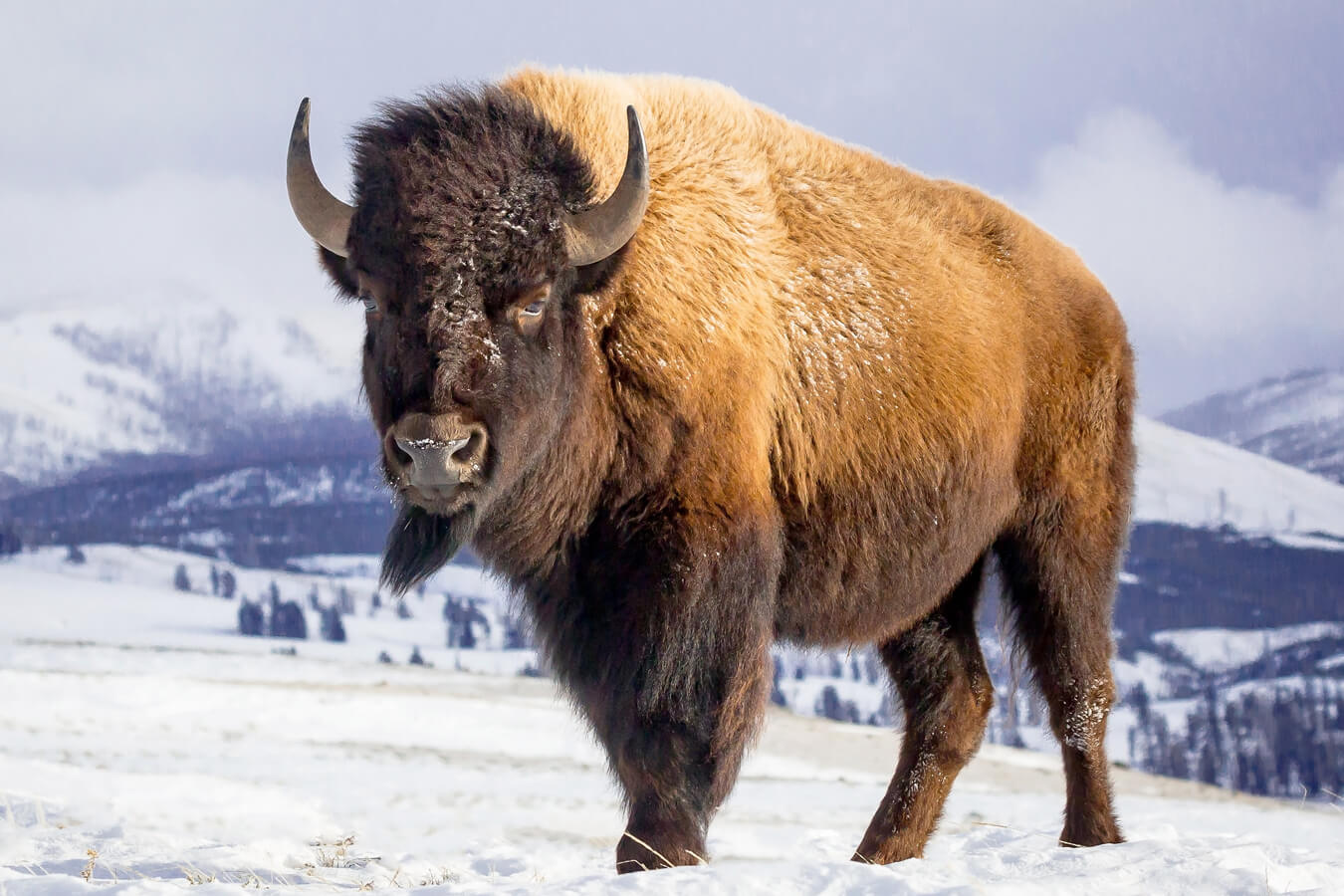
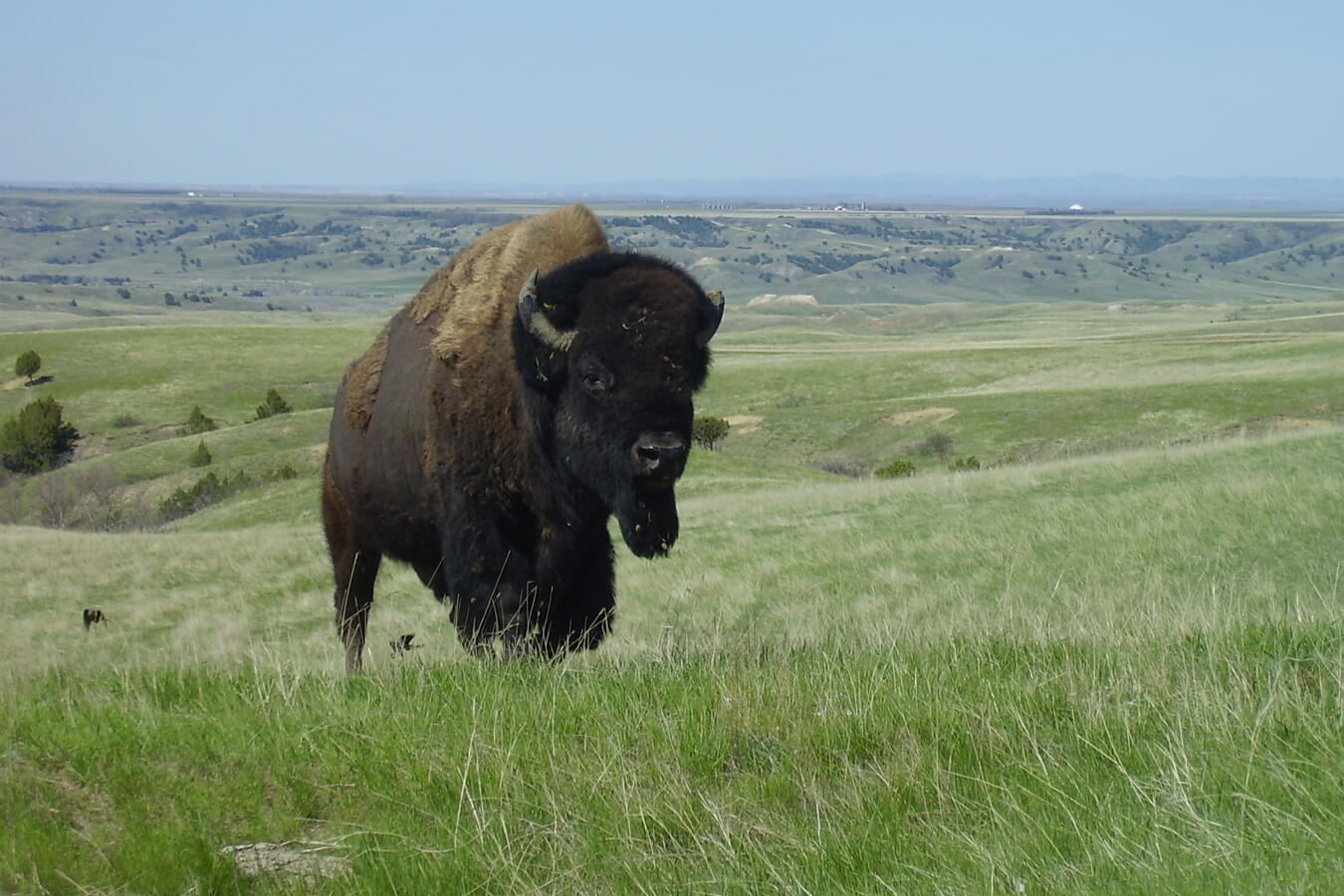
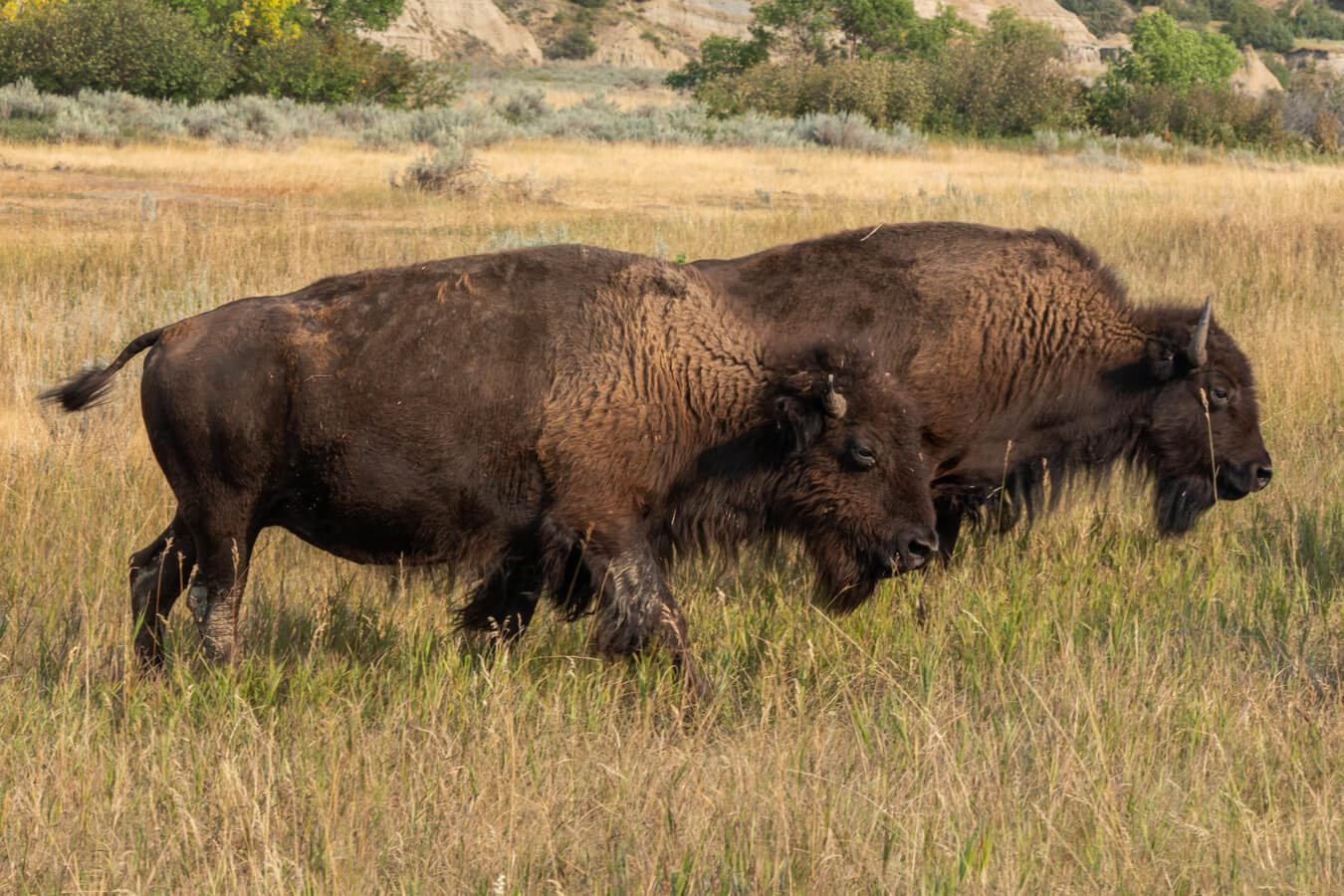
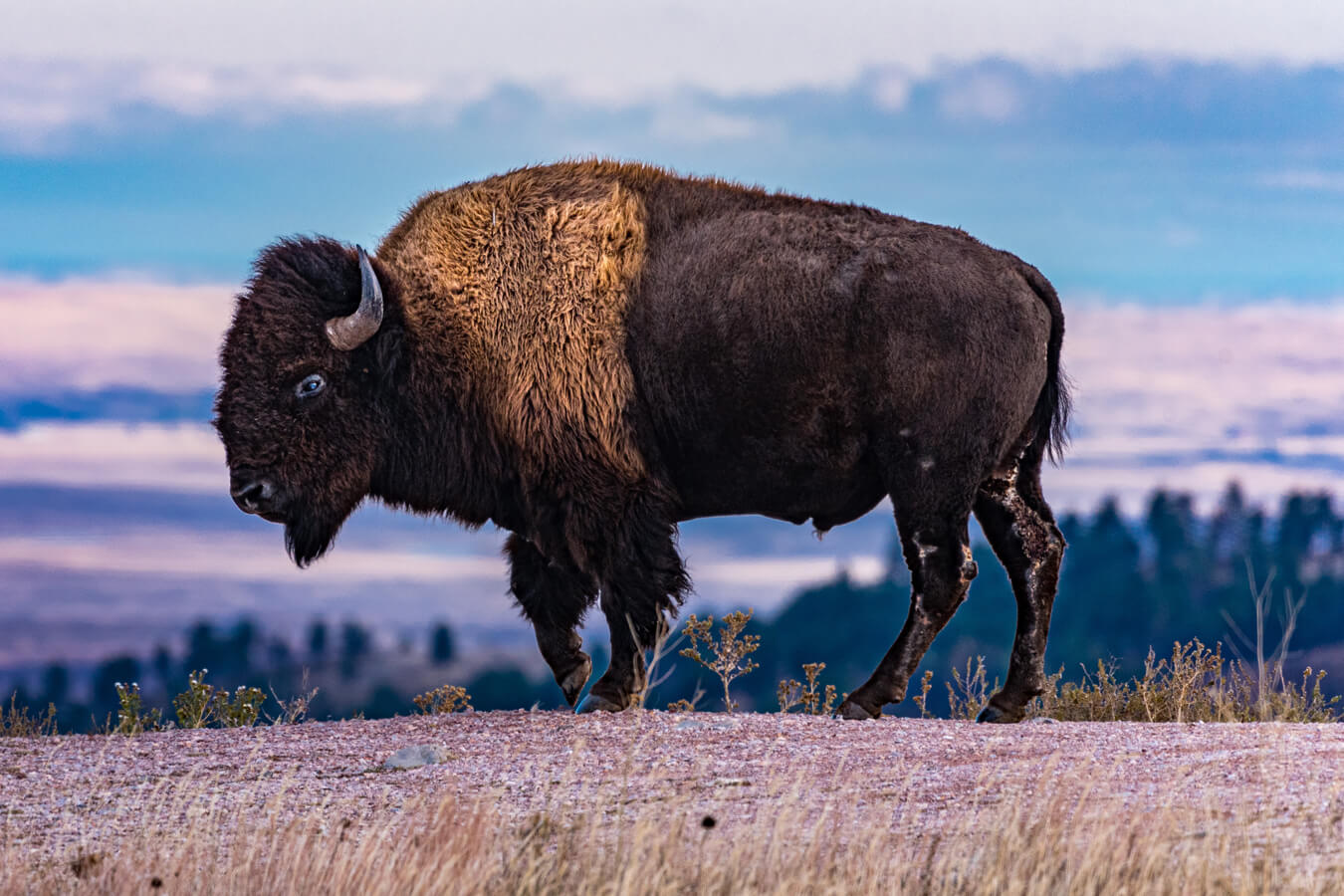
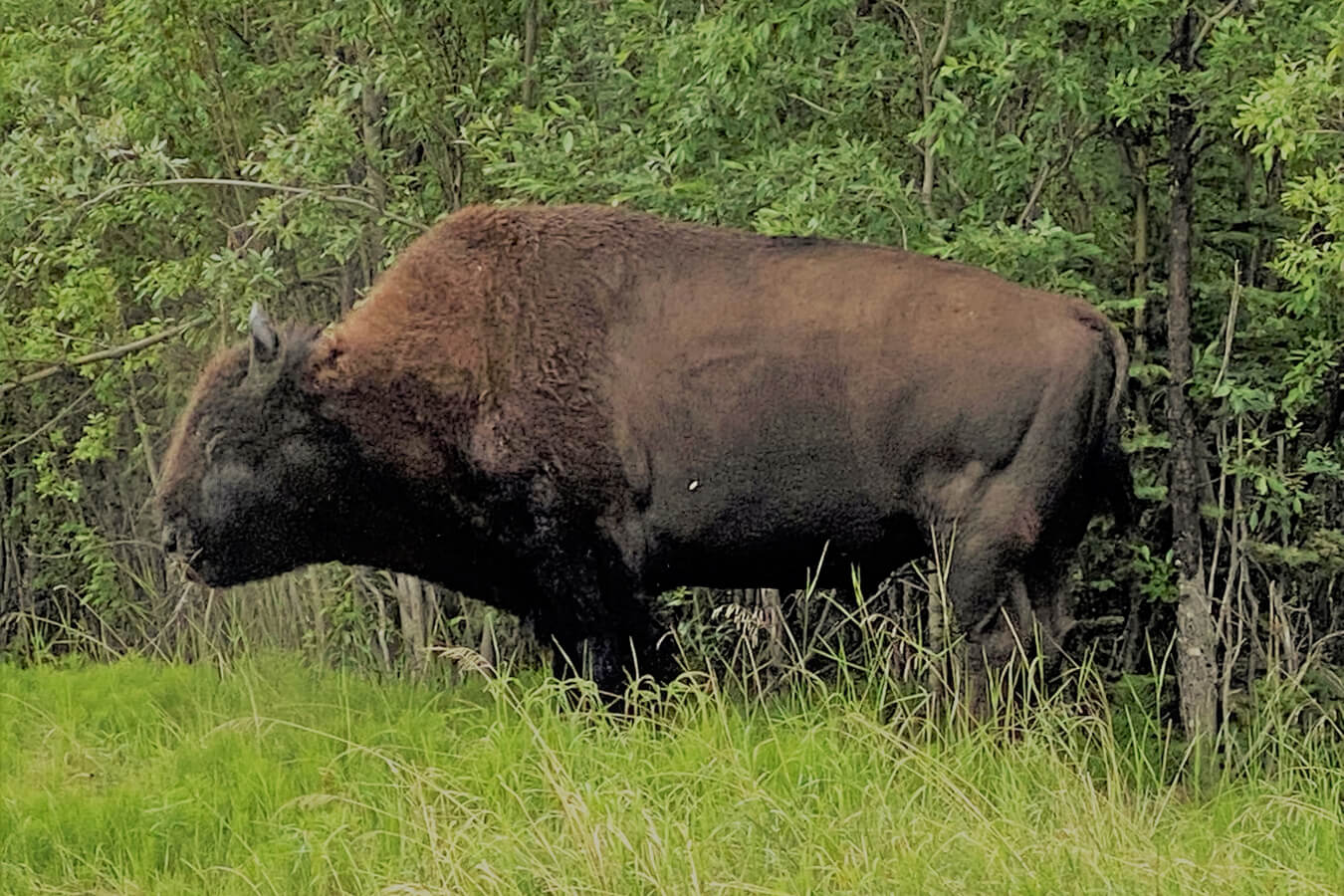
No land mammal in North America outweighs the bison. A big bull may reach 2,000 pounds. Cows weigh about 1,000 pounds. Both are generally dark chocolate-brown, with long hair on the head, shoulders, and forelegs and short, dense hair about an inch long on the flanks and hindquarters.
The hump is a bison’s most distinctive feature. It is made of muscle supported by long vertebrae, and it lets a bison swing its massive head from side to side to sweep snow away from the grass beneath. Other hoofed animals in Yellowstone scrape snow with their front feet instead. Both sexes have short, upward-curving horns. A bull’s head is wider and more triangular, with thicker fur on the forehead and forelegs and a heavier beard. Cows carry thinner horns with a bit more curve, and their shoulders are narrower than their hips.
Bison are far more athletic than they look. They are nimble, strong swimmers, fast enough to reach 35 miles per hour, and able to jump objects roughly five feet high. They also have excellent hearing and sense of smell. Winter protection comes from thick skin, fat reserves, a dense underfur, and long outer guard hairs. In spring they shed that coat, and at Wind Cave they often rub against signs, trail markers, and fence posts to work loose fur free.
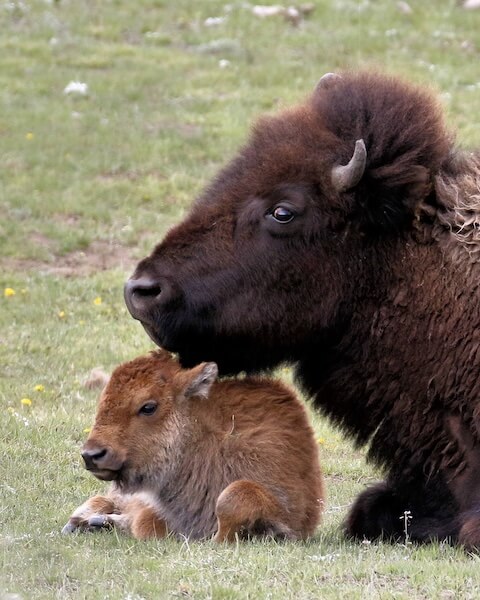
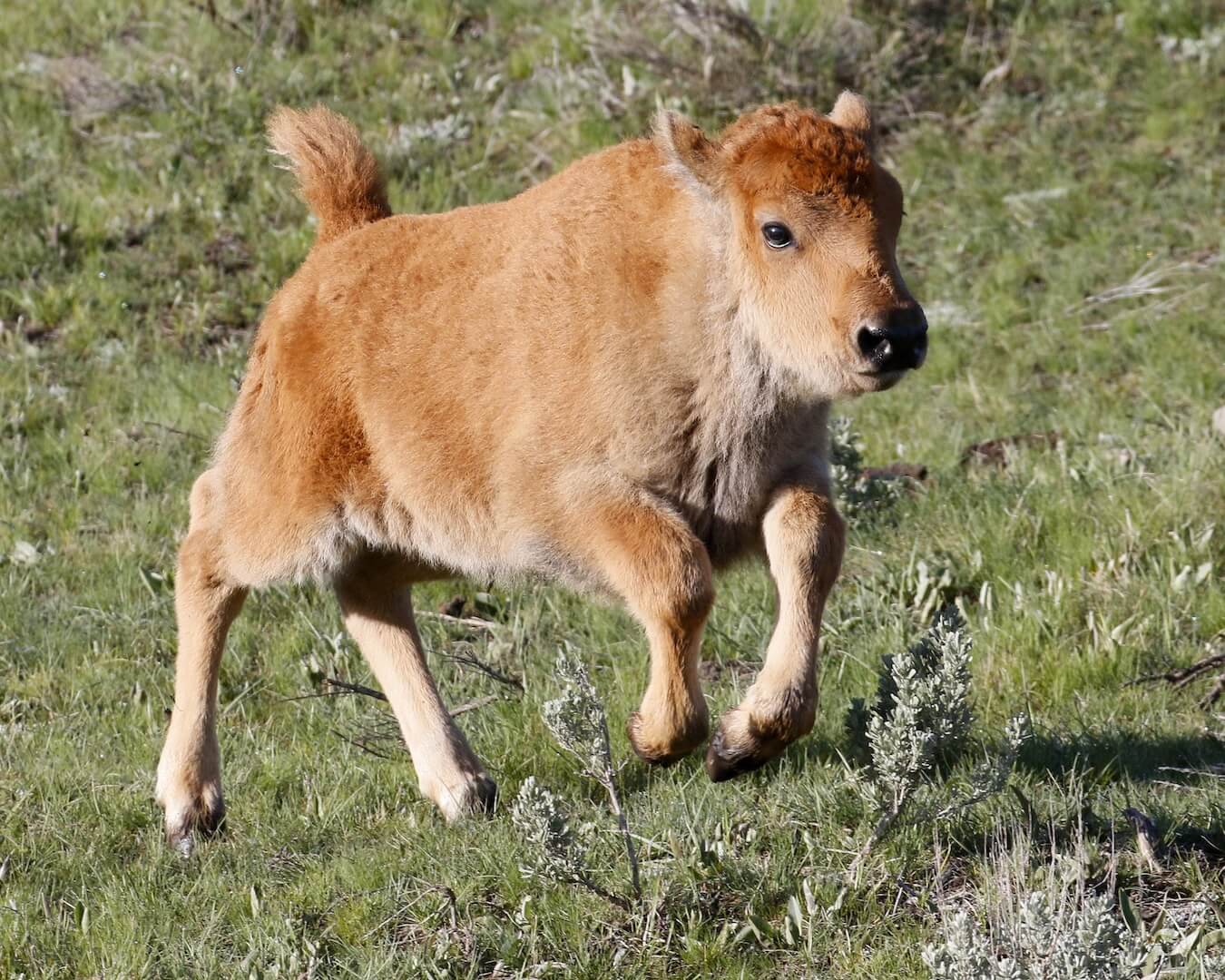
Calves look quite different from adults. Newborns are a reddish tan with no hump yet, and their coats start darkening to brown when they are around two and a half months old. Newborns generally weigh 30 to 70 pounds.
Habitat and Distribution
Before European settlement, bison had the largest range of any native large grazing animal in North America. They ranged from northern Mexico to interior Alaska and from California to New York and Georgia. The greatest numbers lived on the Great Plains.
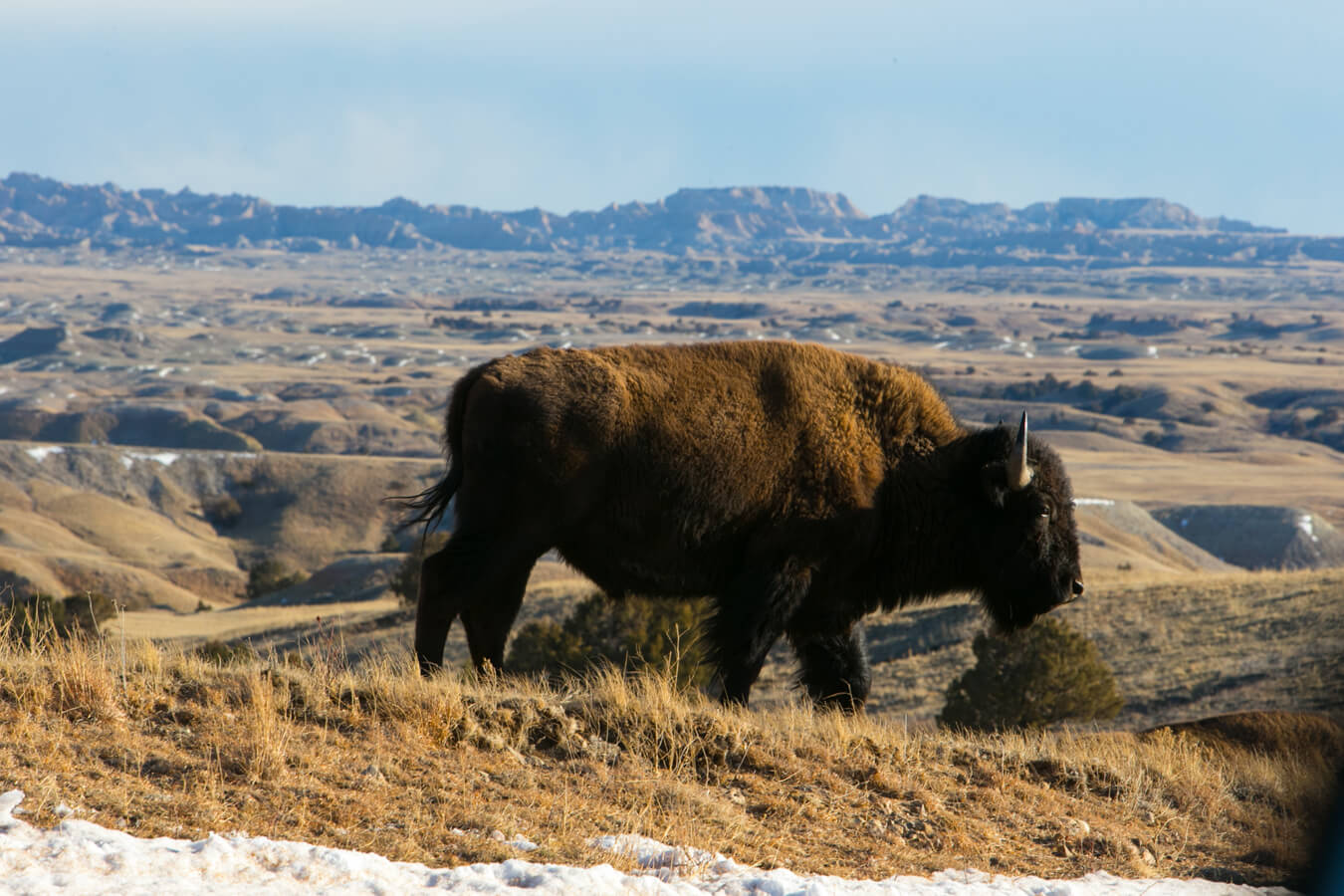
Plains bison favor open grasslands, wet meadows, and sage-steppe, but they adapt to a wide range of landscapes. In Yellowstone, their original range covered about 7,720 square miles where the Yellowstone and Madison rivers begin. Today, Yellowstone’s bison are split into two main breeding herds. Lamar Valley and the plateaus around it are the northern herd’s breeding grounds. The central herd breeds in Hayden Valley. Recent counts have swung between about 3,500 and nearly 6,000 animals, and the 2025 estimate came in just under 5,300.
Yellowstone bison are migratory. As snow piles up, they move from summer ranges to lower winter ranges, traveling up to 70 miles between them. Over a year, most cover about 1,000 miles, moving away from and back to the same areas again and again, farther than any other hoofed animal in the Greater Yellowstone Ecosystem.
Elsewhere, bison live in smaller, actively managed herds on the northern Great Plains, including Theodore Roosevelt, Wind Cave, and Badlands. On the North Rim of Grand Canyon, the Kaibab Plateau herd ranges across the park and the neighboring North Kaibab National Forest. In Alaska, Wrangell-St. Elias supports two free-ranging herds of introduced plains bison, known as the Copper River and Chitina River herds.
Behavior and Social Structure
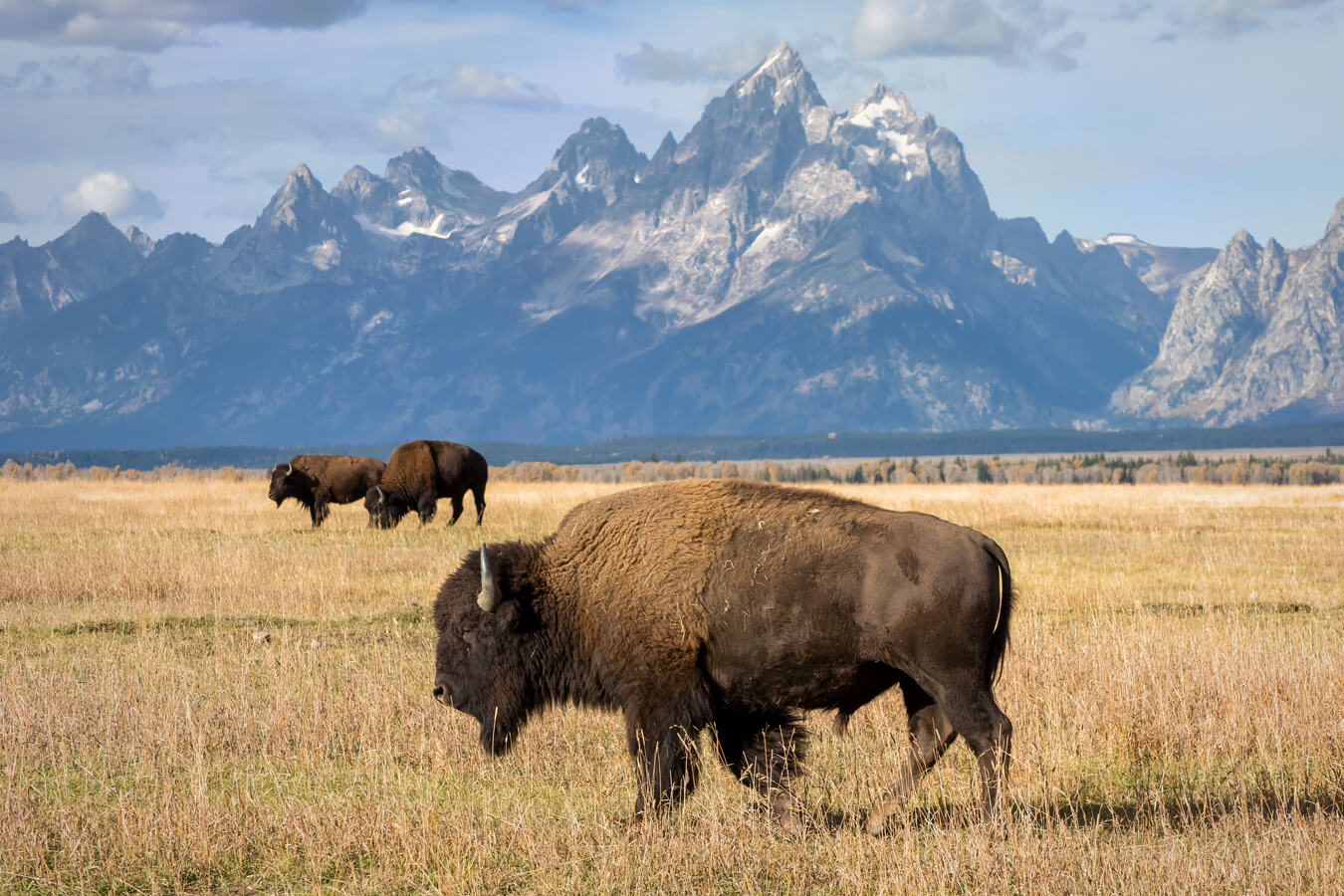
Bison live in groups, and older cows seem to set the direction for the herd. In Yellowstone, groups shrink to around 20 animals in winter, swell to roughly 200 in summer, and may top out near 1,000 during the rut. For much of the year, adult bulls live on their own or in small bull groups.
Timing of the rut, or breeding season, differs by park. In Yellowstone it runs from late July through August, while at Wind Cave National Park it stretches from late June to early September and is busiest in July and August. Bulls return to the herd and assert themselves by bellowing, rolling in wallows, and sparring with rivals. Once a bull finds a cow close to breeding, he stays beside her until she is ready to mate, then moves on. Bison are sexually mature at two, but bulls older than seven do most of the breeding.
After a pregnancy of nine to nine and a half months, cows give birth in late April or May. They can keep up with the herd within two to three hours, and mothers and other herd members guard them closely. A calf remains at its mother’s side for roughly its first year. In the wild, bison live 12 to 15 years, and a few reach 20.
Wallowing is one of the most entertaining bison behaviors to watch. Bison roll in dry, loose ground to deter biting flies, remove shedding fur, and leave their scent. During the rut, bulls wallow to show off their strength. Bison vocalize with everything from piglike grunts to angry bellows.
Diet and Foraging
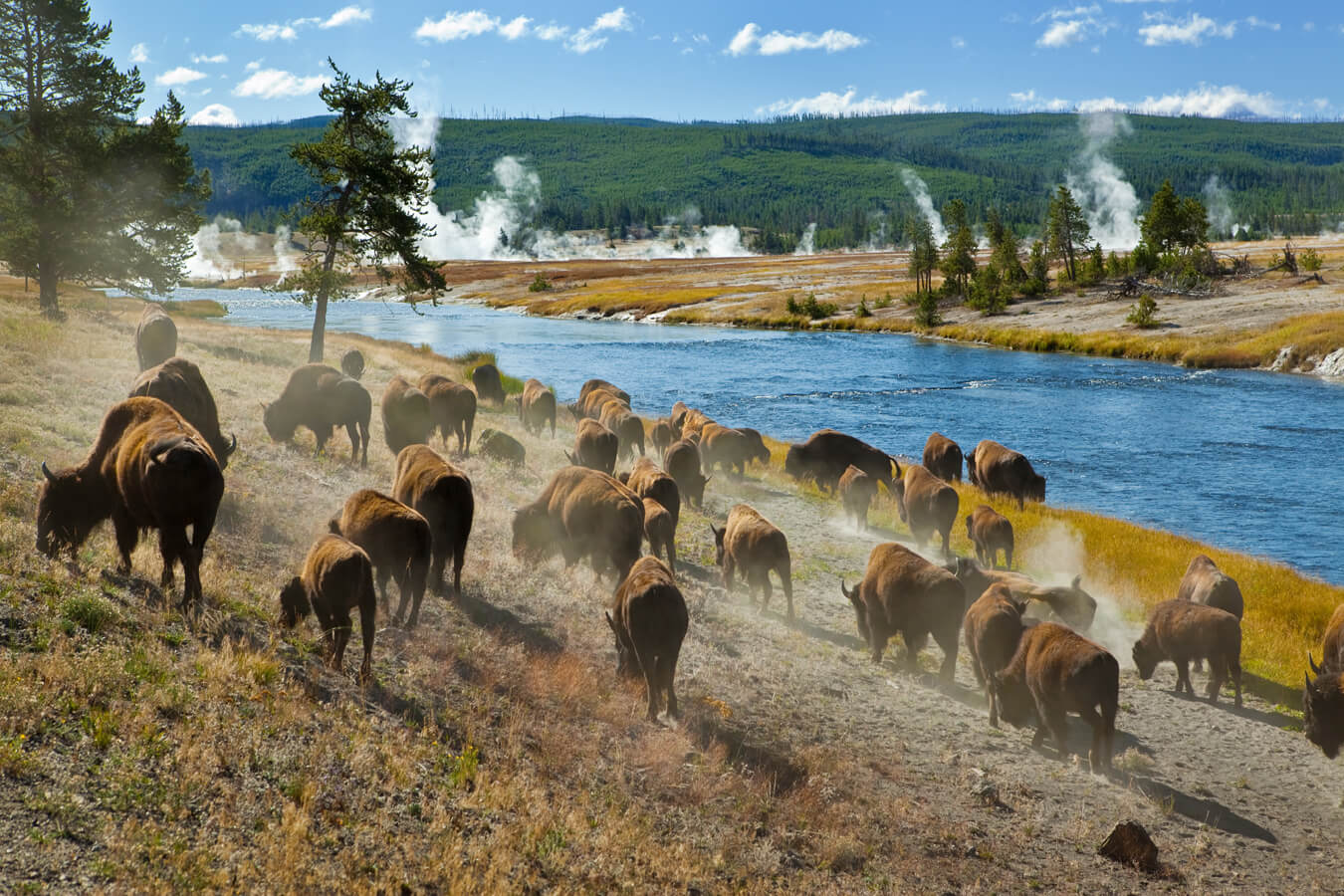
Bison are grazers. Year-round, more than 90 percent of a Yellowstone bison’s diet is grasses, sedges, and similar plants. Forbs and woody browse usually make up less than five percent.
Feeding takes most of the day. Yellowstone bison usually spend 9 to 11 hours a day feeding. Like cattle, they are ruminants with a multi-chambered stomach that relies on microorganisms to break down plants. They alternate between eating and chewing their cud. A large digestive system helps them get more out of poor forage than cattle, deer, or elk can.
Winter is the hardest season. Bison use their heads like snowplows to clear snow from grass. In Yellowstone, an average of 9 of every 100 adult bison die during winter, usually animals already weakened by age, disease, or injury. Calves have it harder: accidents, winter weather, or predators claim 20 to 40 out of every 100 in their first year.
Bison also shape their own food supply. In spring, many hoofed animals follow the “green wave” of new plant growth uphill. Yellowstone’s bison start out with it but then let it pass, returning to graze the same areas over and over. That repeated grazing keeps plants growing and nutritious.
Role in the Ecosystem
Few animals have shaped North American landscapes as much as bison. No other large grazer on the continent shaped the variety and workings of its ecosystems as much as the bison did. Their movement, grazing, and wallowing created a patchwork of vegetation and soils that benefited many other plants and animals. Seeds caught in their coats dropped in new places, and insects and bacteria broke down their dung, returning nutrients to the soil.
Bison also feed other wildlife. In Yellowstone, the only big predators able to take adult bison are wolves and grizzly bears, and dead bison are an important food source for scavengers and other carnivores. Magpies perch on bison to pick off insects, and cowbirds follow close behind to catch insects stirred up by their steps. Even so, predators barely dent the herd’s numbers. Instead of fleeing, bison usually stand their ground together, so they are tougher prey than animals that bolt.
Disease complicates bison management. Brucellosis, a livestock disease, is present in some Yellowstone bison, and contact with infected birth tissue can spread it to other bison, elk, or cattle. Because ranching surrounds the park, the National Park Service and its federal, state, and tribal partners decide together where bison can range in Montana.

From Near Extinction to Recovery
The near extinction of bison is one of the darkest chapters in American wildlife history. Before the mid-1800s, North America may have held somewhere between 30 and 60 million bison. Market hunters and the U.S. Army killed millions of them for their hides from 1800 to 1890, destroying the animals at the center of Plains Indian life. By 1900, fewer than a thousand bison were left on the continent.
Yellowstone held the last of them. Nowhere else in the lower 48 did wild, free-ranging bison last into the twentieth century, and poachers cut that herd to about two dozen animals by 1902. That year, the U.S. Army bought 21 bison from two private herds, keeping them first at Mammoth and then at the Lamar Buffalo Ranch. These animals eventually mixed with the wild herd. Many people see the comeback of Yellowstone’s bison as a landmark win for American conservation.
Other parks rebuilt herds from scratch. The Wind Cave herd got its start in 1913, when the American Bison Society sent 14 bison from the New York Zoological Gardens, now the Bronx Zoo. Six more came from Yellowstone in 1916, and Wind Cave’s herd descends from those animals. Theodore Roosevelt had no bison when it was founded. In 1956, the South Unit received 29 bison from Nebraska’s Fort Niobrara National Wildlife Refuge, and in 1962, 20 of their descendants started the North Unit herd. In 1963, 50 bison from Theodore Roosevelt helped establish the Badlands herd, which now numbers more than 1,000.
These herds now help restore bison elsewhere. Badlands has sent 4,782 live bison to more than 29 tribes since 1969. Theodore Roosevelt has relocated 3,752 bison since 1956. Today, about 30,000 bison live in conservation herds, while around 500,000 more are raised on commercial ranches.
Plains Bison Safety
Bison may look slow and calm, but they are unpredictable and fast. In Yellowstone, bison have injured more people than any other animal, and they can run three times faster than a human. Always follow the wildlife distance rules of the park you are visiting. In Yellowstone, the rule is 25 yards or more from any bison. The National Park Service’s bison program recommends 100 feet, about two bus lengths, and suggests viewing from inside your vehicle when bison are within 100 feet of the road.
Learn the warning signs. A threatened bison may raise its tail, bluff charge, bob its head, paw the ground, bellow, or snort. Any of these means you are too close, and a charge could come next. Do not stand your ground. Walk or run away immediately. At Wind Cave, bison are more aggressive during calving and the rut, from May through August.
Drive carefully in bison country. Bison often walk on or beside park roads. Stay in your vehicle, drive slowly, and wait patiently instead of honking or pushing through a herd. Their size and dark color make them hard to see at night. Use established pullouts and park completely off the road. Never feed bison or approach a calf.
National Park Presence
Plains bison are most closely tied to the parks of the Great Plains and the northern Rockies. For photographers visiting the 63 designated U.S. National Parks, these parks have NPSpecies records of bison as present:
| Park Name | Occurrence | Abundance |
| Badlands National Park | Present – Native | Common |
| Capitol Reef National Park | Present – Native | Rare |
| Grand Canyon National Park | Present – Native | Abundant |
| Grand Teton National Park | Present – Native | Common |
| Great Sand Dunes National Park and Preserve | Present – Native (NPS reports about 2,000 bison managed within park boundaries on land owned by The Nature Conservancy, an area closed to the public; source: NPS) | Not recorded |
| Theodore Roosevelt National Park | Present – Native | Common |
| Wind Cave National Park | Present – Native | Common |
| Wrangell-St. Elias National Park and Preserve | Present – Non-native | Unknown |
| Yellowstone National Park | Present – Native | Abundant |
According to National Park Service NPSpecies records, bison are Abundant in Yellowstone and Grand Canyon and Common in Grand Teton, Badlands, Theodore Roosevelt, and Wind Cave. Wrangell-St. Elias lists its bison as non-native, reflecting herds introduced from elsewhere in Alaska. NPSpecies also lists wood bison as Present Adjacent to Wrangell-St. Elias.
Many other parks list bison as historical, meaning they once lived there but are no longer present. These include Glacier, Rocky Mountain, Denali, and Great Smoky Mountains. Great Sand Dunes is a different case: about 2,000 bison live inside the park boundary, managed on a Nature Conservancy property that visitors can’t enter.
Plains Bison Photography Tips
Bison are among the easiest large mammals to find in our National Parks, which makes it easy to forget safety. In Yellowstone, try the Hayden and Lamar valleys year-round, grasslands in summer, and thermal areas and the Madison River in winter. In Theodore Roosevelt, bison are readily visible along the South Unit scenic drive. At Wind Cave, look on Bison Flats, near prairie dog towns, and where fire has recently burned. Bison often cross Highway 385, causing “bison jams.” Bison from the Jackson herd are often seen in large groups from roadside vantage points in Grand Teton.
Seasons change the story. Spring brings shaggy, shedding adults and orange calves. Midsummer brings the rut, with bellowing bulls, dust-filled wallows, and the year’s largest herds. Winter turns bison into frosted shapes in steam and snow, especially in Yellowstone’s thermal basins. Watch for behavior, too. Rolling, sparring, and a calf nursing usually make stronger images than a bison simply grazing.
A telephoto lens is essential for photographing plains bison responsibly. If you already own or want to own a professional-grade mirrored camera like the Canon EOS 5D Mark IV Full Frame Digital SLR, we recommend using a Canon EF 100-400mm f/4.5-5.6L IS II USM Lens zoom lens for wildlife photography. If you have or are interested in a newer mirrorless model like the Canon EOS R5 Full-Frame Mirrorless Camera, we recommend using a Canon RF100-400mm F5.6-8 IS USM for long-distance shots.
Not quite ready to invest in traditional professional-grade camera equipment but want to enhance the quality of your cell phone photographs? Consider using a Moment Tele 58mm Mobile Lens II for improved reach, and use a Moment camera case with a lens mount to attach it to your phone. Since cell phones generally cannot provide the same reach as a dedicated telephoto camera lens, never compensate by moving dangerously close to wildlife.
No photograph is worth disturbing an animal or putting yourself or others at risk.
Why Are They Called Bison and Buffalo?
On this continent, “bison” and “buffalo” name the same animal, the American bison. “Buffalo” is the casual term and “bison” the one favored in formal and scientific writing. Historians believe “buffalo” grew from the French word for beef, “boeuf.” One version traces it from early French explorers’ “les boeufs” through “buffle” and “buffelo” to “buffalo.” Some people argue “buffalo” is wrong because the true buffalo of Africa and Asia are only distant cousins.
Native peoples have many names for bison. Among them are “tatanka,” the Lakota word, along with “pezhekee” and “iinii.” “Plains” separates this subspecies from the larger wood bison of the north.
A Note About Plains Bison Taxonomy
Readers researching plains bison may encounter more than one scientific name for the same animal. This page uses:
Bison bison bison
However, some National Park Service records identify bison as:
Bos bison
The National Park Service recognizes two subspecies in North America: plains bison (Bison bison bison) and wood bison (Bison bison athabascae). Plains bison are generally smaller, with a smaller, more rounded hump, and have historically lived farther south. Wood bison are suited to the northern forests and meadows of Alaska and Canada, while plains bison formed the great herds of the Great Plains.
NPSpecies records show the naming debate. Some parks list Bison bison, while others, including Grand Teton, Theodore Roosevelt, and Wind Cave, file their records as Bos bison, which places bison in the same genus as cattle. For consistency throughout National Park Photographer, this page uses Bison bison bison while recognizing the other names visitors may encounter.
Final Thoughts
Plains bison are among the most powerful symbols of our National Parks. A herd moving across the Lamar Valley, a bull bellowing during the summer rut, or a calf pressed against its mother’s side connects visitors to a landscape that once held tens of millions of these animals.
They are also a reminder of how close we came to losing them. A few dozen wild bison in Yellowstone, a train full of bison from New York to Wind Cave, and small herds moved between parks helped bring the species back. Today, parks such as Badlands and Theodore Roosevelt send bison to tribes and conservation herds across the country, carrying that recovery forward.
Seeing bison up close is easy, which is exactly why it requires care. By keeping our distance, staying in our vehicles when bison are near the road, watching for warning signs, and using telephoto lenses rather than moving closer, photographers and visitors can enjoy bison without becoming another injury statistic. Keeping your distance protects you and lets bison go on behaving like the wild animals they are.
Want more information about the amazing wildlife that call our National Parks home? Take a look at our National Park Wildlife page to explore the various parks and the animals in them. Planning on visiting a National Park in the near future? Be sure to follow park regulations, practice Leave No Trace principles, and prioritize both your safety and the well-being of wildlife while exploring.
Joyful Journeys!
Bonnie, Co-Owner, National Park Photographer
Want to learn more about plains bison? Check out the additional resources below!
Plains Bison Books & Field Guides
- American Buffalo: In Search of a Lost Icon
- Bison: Portrait of an Icon (Wild in the West)
- B Is for Bison: A National Parks Primer
- Wild Republic Bison Plush
- Peterson Field Guide to Mammals of North America
- 10×42 Binoculars for Wildlife Viewing
- Monocular for Wildlife Viewing
- Camera Bean Bag for Wildlife Photography
Please note, by making purchases through our affiliate links, you are supporting our mission to celebrate and showcase our National Parks and the photographers who frequent them. As an Amazon Associate, National Park Photographer earns from qualifying purchases at no cost to you. We appreciate your support.
References & Additional Resources
- National Park Service — Yellowstone National Park: Bison Ecology
- National Park Service — Yellowstone National Park: History of Bison Management
- National Park Service — Yellowstone National Park: Safety
- National Park Service — Bison
- National Park Service — Bison: Basic Facts
- National Park Service — Bison: Visit Parks
- National Park Service — Great Sand Dunes National Park and Preserve: Mammals
- National Park Service — Wind Cave National Park: Bison
- National Park Service — Watch Wind Cave Wildlife
- National Park Service — Theodore Roosevelt National Park: Bison / Buffalo
- National Park Service — Theodore Roosevelt National Park: Bison Management
- National Park Service — Bison Bellows: Badlands National Park
- National Park Service — Wrangell-St. Elias National Park & Preserve: Mammals
- National Park Service — NPSpecies: Yellowstone National Park Species List
- National Park Service — NPSpecies Species Search
Do you want to be featured on National Park Photographer?
Why wait! Contact us today at nationalparkphoto@gmail.com for a chance to be a Featured National Park Photographer!