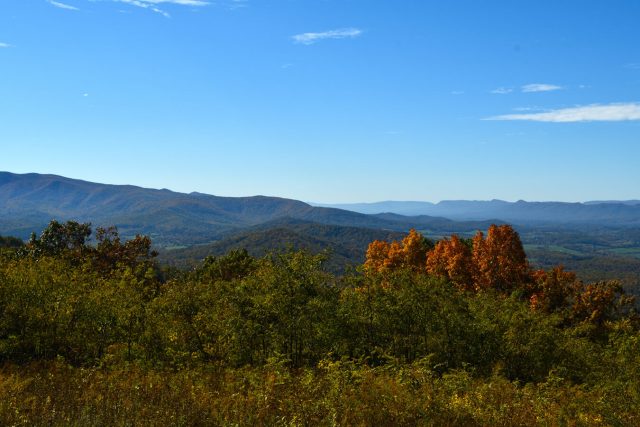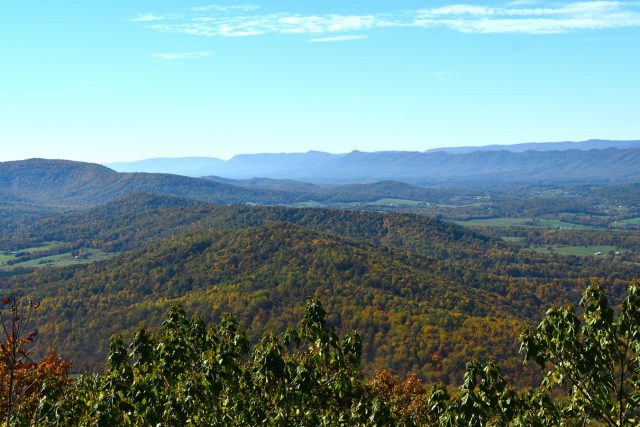
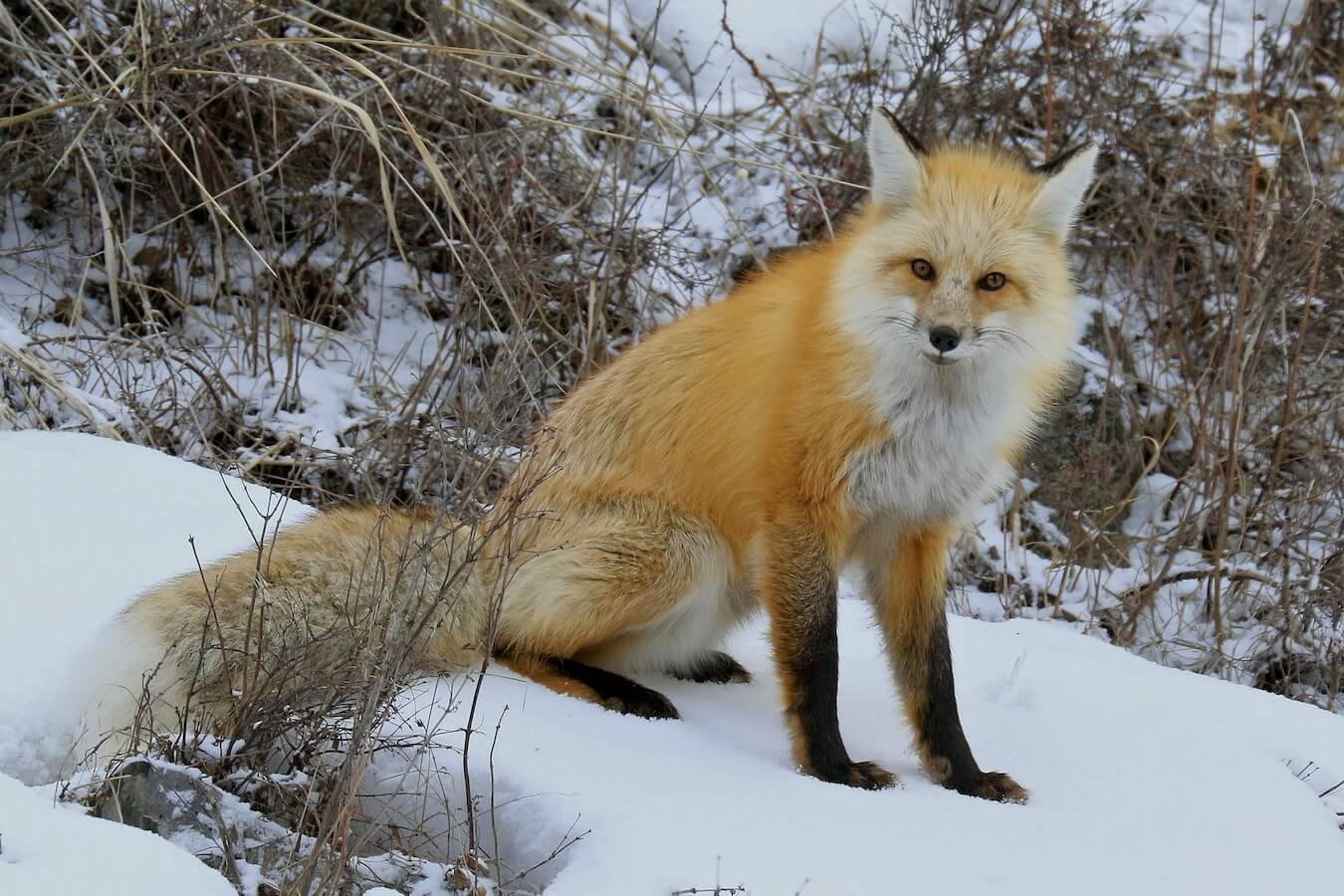
With its rusty coat, black legs, and bright white tail tip, the red fox (Vulpes vulpes) is easy to recognize and hard to forget. It is also one of the most widespread animals on Earth. No land mammal other than humans ranges as widely as the red fox. In our National Parks, they hunt voles in Grand Teton meadows, trot along forest edges on Isle Royale, and wander the high country of Mount Rainier and Lassen Volcanic.
Not every red fox in America has the same story, though. Some are native mountain foxes whose ancestors came across the Bering land bridge long ago. Others descend from European foxes brought over for hunting and fur farms. Today, red foxes can be found in parks such as Yellowstone, Grand Teton, Acadia, Lake Clark, Mount Rainier, and Crater Lake.
Learning about animals like the Red Fox can significantly enhance wildlife photography skills by providing valuable insights into animal behavior, habitat, and physical characteristics. Understanding an animal’s habits can allow photographers to better anticipate and capture unique and authentic moments. Knowledge of an animal’s habitat may also help in selecting the best locations and times for wildlife viewing and photography, while familiarity with physical characteristics is essential for accurately identifying wildlife in the field. If wildlife photography or simply wildlife viewing are of interest to you, then you’ve come to the right place! Together, let’s learn more about what makes the Red Fox so special.

Physical Characteristics
Most people picture a bigger animal than the red fox really is. The average male weighs around 11 pounds and the average female about 9, so many house cats are heavier. Park figures differ a little: Yellowstone’s adult males weigh 11 to 12 pounds and its females about 10, with an average length of 43 inches, while foxes at Mount Rainier National Park range from 8 to 15 pounds. On Isle Royale, adults stand 14 to 20 inches tall, and the tail can be half as long as the body.
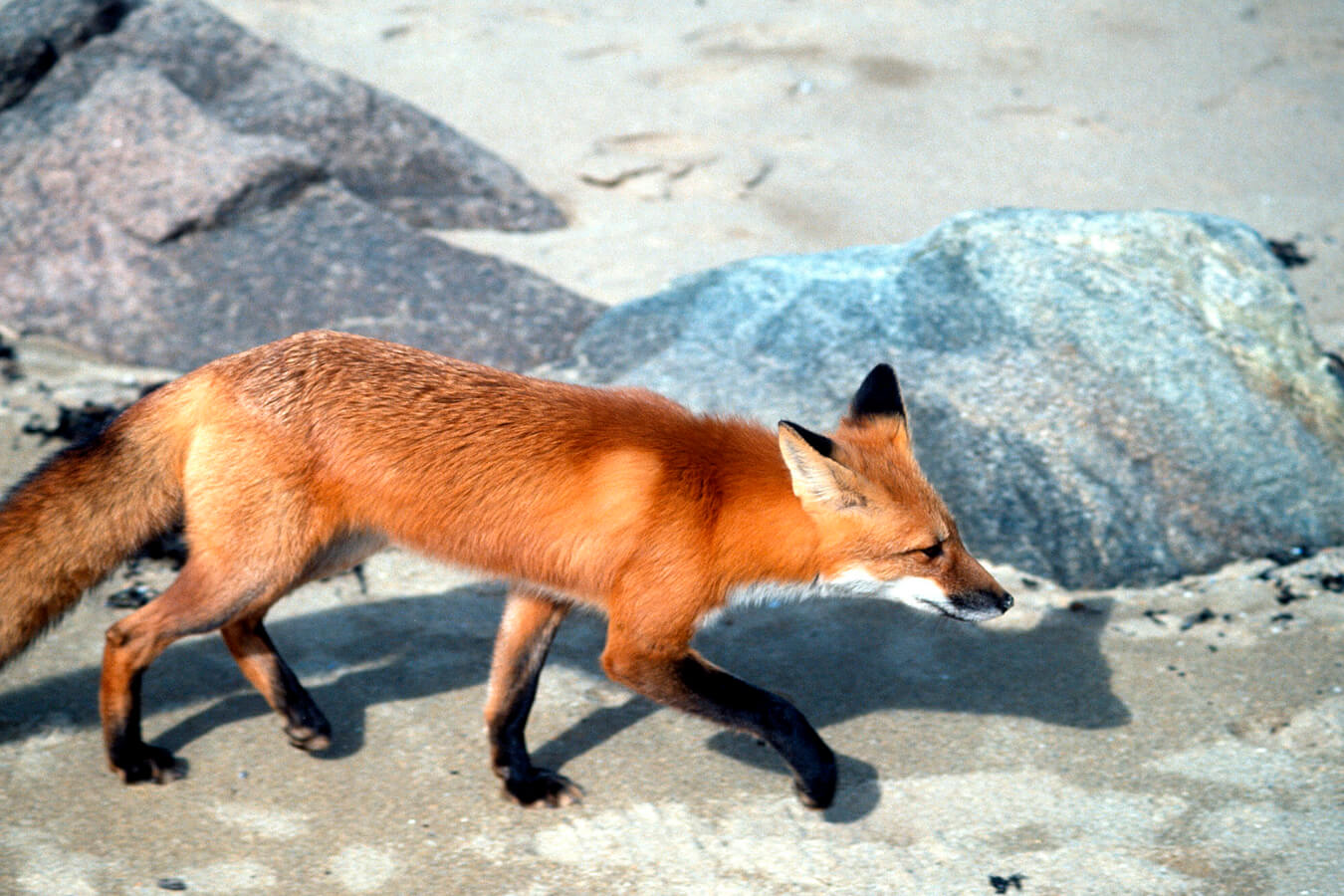
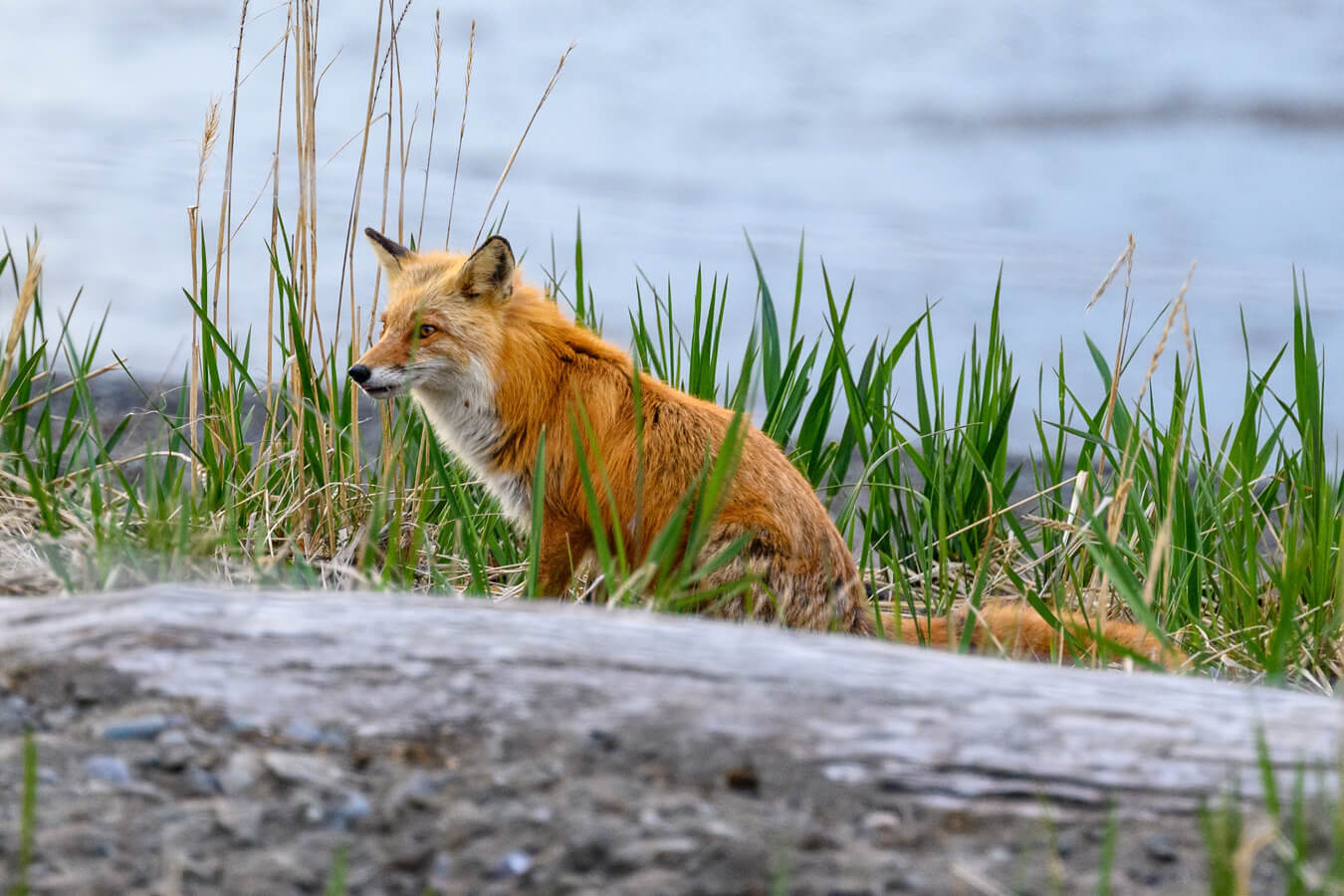
That tail is more than decoration. When winter wind bites, a fox curls up and tucks its nose and bare foot pads under that long, bushy tail. Every red fox, regardless of coat color, has a white-tipped tail. Whatever the coat color, the fox also has pointed ears and white on its chin, throat, and belly.
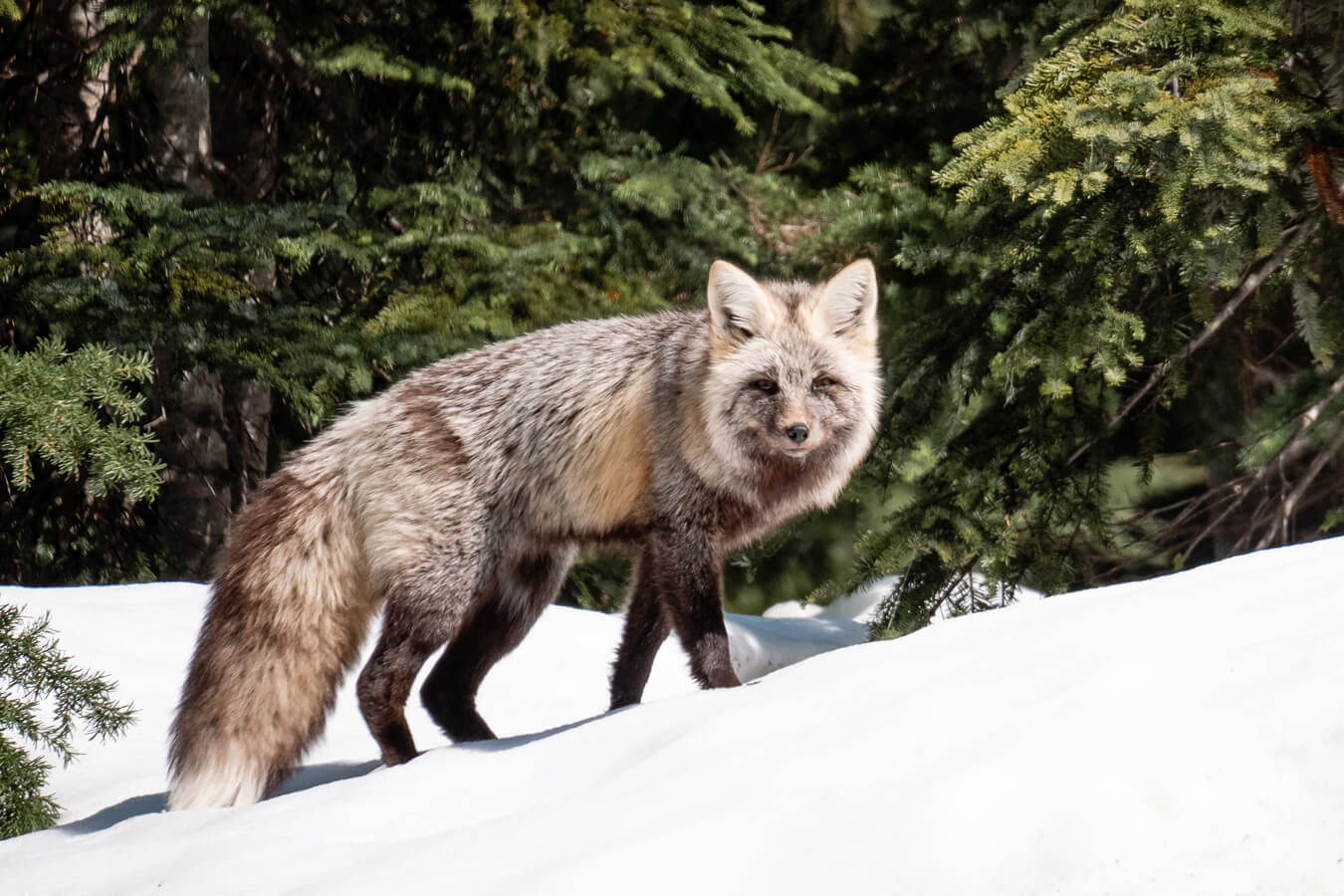
Red foxes are not always red. The most common coat is reddish with black legs, but foxes can also be black, silver, or a mix of red and silver known as a “cross fox.” Cross foxes have black faces and dark stripes across their backs. Silver foxes have black coats tipped with silver guard hairs. Color phases can even show up in the same litter. In Yellowstone, cross foxes have been reported near Canyon and Lamar Valley, and a lighter yellowish or cream-colored fox shows up most often above 7,000 feet, near Cooke City and on the Beartooth Plateau.
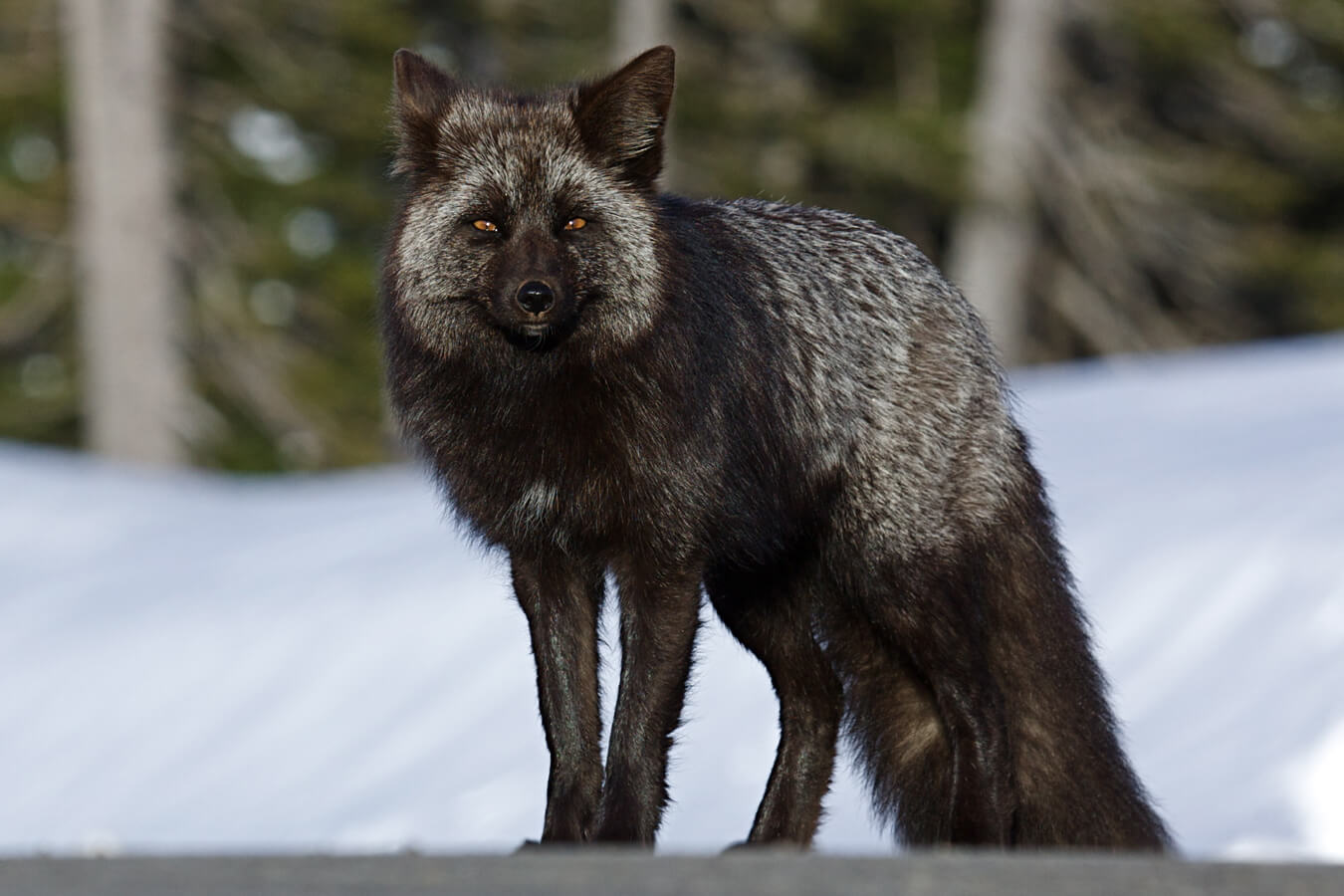
Their senses are remarkable. A red fox’s hearing surpasses that of nearly all mammals. From 100 feet off, a fox can pick up a mouse squeaking or chewing beneath several feet of snow. Their amber eyes have slit-shaped pupils that narrow sharply in strong light. A reflective layer behind the retina, the tapetum lucidum, helps them see at night and creates the eyeshine you notice in headlights.
In Yellowstone, the average lifespan is three to seven years, and some of the park’s foxes have lived up to 11.
Habitat and Distribution
Red foxes live in an enormous range of habitats, from wilderness areas to suburban neighborhoods. Foxes are found throughout Alaska, and they live in many parks across the Lower 48 as well.
Forest edges are a favorite. In Yellowstone, foxes use forest as well as the margins of sagebrush and grassland. Its long stretches of forest edge, along with partly open country and canyons, appear to suit foxes well. They are common across the park’s north and scattered unevenly in other areas. Studies there show a strong preference for forest among red foxes, with coyotes favoring sagebrush and open meadows. On Isle Royale, foxes are found along forest edges, in open areas, around moose and fish carcasses, and around campgrounds.
Eastern parks have red foxes too. Signs of red foxes and coyotes turn up around Acadia National Park, and its mammals page features a young red fox along the Park Loop Road.
The mountain subspecies live high. Sierra Nevada red foxes usually live above 5,000 feet. In California, the subspecies is known only from two places: around Lassen and near Yosemite at Sonora Pass. Genetic testing has also shown that Sierra Nevada red foxes live in Crater Lake National Park. The Cascade red fox is found only high in Washington’s Cascade Range, from the upper forests through subalpine parkland to alpine meadows. Mount Rainier National Park is its stronghold.
Research in Yellowstone from 1994 to 1998 identified two or more fox subpopulations in the Greater Yellowstone Ecosystem. A dividing line ran at about 7,000 feet, with no geographic barrier separating them. Foxes living higher up had ears and hind feet shaped, to some degree, for long winters and deep snow.
Behavior and Social Structure
Red foxes are often hard to spot. They are mostly active at night, typically hunt by themselves, and follow the boundary where meadow meets forest. Winter can shift their schedule toward dawn and dusk, and occasionally into full daylight. Adults are usually solitary until mating season, though a fox may also live with a mate or with a female from a previous litter.
Foxes communicate through scent. Both sexes mark stumps, rocks, and trail junctions with urine and scat. During the February mating season, male urine takes on a strong, skunk-like smell. These signposts tell other foxes about gender, social status, and identity. Where hunting is good, a fox may leave as many as 70 scent marks in an hour. Red foxes also bark, but they rarely howl.
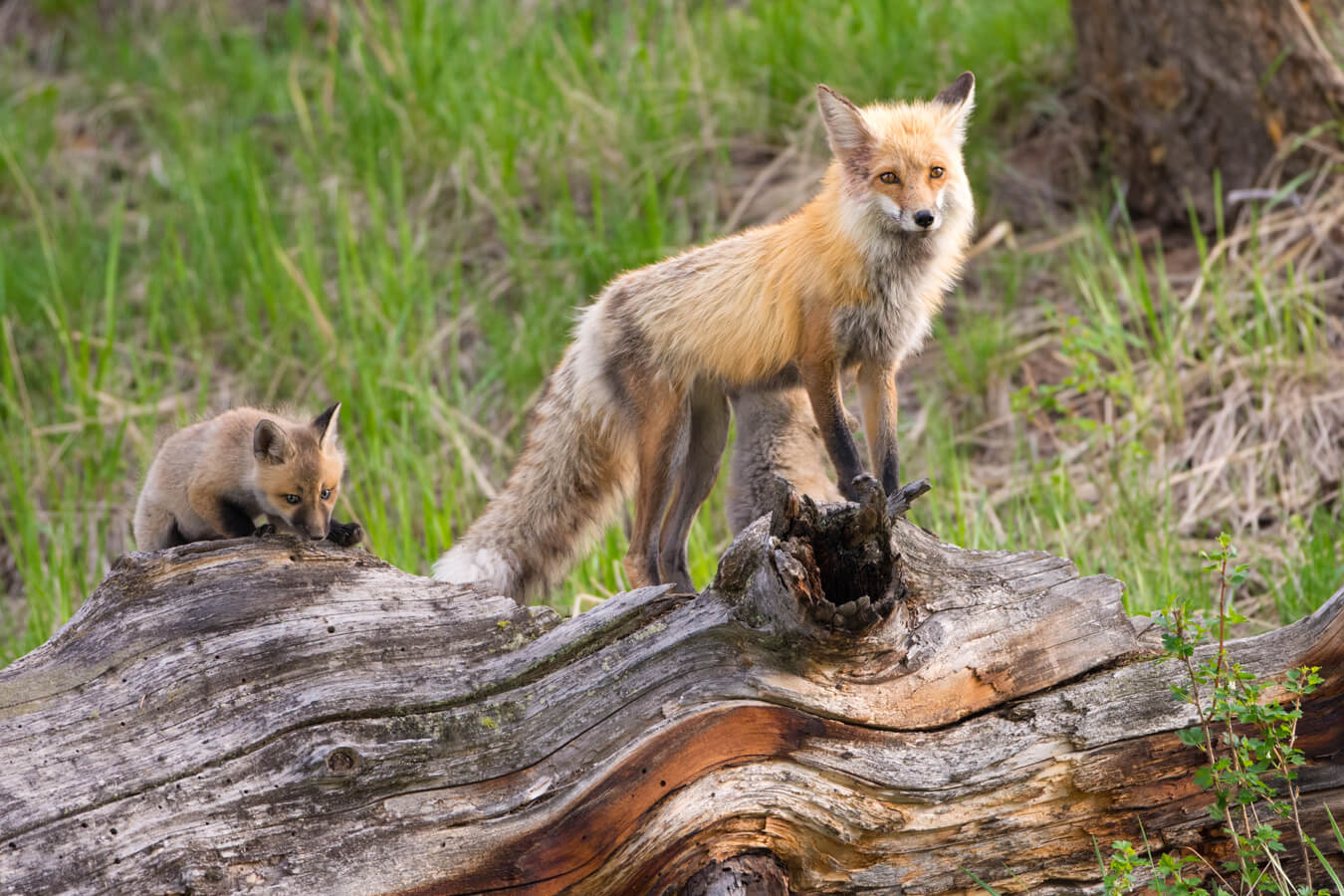
On Isle Royale, foxes pair up to breed in late January and February. Vixens mature at 9 to 10 months and breed once a year. After a gestation of 51 to 53 days, a vixen gives birth to 1 to 10 kits in a den. Kits first leave the den at around a month old, by which time their eyes, ears, teeth, and coat color have formed. Parents then begin bringing them solid food. Kits reach adult size at six to seven months, and the male stays with the vixen and litter until the young are independent.
Most dens are burrows in the ground, often with more than one entrance. In Alaska, pups arrive in early May and stay close to the den through much of the summer. In Yellowstone, nursing females are sometimes more visible in daylight in late April and May, when they forage hard to feed their kits.
Red foxes also have a strong homing instinct. In 1997, a Yellowstone fox that visitors fed at the Tower Fall parking area was relocated three times, 10 to 60 miles away. It came back twice.
Diet and Hunting
Red foxes eat almost anything they can find. Yellowstone foxes eat small prey such as voles, mice, rabbits, birds, and amphibians, plus carrion and some plants. For most of the year, Alaska’s red foxes live largely on small mammals: voles, mice, lemmings, hares, and arctic ground squirrels. Blueberries and crowberries become important when they ripen in July. Isle Royale foxes take snowshoe hares, red squirrels, and deer mice, as well as birds that nest on the ground, snakes, and salamanders. Cascade red foxes at Mount Rainier eat pocket gophers, snowshoe hares, songbirds, and huckleberries, along with eggs and insects.
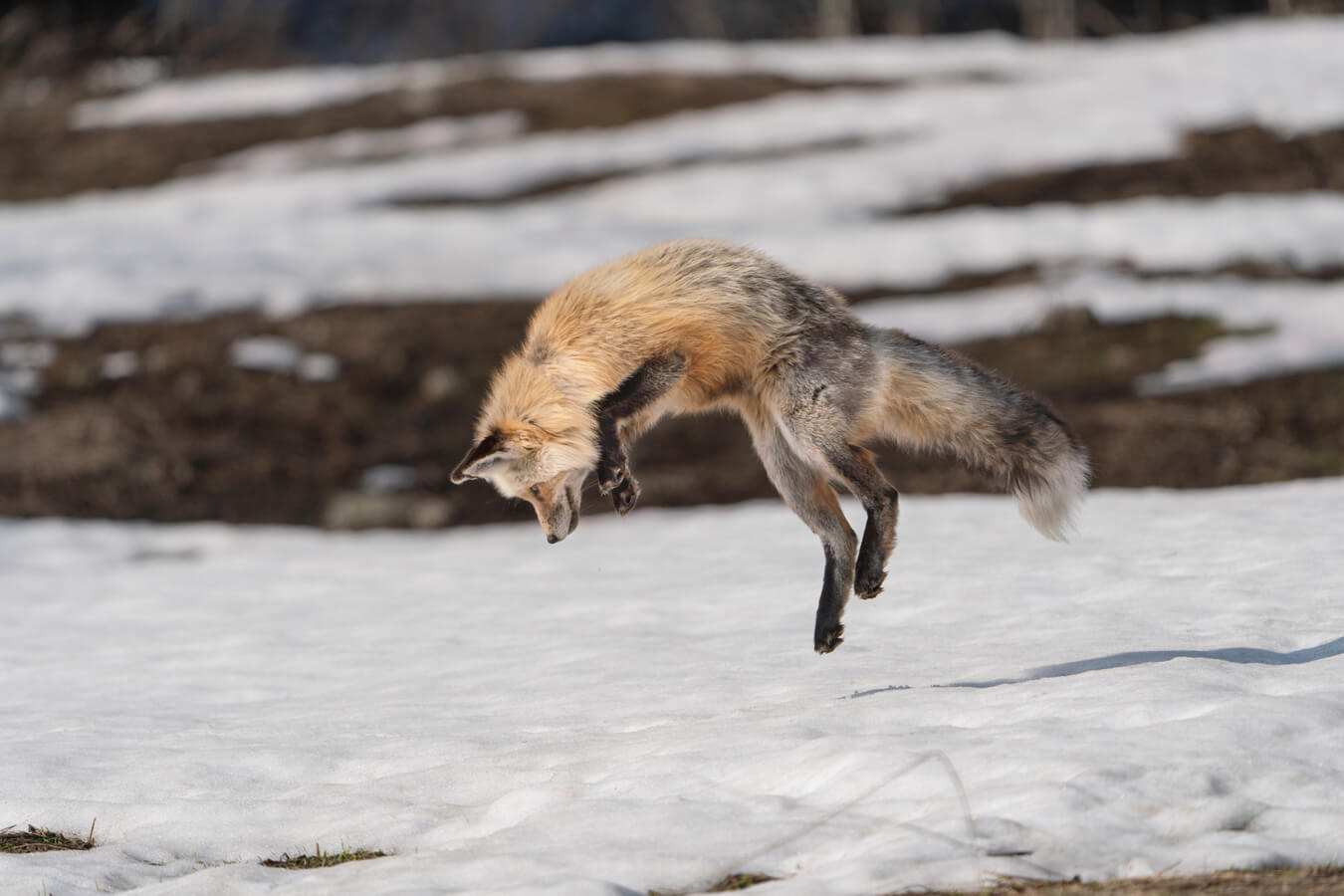
Their hunting style is the stuff of nature documentaries. A hunting red fox relies on its nose, eyes, and ears. A fox may sit still, listening for a mouse rustling in the grass or snow, before it springs. When they hear movement underground, they dig quickly and find the prey by scent. A fox can leap as far as 16 feet and come down nose first in the snow. Czech scientists found that foxes leaping toward the northeast caught prey 73 percent of the time, compared with 18 percent in other directions. If so, the red fox is the first predator known to hunt better with help from the Earth’s magnetic field.
Scavenging matters, too. Foxes visit wolf and cougar kills for an occasional big meal, especially in winter, though less often than coyotes do. In the Lassen area, scat studies showed Sierra Nevada red foxes feeding mostly on mule deer carcasses and pocket gophers.
Role in the Ecosystem
Red foxes are both predators and prey. They help control small mammals like voles and mice, and they scavenge carcasses left by larger carnivores. Yellowstone’s foxes fall prey to wolves, coyotes, and mountain lions.
Their relationship with coyotes shapes much of their life. In Yellowstone, red foxes are more nocturnal than coyotes and stick to forests, while coyotes favor sagebrush and open meadows. Remote cameras show that the two species have opposite peaks in daily activity in winter. Foxes don’t seem to avoid coyotes outright. They sleep when coyotes are most active and forage opportunistically.
Wolves may have helped foxes indirectly. Genetically and physically, wolves and coyotes have more in common than wolves and foxes do. Once wolves were back in Yellowstone, they outcompeted coyotes, and coyote numbers dropped. This may help explain why foxes are seen more often in places where wolves are concentrated, such as Lamar Valley.
Mountain Foxes: A Native Story
Red foxes have a surprising history in North America. Before Europeans arrived, the native range in North America was limited to the far north and the mountains. Along the East Coast, red foxes were uncommon before the mid-1800s. Across much of the Lower 48, and especially in the East and on the plains, today’s red foxes descend largely from European foxes brought over in the 1700s and 1800s for sport hunting and fur farms. Those that survived the hunts or escaped the farms spread west.
The western United States also has three native mountain subspecies: the Sierra Nevada (V. v. necator), Cascade (V. v. cascadensis), and Rocky Mountain (V. v. macroura) red foxes. Together they are called mountain foxes. The ancestors of the Cascade red fox crossed the Bering land bridge more than 300,000 years ago. Glaciers later pushed them south into ice-free forest refuges, where they adapted to a colder climate. When the ice retreated, they followed similar conditions into the mountains.
Several of these mountain foxes are in trouble. Few mammals in California are as rare today as the Sierra Nevada red fox. Surveys from 2009 to 2011 led researchers to put the Lassen area population at roughly 20 foxes. The probable causes include trapping before it was banned in 1974, less prey after meadows were overgrazed long ago, competition with coyotes and American martens, and lighter snowfall. The state of California treats it as threatened, and federal Endangered Species Act listing is under consideration for the Yosemite population.
In Washington, the Cascade red fox is a state candidate species and carries a critically imperiled ranking. Surveys suggest a steep loss of abundance and range. Possible causes include climate change, timber removal at mid elevations, and winter recreation that opens paths into alpine areas for coyotes and non-native lowland red foxes. At Mount Rainier, foxes in the Paradise area have become food habituated, and their begging puts them at risk of being hit by cars.
Red Fox Safety
Red foxes are small and often bold around people, which tempts visitors to get close or toss them a snack. Please don’t. Feeding wildlife is harmful and illegal in National Parks. Each park sets its own wildlife distance rules, so check them before you go. In Yellowstone, that means staying at least 25 yards from all animals other than bears, wolves, and cougars, which require 100 yards.
Fed foxes rarely end well. The Yellowstone fox that visitors fed at Tower Fall kept returning after being moved, and when it was fed again at Mammoth, managers killed it. At Mount Rainier, some foxes accept handouts and hang around roads and developed areas looking for more. Don’t feed them, both for your safety and for the animals’ health. The same goes for Isle Royale, since foxes there forage around campgrounds for human food.
Drive carefully where foxes beg near roads, especially in the Paradise area of Mount Rainier. Store food and trash properly at campgrounds. If a fox approaches you, back away, and never try to touch or hand-feed one.
National Park Presence
Red foxes are some of the most widespread mammals in our National Parks. For photographers visiting the 63 designated U.S. National Parks, red foxes can be found in the following parks:
According to National Park Service NPSpecies records, red foxes are Common in parks such as Yellowstone, Acadia, Lake Clark, Mount Rainier, Crater Lake, Rocky Mountain, Isle Royale, Voyageurs, Katmai, and New River Gorge. NPSpecies lists Mount Rainier’s foxes as the Cascade red fox and Lassen Volcanic’s and Yosemite’s as the Sierra Nevada red fox. Crater Lake’s record uses the common name Sierra Nevada red fox. Nativeness is listed as Unknown for Yellowstone, Grand Teton, Acadia, and Hot Springs. Yellowstone’s record explains that native foxes have been replaced by Eurasian-derived foxes in Rocky Mountain lowlands, and it is unclear how many of the park’s foxes are native, hybrid, or non-native.
Red Fox Photography Tips
Red foxes are most active at dawn, dusk, and night, so early mornings and evenings are your best bet. In winter they may hunt in broad daylight, and snow makes a clean backdrop for those famous headfirst pounces. If you see a fox listening intently over a meadow, get ready. A leap may follow. In Yellowstone, good bets are Hayden Valley, Pelican Valley, and the country around Canyon Village. In late April and May, nursing vixens are more active in daylight.
Shoot from a respectful distance and let the fox’s behavior come to you. Never bait a fox, call it in, or approach a den. Isle Royale foxes often turn up on trails and around campgrounds, which can make for natural portraits. Keep a long lens ready rather than moving closer. Watch for color phases, too. A silver or cross fox in Mount Rainier’s high country or Yellowstone’s northern range is a rare and memorable image.
A telephoto lens is essential for photographing the Red Fox responsibly. If you already own or want to own a professional-grade mirrored camera like the Canon EOS 5D Mark IV Full Frame Digital SLR, we recommend using a Canon EF 100-400mm f/4.5-5.6L IS II USM Lens zoom lens for wildlife photography. If you have or are interested in a newer mirrorless model like the Canon EOS R5 Full-Frame Mirrorless Camera, we recommend using a Canon RF100-400mm F5.6-8 IS USM for long-distance shots.
Not quite ready to invest in traditional professional-grade camera equipment but want to enhance the quality of your cell phone photographs? Consider using a Moment Tele 58mm Mobile Lens II for improved reach, and use a Moment camera case with a lens mount to attach it to your phone. Since cell phones generally cannot provide the same reach as a dedicated telephoto camera lens, never compensate by moving dangerously close to wildlife.
No photograph is worth disturbing an animal or putting yourself or others at risk.
Why Are They Called Red Foxes?
The name comes from the classic rusty-red coat that most red foxes wear. It sticks even for black, silver, and cross foxes, which are all the same species. The white-tipped tail remains the best field mark, whatever the color.
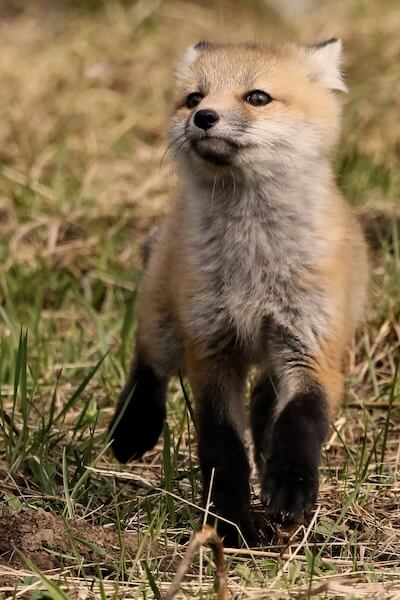
The vocabulary of foxes is fun to know. Males are called dogs, females are vixens, and young are kits or pups. The red fox is the largest of the “true foxes,” the group that makes up the genus Vulpes.
A Note About Red Fox Taxonomy
Readers researching red foxes may encounter more than one scientific name for the same animal. This page uses:
Vulpes vulpes
You may still see other names in some National Park Service records and older sources, such as:
Vulpes fulva, Vulpes vulpes necator, Vulpes vulpes cascadensis, and Vulpes vulpes macroura
Red foxes were once split into two species: Vulpes vulpes in the Old World and Vulpes fulva in the New World. Today they are considered one species, and fulva still appears as a synonym in several NPSpecies records. Scientists recognize about 45 subspecies worldwide, and ten of them occur in North America. The NPS spells the Sierra Nevada subspecies as both necator and necatar. NPSpecies uses necator.
For consistency throughout National Park Photographer, this page uses Vulpes vulpes while recognizing the subspecies names visitors may encounter. The island fox of Channel Islands and the kit fox of White Sands are separate species and are not covered here.
Final Thoughts
The red fox is one of the most adaptable animals in our National Parks. It can thrive on a Great Lakes island, in Yellowstone’s forests, or on an Alaska tundra, and it has a hunting style that never gets old to watch.
Behind that adaptability is a more fragile story. The native mountain foxes of the Sierra Nevada and Cascades survive in small, isolated populations, and a fox that learns to beg for food can end up dead on the road or removed by managers.
Seeing a red fox in the wild is a highlight of any park visit, and it comes with responsibility. By keeping our distance, never feeding foxes, driving slowly, and using telephoto lenses instead of moving closer, photographers and visitors can enjoy red foxes without changing their behavior. Responsible wildlife viewing and photography help keep these clever animals wild.
Want more information about the amazing wildlife that call our National Parks home? Take a look at our National Park Wildlife page to explore the various parks and the animals in them. Planning on visiting a National Park in the near future? Be sure to follow park regulations, practice Leave No Trace principles, and prioritize both your safety and the well-being of wildlife while exploring.
Joyful Journeys!
Bonnie, Co-Owner, National Park Photographer
Want to learn more about the Red Fox? Check out the additional resources below!
Red Fox Books & Field Guides
- Red Fox: The Catlike Canine
- The Secret Life of the Red Fox
- Foxes (National Geographic Kids Readers)
- Wild Republic Red Fox Plush
- Peterson Field Guide to Mammals of North America
- Isle Royale National Park Map (National Geographic Trails Illustrated)
- 10×42 Binoculars for Wildlife Viewing
- Monocular for Wildlife Viewing
- Camera Bean Bag for Wildlife Photography
Please note, by making purchases through our affiliate links, you are supporting our mission to celebrate and showcase our National Parks and the photographers who frequent them. As an Amazon Associate, National Park Photographer earns from qualifying purchases at no cost to you. We appreciate your support.
References & Additional Resources
- National Park Service — The Clever Red Fox
- National Park Service — Red Fox (Alaska parks)
- National Park Service — Yellowstone National Park: Red Fox
- National Park Service — Isle Royale National Park: Red Fox
- National Park Service — Mount Rainier National Park: Carnivores
- National Park Service — Conservation Status of the Cascade Red Fox
- National Park Service — Lassen Volcanic National Park: Sierra Nevada Red Fox
- National Park Service — Tracking One of California’s Rarest Mammals
- National Park Service — Crater Lake Science and Learning Center: Current Research
- National Park Service — Acadia National Park: Mammals
- National Park Service — Olympic National Park: Terrestrial Mammal Species List
- National Park Service — Yellowstone National Park: Safety
- National Park Service — NPSpecies: Yellowstone National Park Red Fox
- National Park Service — NPSpecies Species Search
Do you want to be featured on National Park Photographer?
Why wait! Contact us today at nationalparkphoto@gmail.com for a chance to be a Featured National Park Photographer!