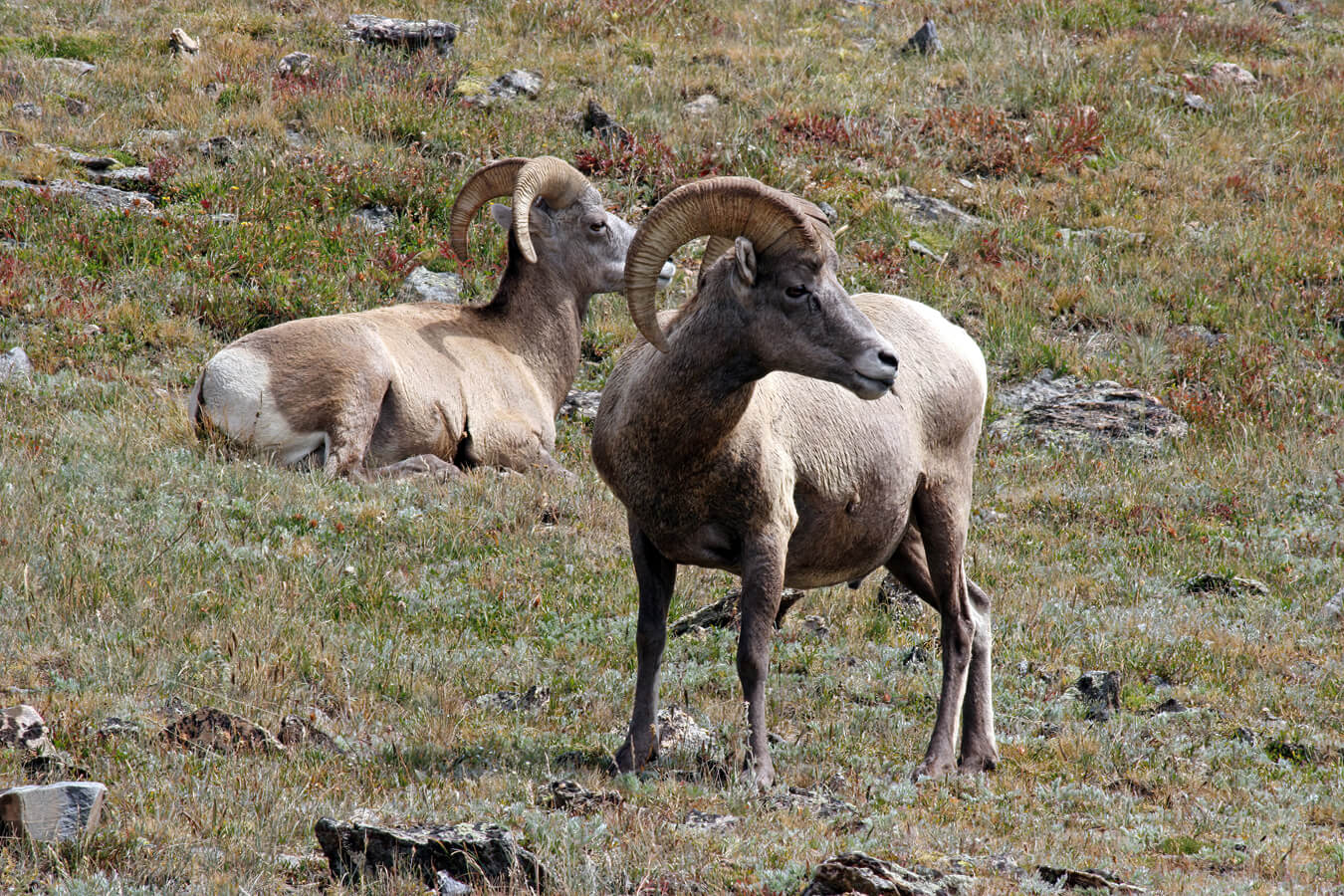
Rocky Mountain bighorn sheep (Ovis canadensis canadensis) are the biggest wild sheep on the continent, and Rocky Mountain National Park uses them as its emblem. Rams carry heavy, curling horns and settle rivalries with head-on collisions that can be heard a mile away. Ewes lead nursery bands across cliffs and talus slopes where few predators can follow. For photographers, few animals pair so naturally with dramatic mountain scenery.
Rocky Mountain bighorn also show how fragile wildlife recovery can be. Market hunting, habitat loss, and diseases carried by domestic sheep wiped out herds across the West. Some survived in remote high country, and others were moved back into historic range by wildlife managers. Today, Rocky Mountain bighorn sheep can be seen in Rocky Mountain, Glacier, Yellowstone, Grand Teton, and even the prairie badlands of Badlands.
Learning about animals like Rocky Mountain bighorn sheep can significantly enhance wildlife photography skills by providing valuable insights into animal behavior, habitat, and physical characteristics. Understanding an animal’s habits can allow photographers to better anticipate and capture unique and authentic moments. Knowledge of an animal’s habitat may also help in selecting the best locations and times for wildlife viewing and photography, while familiarity with physical characteristics is essential for accurately identifying wildlife in the field. If wildlife photography or simply wildlife viewing are of interest to you, then you’ve come to the right place! Together, let’s learn more about what makes Rocky Mountain bighorn sheep so special.
Physical Characteristics
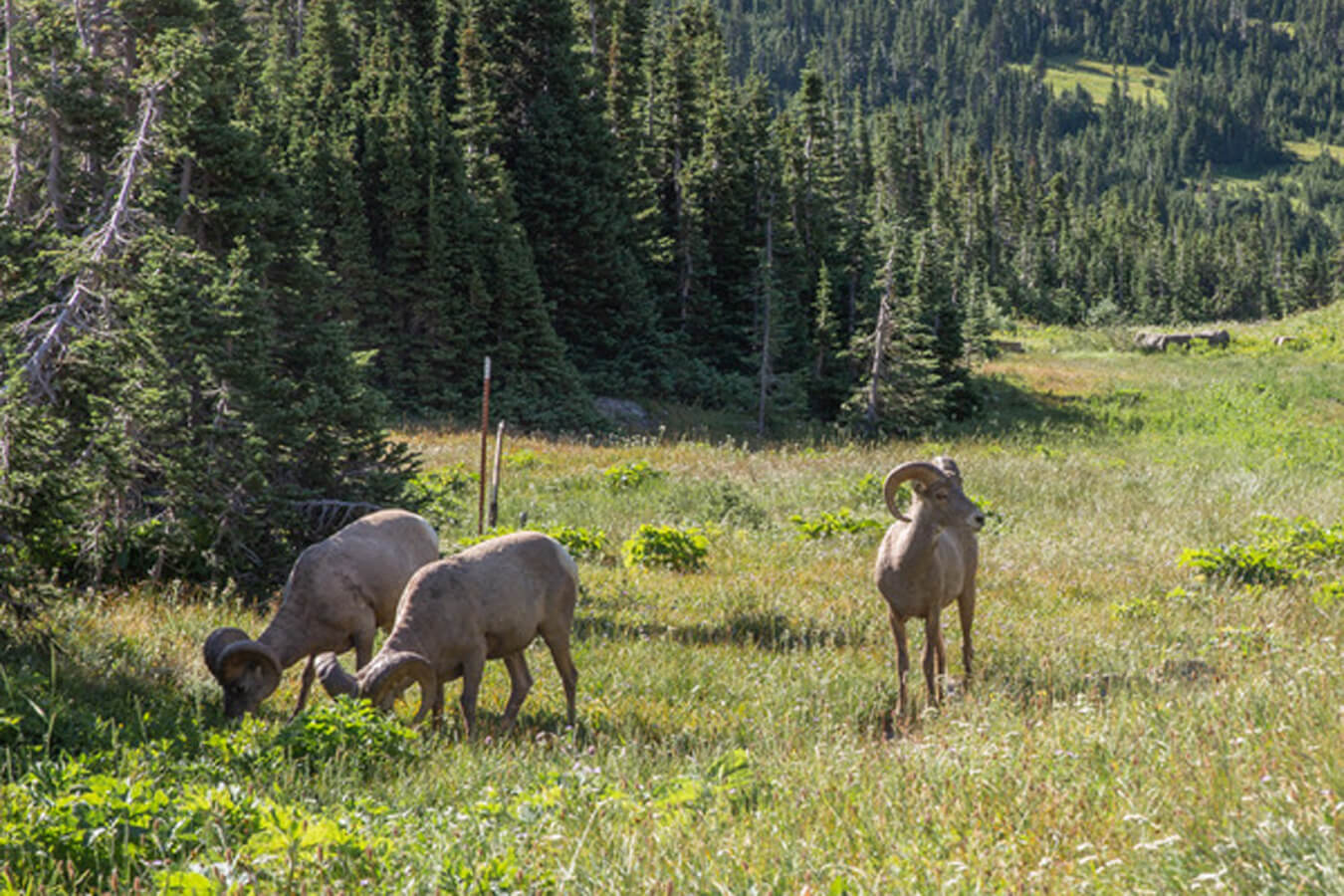
Size varies by herd and by source. In Rocky Mountain National Park, muscular rams can weigh over 300 pounds and stand more than three feet tall at the shoulder, while ewes are roughly half that size. Yellowstone’s adult rams run 174 to 319 pounds and its ewes up to 130 pounds. The sheep of Black Canyon of the Gunnison National Park are smaller, with rams at 150 to 200 pounds and ewes at 75 to 150 pounds.
Their coats run from grayish brown to deep brown, set off by white on the muzzle, the rump, and the backs of the legs. In winter they grow a heavy two-layer coat that is frequently paler than the summer one. They shed their heavy coats in summer.
The horns tell much of the story. Bighorn horns are true horns, and an animal carries the same pair its whole life. By around age eight, a ram’s horns have curled all the way around the sides of his face. Horn weights differ by source: up to 30 pounds in Rocky Mountain National Park, and as much as 40 pounds in Yellowstone, where a ram’s horns make up 8 to 12 percent of his body weight. A ewe’s horns are shorter, with a gentle curve ending in a sharp tip. A ewe’s horns nearly stop growing once she is four or five.
Horns also hold clues about age. Growth is greatest in summer and early in life, and the rings can be counted to estimate age, though this is easier on rams. Older rams often have “broomed” horn tips that are worn or broken off, which can remove one to two years of growth.
Their senses and feet are built for steep terrain. Wide-set eyes give them a broad field of view, and sharp hearing and a keen sense of smell help them detect danger from far away.
Habitat and Distribution
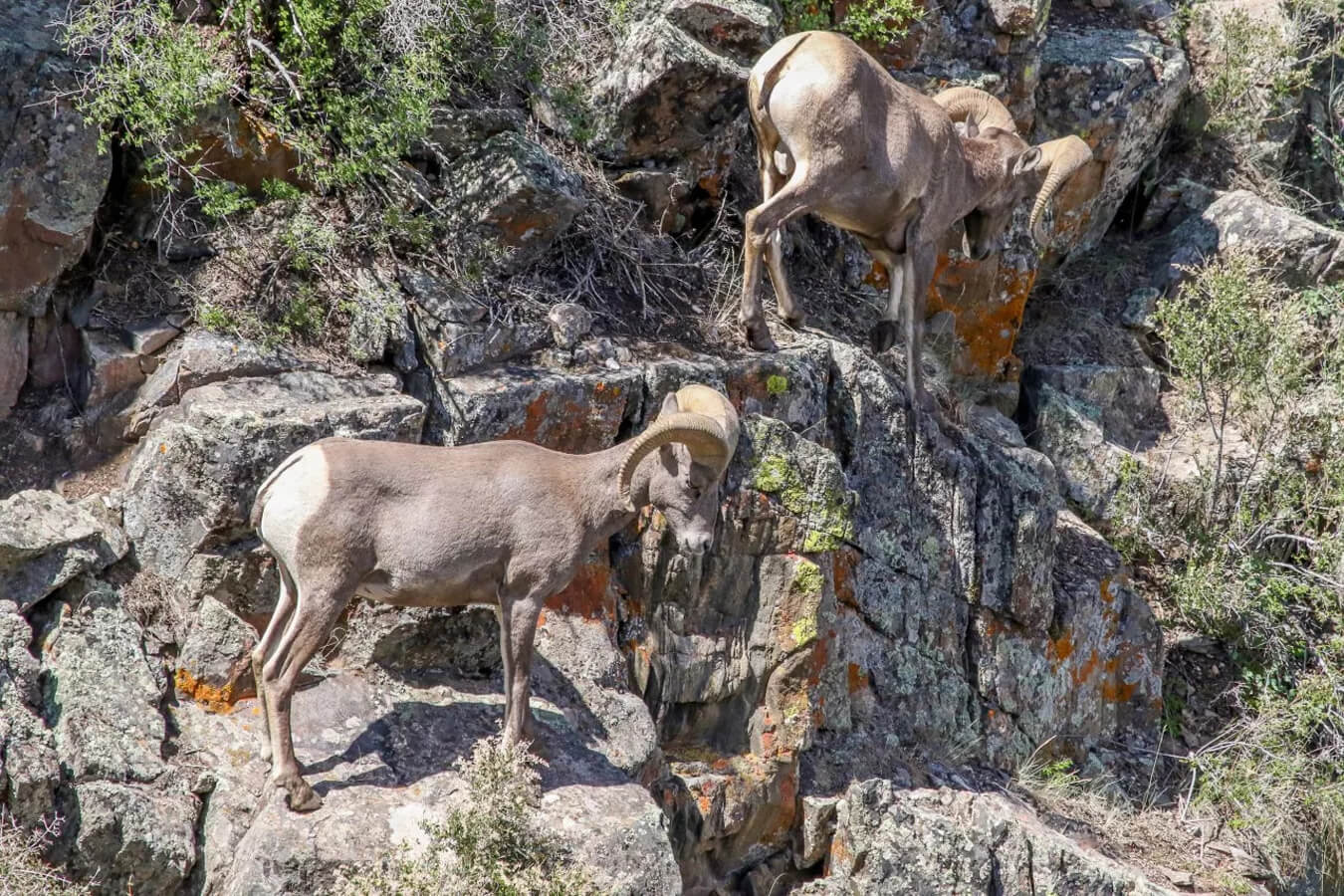
Rocky Mountain bighorn live in alpine meadows, on grassy mountain slopes, and along cliffs, with steep, rocky escape terrain always close by. Their climbing skill lets them escape predators, and they are one of the few species able to survive winters at high elevations.
Many herds migrate with the seasons. In Yellowstone, most bighorn spend winter low, near the Gardner, Lamar, and Yellowstone rivers, then climb to higher country from May through October. Ten to 13 interbreeding bands live in the upper Yellowstone River drainage, and Mount Everts gets the most concentrated year-round use. In Rocky Mountain National Park, sheep descend from the Mummy Range each late spring and early summer to reach Sheep Lakes in Horseshoe Park.
Bighorn are not limited to the mountains. In Badlands National Park in South Dakota, about 250 bighorn live among the buttes and spires. At Black Canyon of the Gunnison, visitors may spot them on the inaccessible cliffs of the inner canyon.
In the Teton Range, bighorn sheep have lived for thousands of years, but the native herd is now small and cut off from other herds, and it could disappear from the range.
Behavior and Social Structure
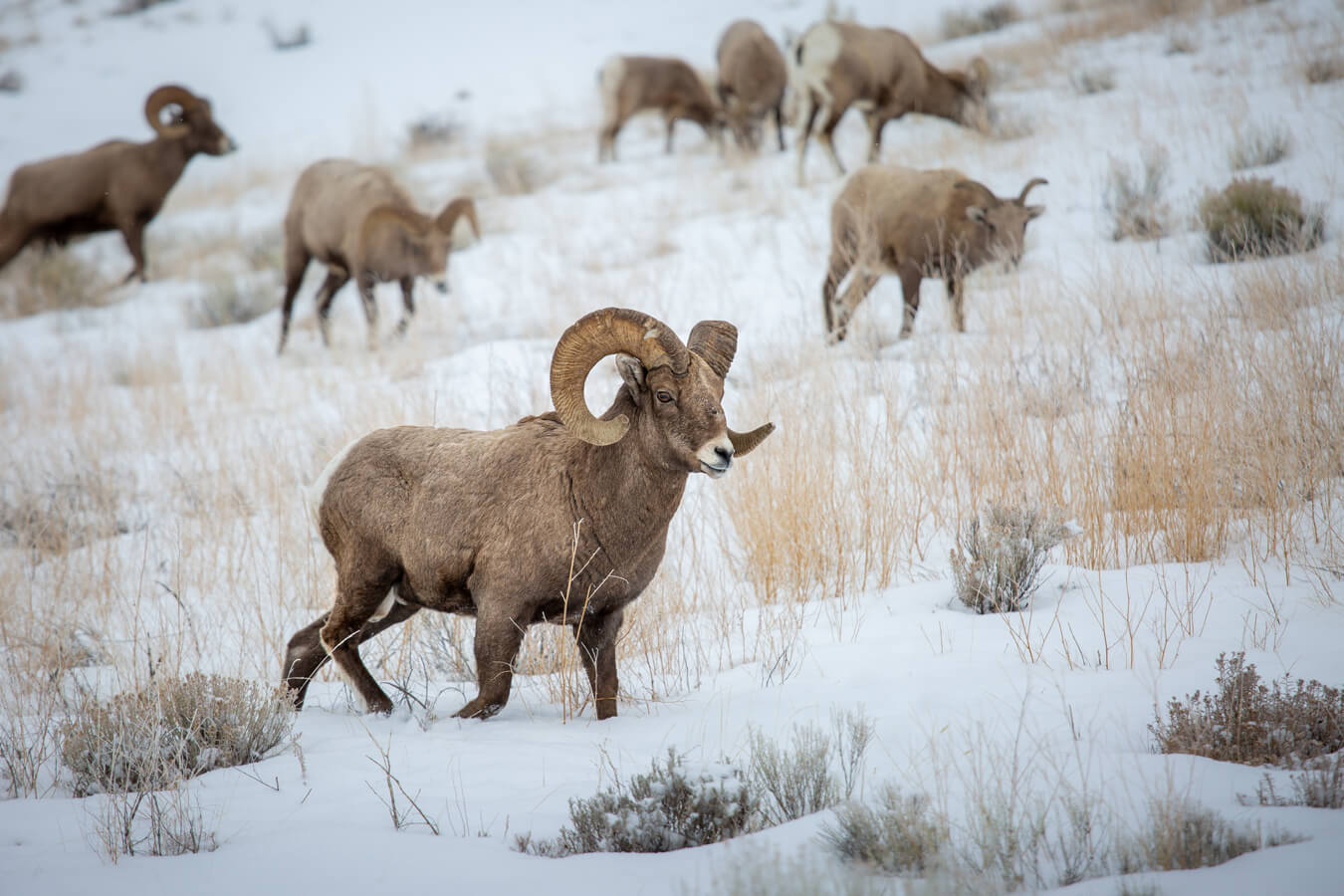
Bighorn live in groups, though rams and ewes typically mix only during mating. For most of the year, older rams live alone or in bachelor groups. A bachelor group may hold as many as 10 rams, usually under one dominant male. Ewes, lambs, and yearlings form nursery bands. Females usually stay with their mother’s herd for life, while young males leave at about two to four years of age.
Fall brings the rut. Mating season begins in November, when rams join the ewe groups to compete for mating opportunities. The ritual is dramatic. Two rams square off, rise on their hind legs, and throw themselves at each other at up to 40 miles per hour. The crash of horns can be heard up to a mile away, and the clash is repeated until one ram gives up and walks away. A double layer of bone over a ram’s brain cushions each impact. Bigger horns can help a ram rise in the herd’s pecking order.
Lambs are born in spring. Ewes give birth to one or two lambs in May or June. Lambs walk soon after birth and nurse for up to six months.
Lifespans are relatively short. Estimates vary: about 10 years in Rocky Mountain National Park, and 9 to 12 years for rams and 10 to 14 for ewes in Yellowstone.
Diet and Foraging
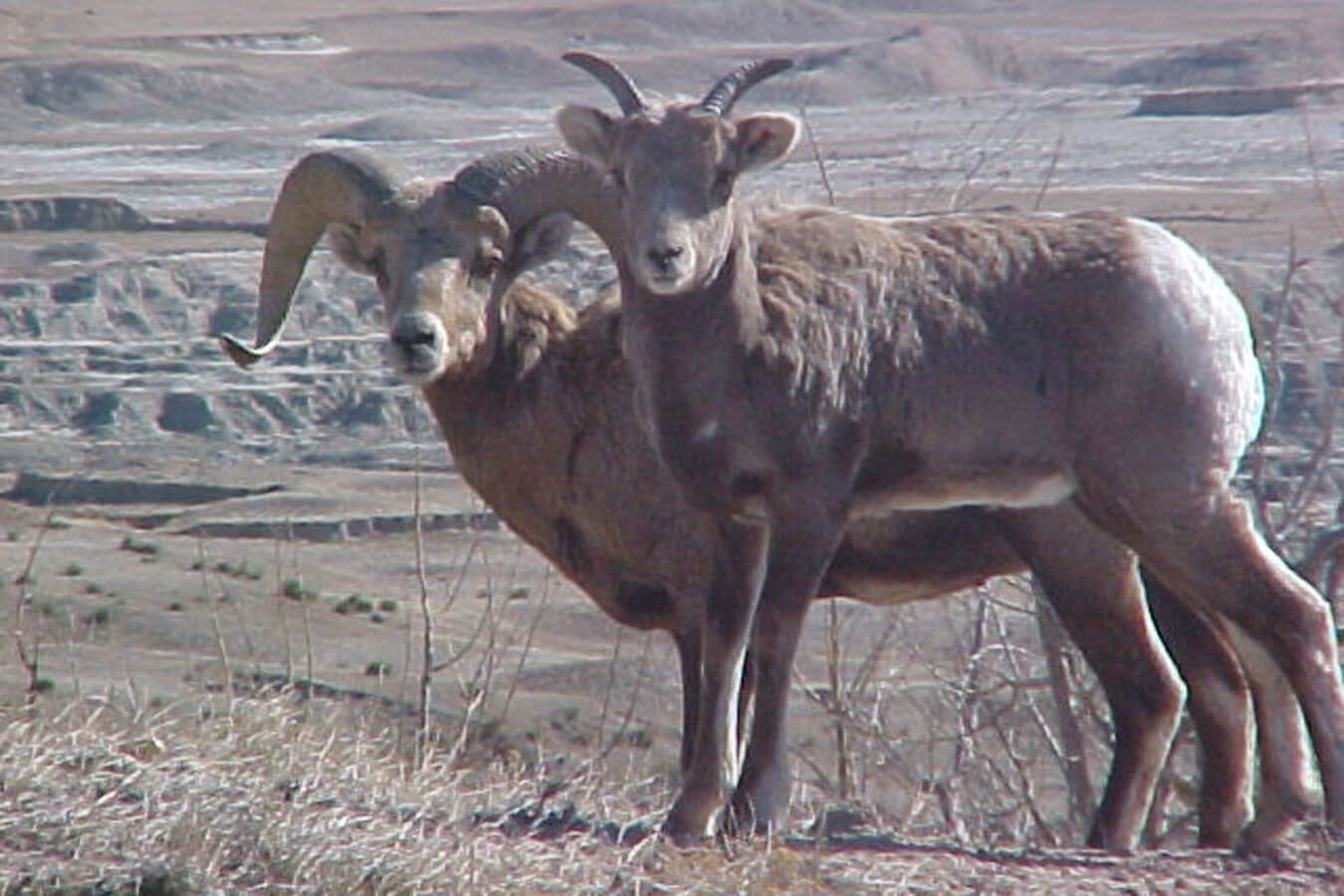
Rocky Mountain bighorn sheep are grazers and browsers. Summer meals are mostly grass; in fall and winter they switch to browsing shrubs.
Minerals matter, too. Rocky Mountain National Park’s sheep visit natural salt licks like Sheep Lakes, where they graze and eat soil to get minerals missing from their high mountain habitat. Those minerals restore nutrients depleted by lambing and a poor winter diet.
Their digestive system is part of their survival strategy. A four-chambered stomach lets bighorn pull nourishment from tough, dry plants. Sheep descend to grassland, eat fast and in bulk, and then head back to the safety of the cliffs. There, away from predators, they bring the food back up and chew it as cud before fully digesting it.
Food can be limiting where sheep share range with other grazers. Herds that winter high in the mountains tend to stay small, grow slowly, and raise few lambs.
Role in the Ecosystem
Bighorn sheep share their range with predators and competitors. Wolves occasionally prey on bighorn in Yellowstone, but the park’s bighorn numbers have gone up since wolves returned in 1995.
Competition may matter more than predation in some parks. In Yellowstone, overlap with elk in diet and habitat may have slowed the recovery of the northern herd after a disease outbreak. The park is also working with state, federal, university, and nonprofit partners to learn whether non-native mountain goats, brought to the Absaroka Mountains in the 1950s, are a threat to bighorn sheep.
Some herds face almost no predators at all. In Badlands National Park, adult sheep face few if any natural predators, so they die mostly from accidents and disease. Lambs sometimes misstep and fall while climbing, and disease deaths are commonly from pneumonia or epizootic hemorrhagic disease.
A Story of Loss and Return
Bighorn sheep once numbered about two million in North America. As European Americans spread across the West, sport hunting, disease, and new land uses drove that number down to just 20,000 by 1940.
Rocky Mountain National Park’s history shows how that decline unfolded. In the mid-1880s and early 1900s, market hunters killed hundreds of bighorn, chasing the high prices their horns and meat brought. Ranchers then moved into mountain valleys, changed habitat, and brought domestic sheep that carried scabies and pneumonia. Those diseases killed large numbers of bighorn. By the 1950s, research showed only about 150 bighorn left in the park area, mostly in isolated high country in the Mummy and Never Summer ranges and along the Continental Divide. The low-country migratory herds were gone.
Recovery came slowly. As hunting and disease pressure eased in the 1960s and 1970s, numbers began to rise. Bighorn were brought back to their old haunts along the North St. Vrain River and Cow Creek in 1978 and 1980. The park and its surroundings now hold about 300 to 400 bighorn.
On the northern Great Plains, Badlands received 22 bighorn from Pikes Peak, Colorado, in 1964 and a second group from Wheeler Peak, New Mexico, in 2004.
Disease remains the biggest threat. Yellowstone’s count reached 487 in 1981, but a pinkeye epidemic the next winter cut the northern herd by 60 percent. The temporary blindness is rarely fatal for fenced domestic sheep, but it can kill a wild sheep that must find food on steep slopes. An all-ages pneumonia event caused another decline in 2015.
Rocky Mountain Bighorn Sheep Safety
Bighorn sheep are sensitive to human disturbance. Always follow the wildlife distance regulations of the park you are visiting. Yellowstone requires visitors to stay at least 25 yards from all animals other than bears, wolves, and cougars. Rocky Mountain National Park asks visitors to give bighorn sheep and elk at least 75 feet, about the length of two buses. Rocky Mountain’s “rule of thumb” is simple. Hold out your arm and give a thumbs-up. If your thumb doesn’t cover the whole animal, you are too close.
Sheep Lakes needs special care. Every highway crossing is stressful for the sheep, and that stress can weaken their defenses against disease. The park created a “Bighorn Crossing Zone” in Horseshoe Park, where rangers control traffic in late spring and summer. Take it slow on the stretch of Highway 34 that runs along Horseshoe Park’s north side. When sheep are in the crossing zone, stay out of it, whether you are walking or driving. If sheep are on the slope or in the meadow, stay near the road, keep quiet, and let them come and go without being approached.
In Grand Teton, backcountry skiers and snowboarders are asked to avoid designated bighorn sheep winter zones and to obey closures that protect the park’s small native herd. Wherever you are, never feed bighorn sheep or lure them closer for a photograph.
National Park Presence
Rocky Mountain bighorn sheep live in parks from the Northern Rockies to the prairie badlands. For photographers visiting the 63 designated U.S. National Parks, these parks have NPSpecies records of bighorn sheep as Present that are filed at the species level within the range of the Rocky Mountain subspecies or name it as a synonym:
| Park Name | Occurrence | Abundance |
| Badlands National Park | Present – Native | Common |
| Black Canyon of the Gunnison National Park | Present – Native | Uncommon |
| Glacier National Park | Present – Native | Common |
| Grand Teton National Park | Present – Native | Uncommon |
| Great Basin National Park | Present – Native | Rare |
| Great Sand Dunes National Park and Preserve | Present – Native | Rare |
| Rocky Mountain National Park | Present – Native | Common |
| Wind Cave National Park | Present – Native | Occasional |
| Yellowstone National Park | Present – Native | Uncommon |
According to National Park Service NPSpecies records, bighorn sheep are Common in Glacier, Rocky Mountain, and Badlands, and Uncommon in Yellowstone, Grand Teton, and Black Canyon of the Gunnison. Most of these records are filed at the species level as Ovis canadensis. Great Basin’s record lists Ovis canadensis canadensis as a synonym and carries a Restoration tag, and Wind Cave’s bighorn are listed as Occasional. Two parks with bighorn records are left out of the table above because their records point to California bighorn: Theodore Roosevelt’s record lists californiana, the California bighorn name, as a synonym, and North Cascades’ record describes its Stehekin herds as “probably California bighorn subspecies.”
NPSpecies lists bighorn as historical, no longer present, at Mesa Verde and Lassen Volcanic. Desert bighorn of the Southwest are covered on our Desert Bighorn Sheep page.
Rocky Mountain Bighorn Sheep Photography Tips
Bighorn sheep blend into rock, so scan cliffs, ledges, and talus slowly with binoculars. Park pages point to reliable spots. In Rocky Mountain, Sheep Lakes in Horseshoe Park is the classic location in late spring and summer. Visits are hit-and-miss, but they generally happen between 9 a.m. and 3 p.m. Groups of one to sixty sheep cross the road and may stay for two or three hours. For high-country shots, work the section of Trail Ridge Road from Forest Canyon Overlook to the Alpine Visitor Center. In Yellowstone, check Dunraven Pass and the flanks of Mount Washburn in summer, and Gardner Canyon, on the road from Mammoth to the North Entrance, at any time of year.
Each season offers something different. Late spring and summer bring lambs and mineral visits to Sheep Lakes. Fall and early winter bring the rut, when rams clash and chase ewes. Winter coats are thick and pale, and sheep stand out against snow. Include the landscape when you can. A ram on a ridgeline or a band of ewes on a cliff says more about bighorn than a tight portrait.
A telephoto lens is essential for photographing Rocky Mountain bighorn sheep responsibly. If you already own or want to own a professional-grade mirrored camera like the Canon EOS 5D Mark IV Full Frame Digital SLR, we recommend using a Canon EF 100-400mm f/4.5-5.6L IS II USM Lens zoom lens for wildlife photography. If you have or are interested in a newer mirrorless model like the Canon EOS R5 Full-Frame Mirrorless Camera, we recommend using a Canon RF100-400mm F5.6-8 IS USM for long-distance shots.
Not quite ready to invest in traditional professional-grade camera equipment but want to enhance the quality of your cell phone photographs? Consider using a Moment Tele 58mm Mobile Lens II for improved reach, and use a Moment camera case with a lens mount to attach it to your phone. Since cell phones generally cannot provide the same reach as a dedicated telephoto camera lens, never compensate by moving dangerously close to wildlife.
No photograph is worth disturbing an animal or putting yourself or others at risk.
Why Are They Called Bighorn Sheep?
The name comes straight from the rams’ massive horns. Those horns gave the species its name, and a ram’s set can reach 30 pounds. Unlike antlers, which deer and elk shed each year, these horns are never shed.
Bighorn also hold a place in Native American tradition. Montana’s Bighorn Canyon takes its name from Big Metal, a bighorn of Crow legend whose horns and hooves shone like steel. “Rocky Mountain” separates this subspecies from desert and Sierra Nevada bighorn.
A Note About Rocky Mountain Bighorn Sheep Taxonomy
Readers researching Rocky Mountain bighorn sheep may encounter more than one scientific name for the same animal. This page uses:
Ovis canadensis canadensis
Older references and some National Park Service records list these sheep under other names, including:
Ovis canadensis auduboni and Ovis canadensis californiana
Bighorn subspecies have been revised several times. The Audubon or Badlands bighorn (auduboni) once described the extinct native sheep of the northern Great Plains, but a study of skull measurements found no support for keeping it separate from Rocky Mountain bighorn. NPSpecies records also reflect older names. Great Basin’s record lists canadensis canadensis as a synonym, and Theodore Roosevelt’s lists californiana. Most parks file the record simply as Ovis canadensis.
For consistency throughout National Park Photographer, this page uses Ovis canadensis canadensis while recognizing the other names visitors may encounter. Dall’s sheep (Ovis dalli) of Alaska are a separate species.
Final Thoughts
Rocky Mountain bighorn sheep are among the most rewarding animals to find in our National Parks. Their curled horns, sure-footed climbing, and echoing fall clashes make them unforgettable, whether they stand on alpine tundra in Rocky Mountain or on a sandstone butte in the Dakotas.
They also remind us how fragile recovery can be. Herds that survived in remote high country, and herds rebuilt by careful reintroduction, still face disease from domestic sheep, outbreaks like pinkeye and pneumonia, habitat loss, and disturbance. Grand Teton’s native herd shows how small and isolated some populations remain.
Seeing a band of bighorn on a cliff face is a highlight of any park visit, and it comes with responsibility. By keeping our distance, respecting crossing zones and winter closures, staying quiet, and using telephoto lenses instead of moving closer, photographers and visitors can enjoy bighorn sheep without adding to the pressures they already face. Responsible wildlife viewing and photography help keep these remarkable animals wild.
Want more information about the amazing wildlife that call our National Parks home? Take a look at our National Park Wildlife page to explore the various parks and the animals in them. Planning on visiting a National Park in the near future? Be sure to follow park regulations, practice Leave No Trace principles, and prioritize both your safety and the well-being of wildlife while exploring.
Joyful Journeys!
Bonnie, Co-Owner, National Park Photographer
Want to learn more about Rocky Mountain bighorn sheep? Check out the additional resources below!
Rocky Mountain Bighorn Sheep Books & Field Guides
- The Light in High Places
- Buford the Little Bighorn
- Wild Republic Bighorn Sheep Plush
- Peterson Field Guide to Mammals of North America
- Glacier and Waterton Lakes National Parks Map (National Geographic Trails Illustrated)
- 10×42 Binoculars for Wildlife Viewing
- Monocular for Wildlife Viewing
- Camera Bean Bag for Wildlife Photography
Please note, by making purchases through our affiliate links, you are supporting our mission to celebrate and showcase our National Parks and the photographers who frequent them. As an Amazon Associate, National Park Photographer earns from qualifying purchases at no cost to you. We appreciate your support.
References & Additional Resources
- National Park Service — Rocky Mountain National Park: Bighorn Sheep
- National Park Service — Rocky Mountain National Park: Elk (Wildlife Viewing Tips)
- National Park Service — Yellowstone National Park: Bighorn Sheep
- National Park Service — Yellowstone National Park: Safety
- National Park Service — Glacier National Park: Mammals
- National Park Service — Grand Teton National Park: Bighorn Sheep Winter Zones
- National Park Service — Black Canyon of the Gunnison National Park: Mammals
- National Park Service — Bighorn Sheep in the Badlands
- National Park Service — NPSpecies: Theodore Roosevelt National Park Bighorn Sheep
- National Park Service — NPSpecies: North Cascades National Park Bighorn Sheep
- National Park Service — NPSpecies Mammal Lists (CSV export, per park)
- National Park Service — NPSpecies Species Search
- Wehausen, J.D. and R.R. Ramey II (2000). Cranial Morphometric and Evolutionary Relationships in the Northern Range of Ovis canadensis. Journal of Mammalogy 81(1)
Do you want to be featured on National Park Photographer?
Why wait! Contact us today at nationalparkphoto@gmail.com for a chance to be a Featured National Park Photographer!