Rocky Mountain elk (Cervus canadensis nelsoni) are the elk most visitors picture when they think of the American West. Bulls carry towering antlers and fill autumn meadows with high, whistling bugles. Cows lead herds across mountain valleys, and spotted calves hide in tall grass each spring. In Yellowstone, elk are the most abundant large mammal in the park, and in Rocky Mountain National Park, the fall rut is one of the most popular times to watch wildlife.
Rocky Mountain elk are also a conservation success story built in our National Parks. Overhunting and development pushed elk out of much of their former range by the late 1800s. Elk from Yellowstone were used to restore herds in Rocky Mountain National Park and Wind Cave National Park, and Wind Cave’s herd later supplied the elk that returned to Theodore Roosevelt National Park in 1985. Today, Rocky Mountain elk can be seen in parks as different as Yellowstone, Grand Teton, Rocky Mountain, Wind Cave, and Glacier.
Learning about animals like Rocky Mountain elk can significantly enhance wildlife photography skills by providing valuable insights into animal behavior, habitat, and physical characteristics. Understanding an animal’s habits can allow photographers to better anticipate and capture unique and authentic moments. Knowledge of an animal’s habitat may also help in selecting the best locations and times for wildlife viewing and photography, while familiarity with physical characteristics is essential for accurately identifying wildlife in the field. If wildlife photography or simply wildlife viewing are of interest to you, then you’ve come to the right place! Together, let’s learn more about what makes Rocky Mountain elk so special.
Physical Characteristics
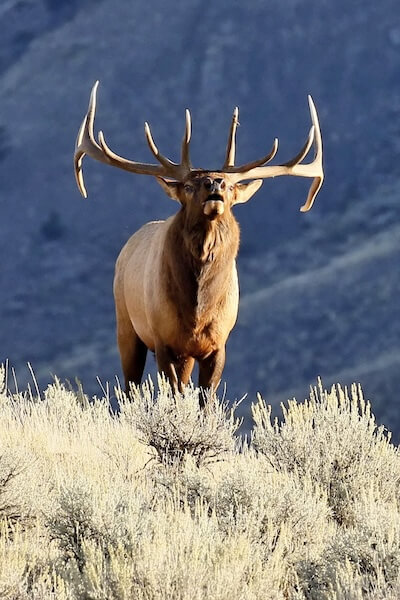
Elk rank among the biggest members of the deer family. Size figures vary by park. In Rocky Mountain National Park, bulls weigh 700 to 1,000 pounds, stand about five feet tall at the shoulder, and measure roughly eight feet from nose to tail, while cows weigh around 300 to 500 pounds and stand about four and a half feet tall. Yellowstone’s figures are about 700 pounds for bulls, about 500 for cows, and about 30 for newborn calves.
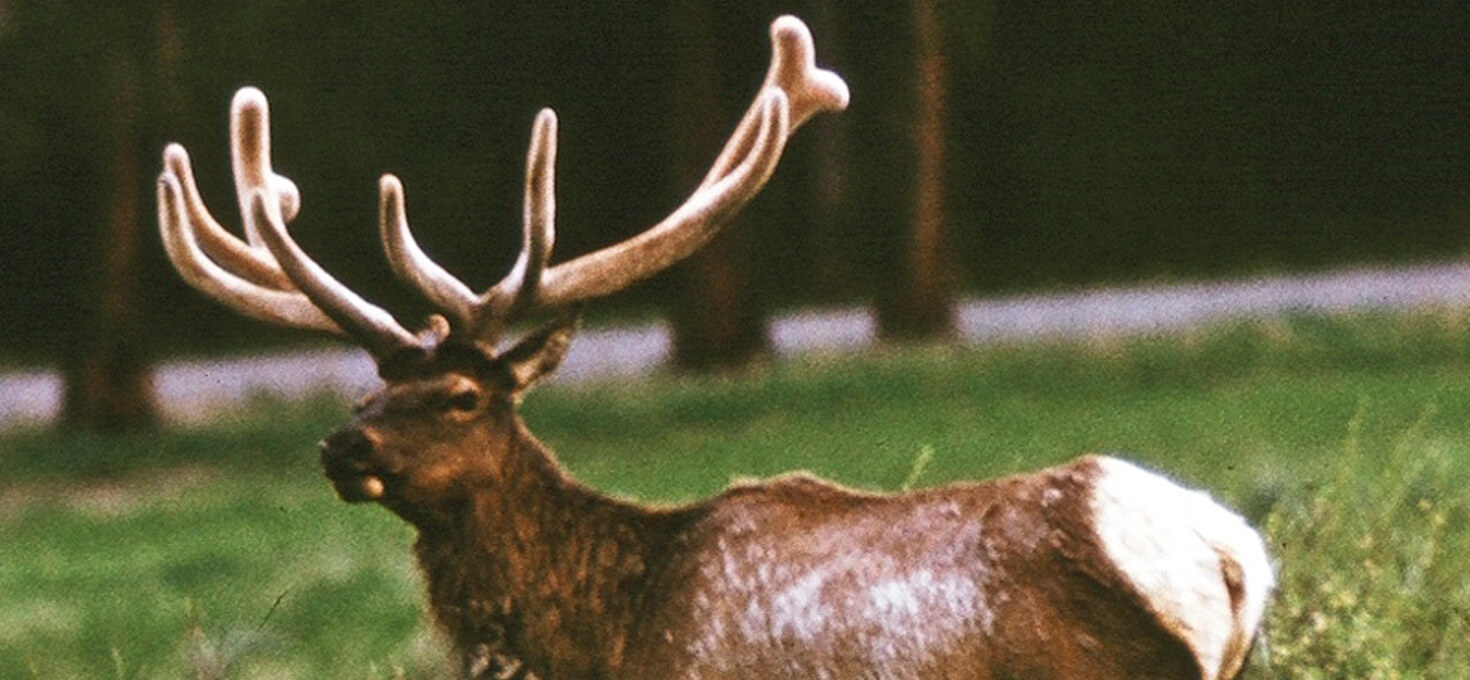
Both sexes have a dark brown mane, a lighter brown body, and a pale rump patch. Elk grow a thick winter coat each fall and shed it in spring.
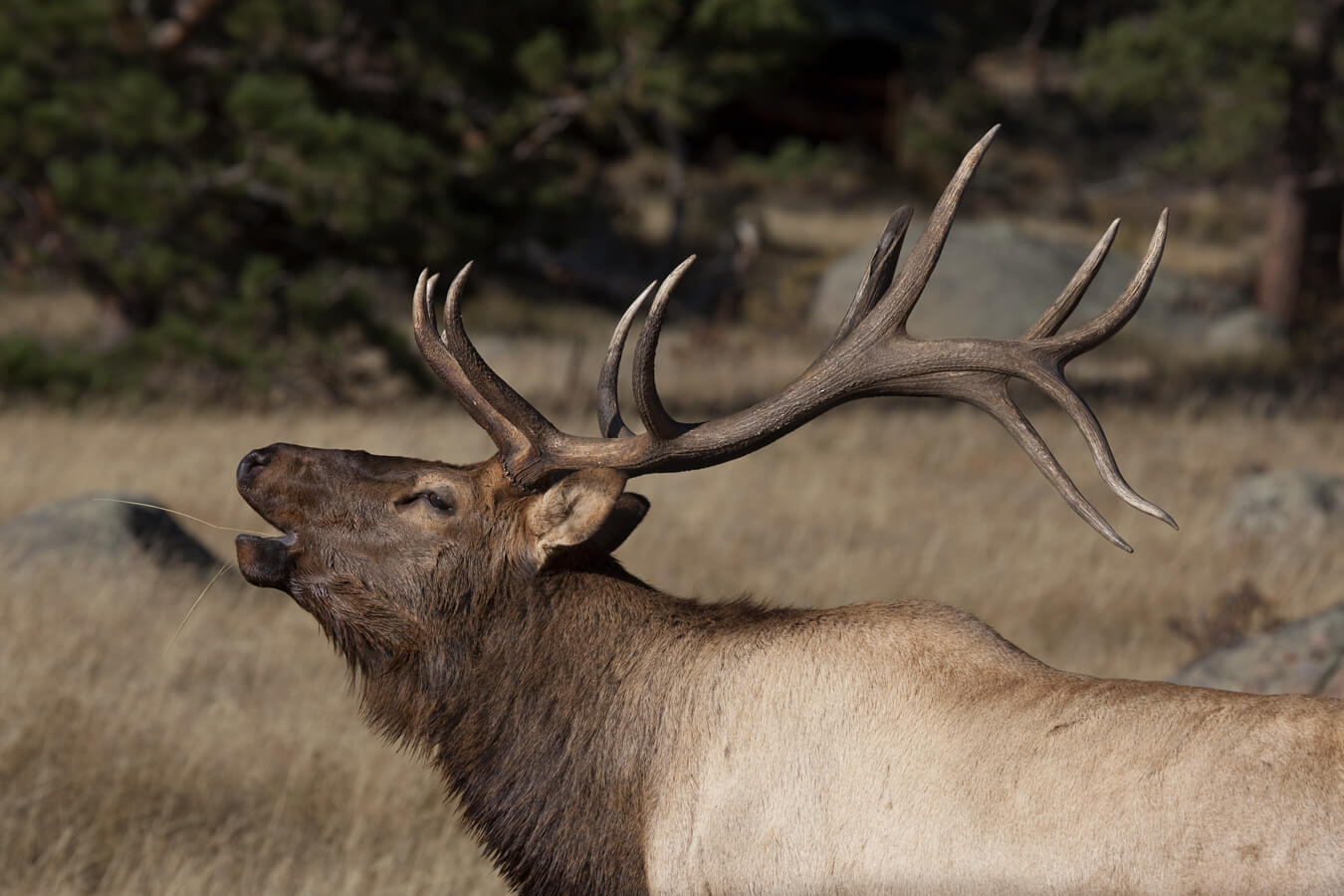
Antlers are what make bull elk famous. Only males grow them, and they are shed and regrown every year. Growth starts in spring, and the antlers can add as much as an inch a day. While growing, they are covered in a soft skin called velvet, which carries blood and minerals to the bone. Around early August, growth stops and bulls rub off the velvet. A healthy adult bull in Yellowstone carries a rack 55 to 60 inches long and close to six feet wide, with the pair weighing around 30 pounds, and in Rocky Mountain National Park a big bull’s rack can reach 40 pounds.
Antlers also roughly track age. Yearling bulls grow spikes 10 to 20 inches long. Two-year-olds usually carry four or five points per side, and bulls four years and older typically have six. Most bulls drop their antlers in March or April.
Habitat and Distribution
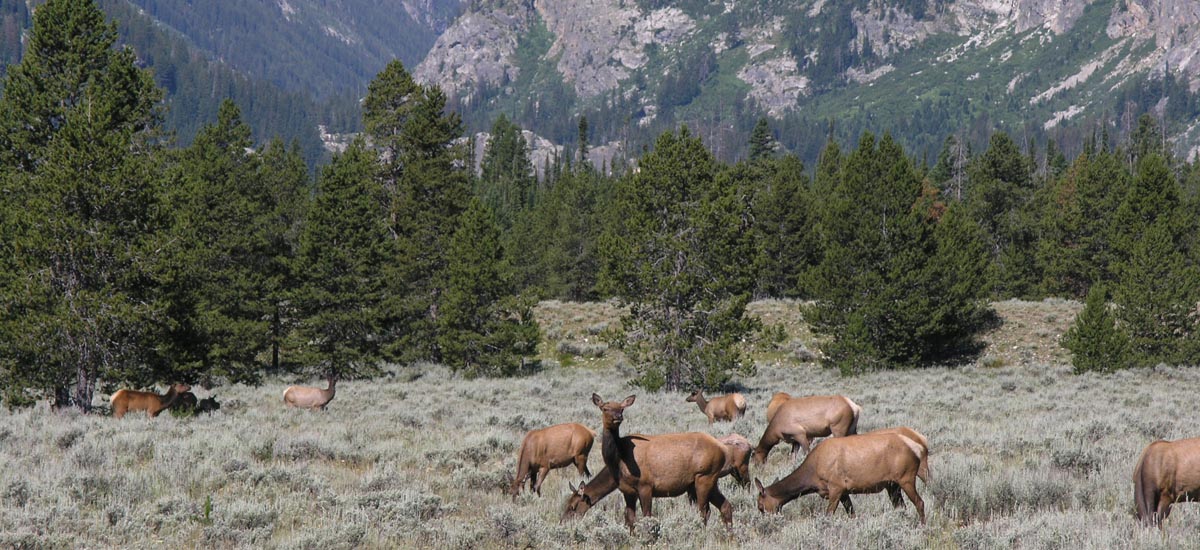
Rocky Mountain elk live in meadows, open forest, and the edges where the two meet. Scan open meadows and the forest edges that border them. Many herds are migratory. In summer, they climb to high meadows and tundra to feed on fresh growth. In fall and winter, they move down into lower valleys where snow is shallower and food is easier to reach. In Glacier, elk sometimes travel scores of miles to reach winter feeding grounds.
Across the Greater Yellowstone Ecosystem, elk number roughly 30,000 to 40,000. An estimated 10,000 to 20,000 elk spend the summer in Yellowstone from six or seven herds, but fewer than 2,000 spend the winter inside the park. Most migrate to lower elevations outside its boundaries. The elk that summer in Grand Teton move between the park and the neighboring National Elk Refuge and belong to the Jackson elk herd, which no other elk herd on the continent outnumbers.
Elk also live well beyond the high Rockies. At Theodore Roosevelt National Park, they use open shrubland and grassland broken up by hardwood draws and juniper slopes. On the South Rim of Grand Canyon, they live in ponderosa pine and pinyon-juniper forests. Elk are not native to northern Arizona, however, and they are poorly adapted to the dry climate and often rely on human water sources.
Behavior and Social Structure
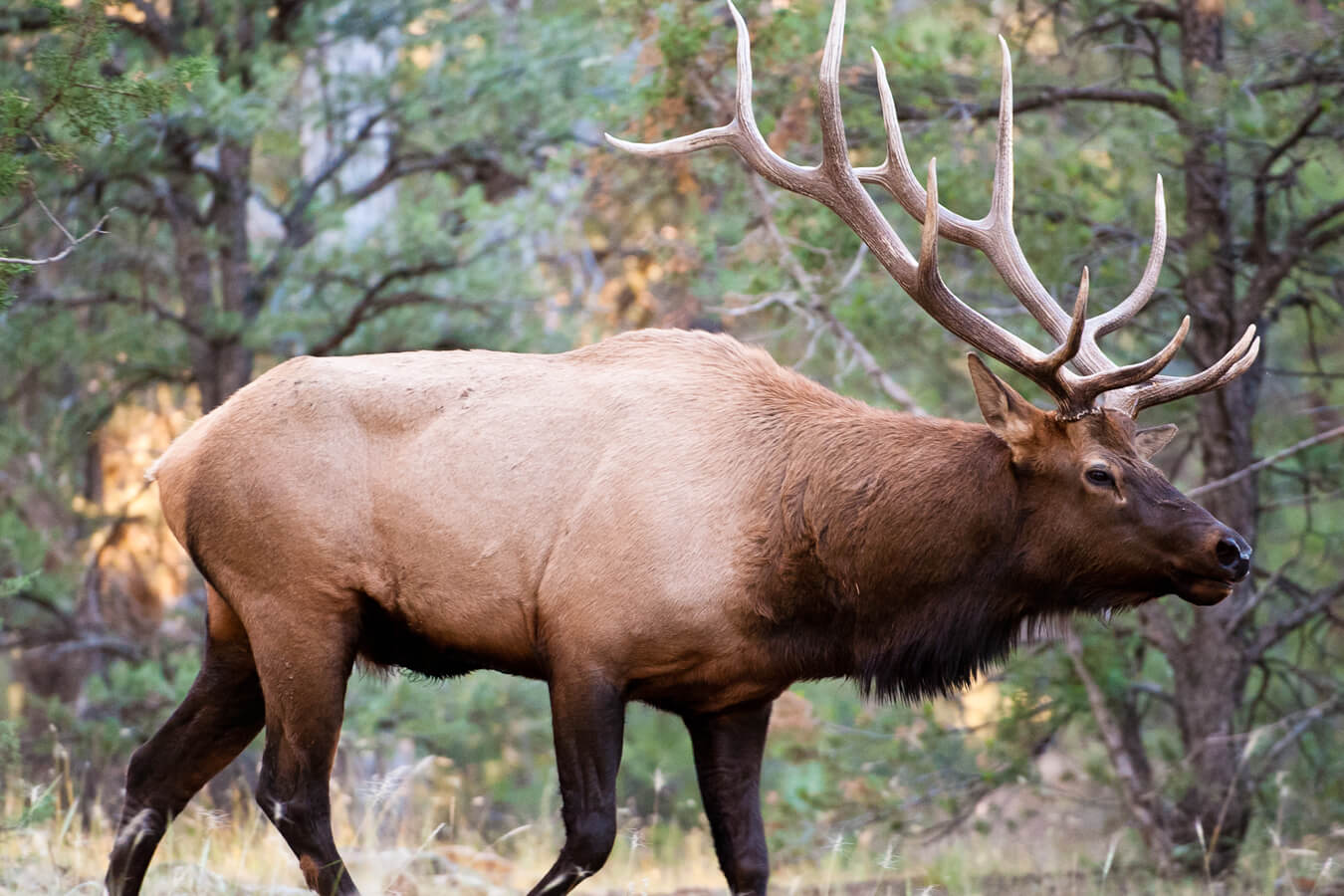
Elk are highly social, and herds can grow to a few hundred animals. For much of the year, large herds are made up of cows, calves, and young bulls called spikes. Mature bulls spend the months before the rut alone or in small groups.
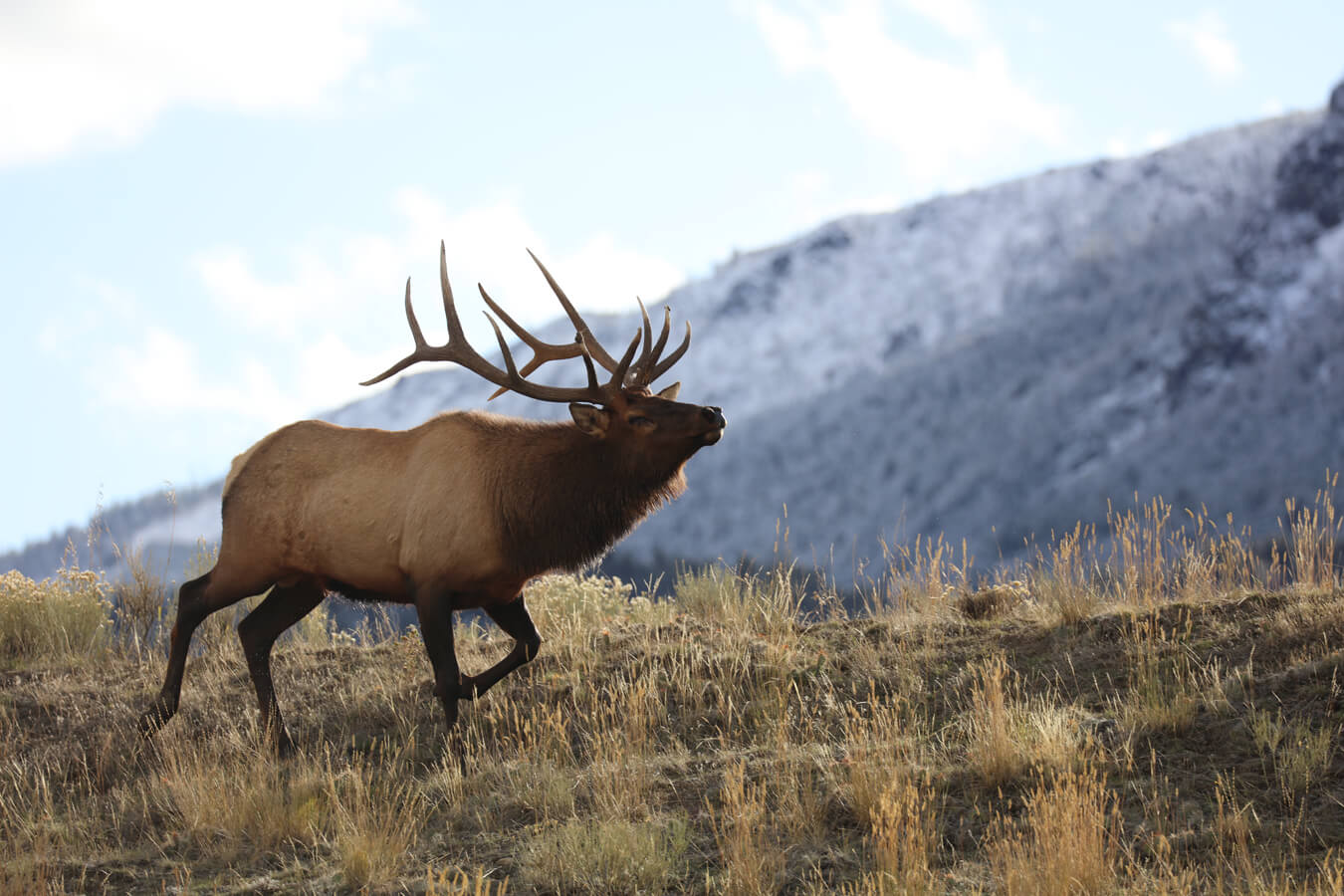
The rut is the highlight of the elk year. In Yellowstone it generally runs from early September to mid-October. Bulls bugle to announce themselves to cows and to challenge rivals. A bugle starts as a crescendo of deep tones, climbs fast into a shrill squeal, and then falls away into grunts. Fittingly, the word “rut” goes back to a Latin root for roar.
Dominant bulls gather groups of cows, called harems. In the Smokies, harems can reach up to 20 cows. Most competition is display rather than combat. Bulls show off their antlers, necks, and bodies, give off strong musky odors, and bugle. When rivals do fight, they crash antlers, push, and wrestle until the weaker bull gives up. Serious injuries are rare. Prime bulls eight to nine years old have the best chance of mating, and bulls head into winter worn down by weeks of little rest or food.
Calving runs from late May through June. Most cows have a single calf, which can join the herd after about two weeks. Calves are born without a scent, so cows often leave them hidden while they feed nearby. Spots fade by late summer. Lifespans vary: free-roaming elk usually live about 10 to 13 years, though on Yellowstone’s northern range they regularly reach about 18.
Diet and Foraging
Elk are herbivores that both graze and browse. They feed mainly on grasses and forbs and also browse shrubs, eating an average of 20 pounds of vegetation a day.
Their diet changes with the seasons and the landscape. Yellowstone’s list of elk foods covers grasses and sedges, other herbs and shrubs, aquatic plants, conifer needles, and both aspen and burned bark. At Theodore Roosevelt, elk eat grasses, forbs, and shrubby plants. In Grand Canyon, they eat grasses, shrubs, and forbs, and they often sip from the puddles that collect beneath water bottle filling stations and graze the irrigated plants around buildings.
Daily routines are built around feeding at the edges of the day. Mornings and evenings are for feeding; through the middle of the day, elk bed down in sheltered spots to digest. At Theodore Roosevelt, they graze on open butte tops or valley bottoms at dawn, spend the day in shaded juniper thickets, and come out again near sunset.
Role in the Ecosystem
Elk are important prey across much of the West. In Yellowstone, elk make up approximately 85 percent of winter wolf kills. Bears and mountain lions eat them, and at least 12 kinds of scavengers, coyotes and bald eagles among them, feed on their carcasses.
Their grazing and browsing shape plant communities. In Yellowstone, elk browsing and nitrogen deposition can affect plant production, soil fertility, and plant diversity, and competition with elk can affect pronghorn, mule deer, moose, bison, and bighorn sheep. When elk numbers become too high, vegetation suffers. Rocky Mountain National Park’s elk population reached record highs in the late 1990s, damaging vegetation and other wildlife communities. The park’s Elk and Vegetation Management Plan now targets a more natural winter count of 600 to 800 elk in the park’s lower valleys.
Where large predators are missing, elk populations can grow quickly. Theodore Roosevelt National Park attributes the rapid growth of its herd to productive forage, good habitat, and the absence of natural predators. Disease is another factor. Chronic wasting disease, a fatal disease of deer and elk, spread to Wind Cave’s elk and deer from a neighboring private elk herd in 2003, and Yellowstone confirmed its first case, in a mule deer, in 2023.
Disappearance and Recovery
Elk once ranged across much of North America. By 1900, their numbers had fallen so low that conservationists worried the species could disappear.
The Rocky Mountains were not spared. Estes Valley settlers hunted elk hard and shipped a large share of the meat to Denver markets. Elk were all but gone from the area by 1890. In 1913 and 1914, before the park was established, 49 elk from Yellowstone were transplanted to the area. With wolves and grizzly bears being eliminated at the same time, the herd recovered quickly.
Wind Cave followed a similar path. Elk had been extirpated from South Dakota by the late 1800s. Wind Cave got its elk back in 1914 and 1916, when 42 animals were brought in from Yellowstone and from Jackson Hole, Wyoming. Close to 100 years on, the herd numbered several hundred and had supplied animals to restore elk in many parts of the country. One of those herds lives in Theodore Roosevelt National Park. Elk disappeared from the North Dakota badlands by the late 1800s, and in 1985 the park reintroduced elk from Wind Cave to its South Unit.
Farther south, Rocky Mountain elk replaced a lost relative. Around Carlsbad Caverns National Park, Merriam’s elk had died out by about 1900, and Rocky Mountain elk, a close relative, were later brought into the region to take their place.
Elk have even returned to the East. Elk were gone from North Carolina by the late 1700s and from Tennessee by the mid-1800s. In 2001, 25 elk from Land Between the Lakes National Recreation Area on the Tennessee-Kentucky border were released in the Smokies’ Cataloochee Valley, followed by 27 more in 2002. About 270 elk now live in western North Carolina, and roughly 150 of them use the park for at least part of the year.

Rocky Mountain Elk Safety
Elk can look calm, but they are large, powerful wild animals. Distance rules differ by park. Yellowstone requires visitors to stay at least 25 yards from elk at all times. Rocky Mountain National Park asks visitors to stay at least 75 feet, or about two bus lengths, from elk. Grand Canyon recommends at least 100 feet and calls elk one of the most dangerous animals in the park. In the Smokies, willfully approaching within 25 yards, or any distance that disturbs elk, is illegal.
Spring and fall need extra care. In Yellowstone, cows are especially protective of their calves from May to early July and may charge or kick even when people are more than 25 yards away. During the September and October rut, bulls are on edge and hard to predict, and they may charge people or vehicles that come too near. If an elk charges, put a building, a vehicle, or a tall, sturdy barrier between you and the animal, fast.
Never touch or move an elk calf. A calf found alone is usually not abandoned. Its mother is often feeding nearby. Stay by the roadside instead of walking into fields, and use binoculars or a telephoto lens. It is against the law to feed wildlife in any national park, and Rocky Mountain National Park bans the use of spotlights or calls to find or lure wildlife. During the rut, the park also closes off-trail foot travel in key meadows, including Horseshoe Park, Moraine Park, and Upper Beaver Meadows, each day from 5 in the evening until 10 the next morning. Check current park rules before you go.
National Park Presence
Rocky Mountain elk are among the most widespread large mammals in our western National Parks, and restored herds now live as far east as the Dakotas. For photographers visiting the 63 designated U.S. National Parks, these parks have NPSpecies records of elk as Present that are filed at the species level within the range of Rocky Mountain elk or list nelsoni as a synonym:
According to National Park Service NPSpecies records, elk are Abundant in Yellowstone, Grand Teton, Rocky Mountain, Glacier, Theodore Roosevelt, Wind Cave, and Grand Canyon, and Common in Mesa Verde and Zion. Grand Canyon, Carlsbad Caverns, and Big Bend list their elk as non-native. Most of these records are filed at the species level, as Cervus elaphus or Cervus canadensis. Yellowstone’s and Carlsbad Caverns’ records use the common name Rocky Mountain elk, and the records for Bryce Canyon, Zion, Guadalupe Mountains, Carlsbad Caverns, and Big Bend list nelsoni as a synonym. Mount Rainier’s record lists elk as Present, Native, and Abundant and names both nelsoni and roosevelti as synonyms. Its elk herd was reestablished through releases of Rocky Mountain elk from Yellowstone and Grand Teton onto lands next to the park between 1912 and 1933, so Mount Rainier also appears on our Roosevelt elk page.
NPSpecies lists elk as Unconfirmed in Badlands National Park and as historical in Indiana Dunes National Park and Voyageurs National Park. Elk in Pacific Northwest and northern California parks such as Olympic and Redwood are Roosevelt elk, which are covered on our Roosevelt Elk page.
Rocky Mountain Elk Photography Tips
Timing is everything with elk. Elk do most of their feeding early and late in the day, which happens to be when the light is best. In Yellowstone, good bets include Cascade Meadows, Madison Canyon, and Lamar Valley in summer, and Mammoth Hot Springs and the Madison River during the rut. In Rocky Mountain, try Moraine Park, Horseshoe Park, and Upper Beaver Meadows. In the Smokies, look in Cataloochee, Oconaluftee, and Balsam Mountain. At Theodore Roosevelt, scan the butte tops west of Wind Canyon Overlook at sunrise or sunset.
Each season offers different images. Early summer brings spotted calves and bulls in velvet. September and early October bring the rut, with bugling bulls, sparring, and frosty dawn light. Dawn and dusk are the likeliest times to hear a bugle. Try including the landscape, too. A bull standing at the edge of a misty meadow often tells a better story than a tight portrait.
A telephoto lens is essential for photographing Rocky Mountain elk responsibly. If you already own or want to own a professional-grade mirrored camera like the Canon EOS 5D Mark IV Full Frame Digital SLR, we recommend using a Canon EF 100-400mm f/4.5-5.6L IS II USM Lens zoom lens for wildlife photography. If you have or are interested in a newer mirrorless model like the Canon EOS R5 Full-Frame Mirrorless Camera, we recommend using a Canon RF100-400mm F5.6-8 IS USM for long-distance shots.
Not quite ready to invest in traditional professional-grade camera equipment but want to enhance the quality of your cell phone photographs? Consider using a Moment Tele 58mm Mobile Lens II for improved reach, and use a Moment camera case with a lens mount to attach it to your phone. Since cell phones generally cannot provide the same reach as a dedicated telephoto camera lens, never compensate by moving dangerously close to wildlife.
No photograph is worth disturbing an animal or putting yourself or others at risk.
Why Are They Called Rocky Mountain Elk?
The name “elk” has a confusing history. European American settlers used the word “elk” for this animal, even though in Europe the same word refers to the moose. That still causes confusion for European visitors. The Shawnee word “wapiti,” which Yellowstone translates as “white deer” or “white-rumped deer,” is another common name. NPSpecies lists Rocky Mountain National Park’s record under the common name “wapiti, or American elk.”
“Rocky Mountain” separates this subspecies from Roosevelt, tule, and Manitoban elk. The scientific name nelsoni was published by Vernon Bailey in 1935 in a paper titled “A New Name for the Rocky Mountain Elk.”
A Note About Rocky Mountain Elk Taxonomy
Readers researching Rocky Mountain elk may encounter more than one scientific name for the same animal. This page uses:
Cervus canadensis nelsoni
However, many National Park Service pages and older scientific records identify Rocky Mountain elk as:
Cervus elaphus nelsoni
The difference reflects changes in how North American elk are classified. The question is still debated: some experts lump North American elk with Europe’s red deer (Cervus elaphus) as one species. Today most scientists use Cervus canadensis for the elk of North America. The U.S. Forest Service’s Fire Effects Information System lists four North American subspecies: Manitoban, tule, Rocky Mountain, and Roosevelt elk. Genetic studies disagree on how distinct some of them are, and translocations have mixed subspecies in some areas.
National Park Service NPSpecies records show this history. Many park records still use Cervus elaphus, others use Cervus canadensis, and several list nelsoni as a synonym. For consistency throughout National Park Photographer, this page uses Cervus canadensis nelsoni while recognizing the older names that visitors may see in park publications and scientific literature. The National Park Service does not name a subspecies for the restored elk herd in Great Smoky Mountains, which came from Land Between the Lakes.
Final Thoughts
Rocky Mountain elk are among the most memorable wildlife of our western National Parks. A bugle echoing across a frosty meadow, a bull carrying a full rack through the timber, or a cow guarding a spotted calf are scenes that stay with visitors for years.
Elk also show how much our National Parks have done for wildlife restoration. Herds rebuilt in Yellowstone helped restore elk to Rocky Mountain and Wind Cave, and Wind Cave’s elk helped return them to Theodore Roosevelt. Elk have even returned to the southern Appalachians.
Watching elk responsibly is part of the experience. By keeping our distance, giving cows with calves and rutting bulls extra room, staying on roads and trails in closed meadows, and using telephoto lenses rather than moving closer, photographers and visitors can enjoy elk without putting themselves or the animals at risk. Giving elk room is the best way to keep them, and you, safe and wild.
Want more information about the amazing wildlife that call our National Parks home? Take a look at our National Park Wildlife page to explore the various parks and the animals in them. Planning on visiting a National Park in the near future? Be sure to follow park regulations, practice Leave No Trace principles, and prioritize both your safety and the well-being of wildlife while exploring.
Joyful Journeys!
Bonnie, Co-Owner, National Park Photographer
Want to learn more about Rocky Mountain elk? Check out the additional resources below!
Rocky Mountain Elk Books & Field Guides
- Douglas Eddie Elk Plush
- Peterson Field Guide to Mammals of North America
- Glacier and Waterton Lakes National Parks Map (National Geographic Trails Illustrated)
- Mammal Tracks & Sign: A Guide to North American Species
- 10×42 Binoculars for Wildlife Viewing
- Monocular for Wildlife Viewing
- Camera Bean Bag for Wildlife Photography
Please note, by making purchases through our affiliate links, you are supporting our mission to celebrate and showcase our National Parks and the photographers who frequent them. As an Amazon Associate, National Park Photographer earns from qualifying purchases at no cost to you. We appreciate your support.
References & Additional Resources
- National Park Service — Yellowstone National Park: Elk
- National Park Service — Yellowstone National Park: Safety
- National Park Service — Rocky Mountain National Park: Elk
- National Park Service — Grand Teton National Park: Elk Management
- National Park Service — Glacier National Park: Mammals
- National Park Service — Wind Cave National Park: Rocky Mountain Elk
- National Park Service — Theodore Roosevelt National Park: Elk
- National Park Service — Theodore Roosevelt National Park: Elk Management
- National Park Service — Grand Canyon National Park: Elk
- National Park Service — Carlsbad Caverns National Park: Mammals
- National Park Service — Great Smoky Mountains National Park: Elk
- National Park Service — NPSpecies: Yellowstone National Park Species List
- National Park Service — NPSpecies: Rocky Mountain National Park Species List
- National Park Service — NPSpecies Species Search
- U.S. Forest Service — Fire Effects Information System: Cervus elaphus
- Bailey, V. (1935). A New Name for the Rocky Mountain Elk. Proceedings of the Biological Society of Washington 48:187–189
Do you want to be featured on National Park Photographer?
Why wait! Contact us today at nationalparkphoto@gmail.com for a chance to be a Featured National Park Photographer!