Every photographer wants to create more compelling and memorable photographs. When working in color, we can use vibrant hues and color contrasts to capture the viewer’s attention. Black-and-white photography presents a different challenge. Without color to carry the image, we must rely on other visual elements to create impact, convey emotion, and make our photographs stand out.
Over the years, I have found that three elements can make a significant difference in the strength of a black-and-white photograph: dramatic lighting, atmosphere, and motion. Including one or more of these elements in your composition can transform an ordinary scene into something much more compelling and perhaps even an award-winning photograph.
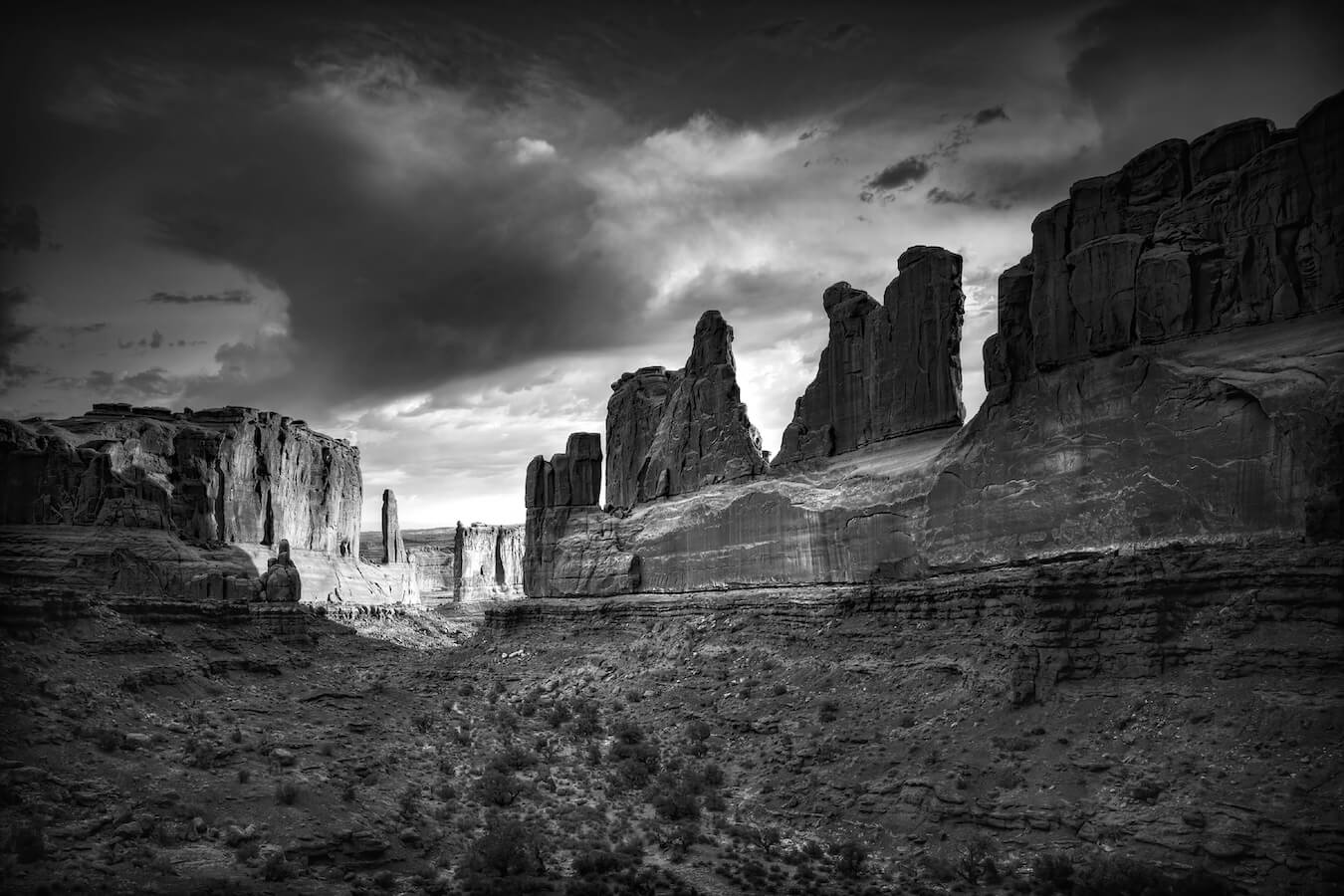
#1 – Look for Dramatic Lighting in the Landscape
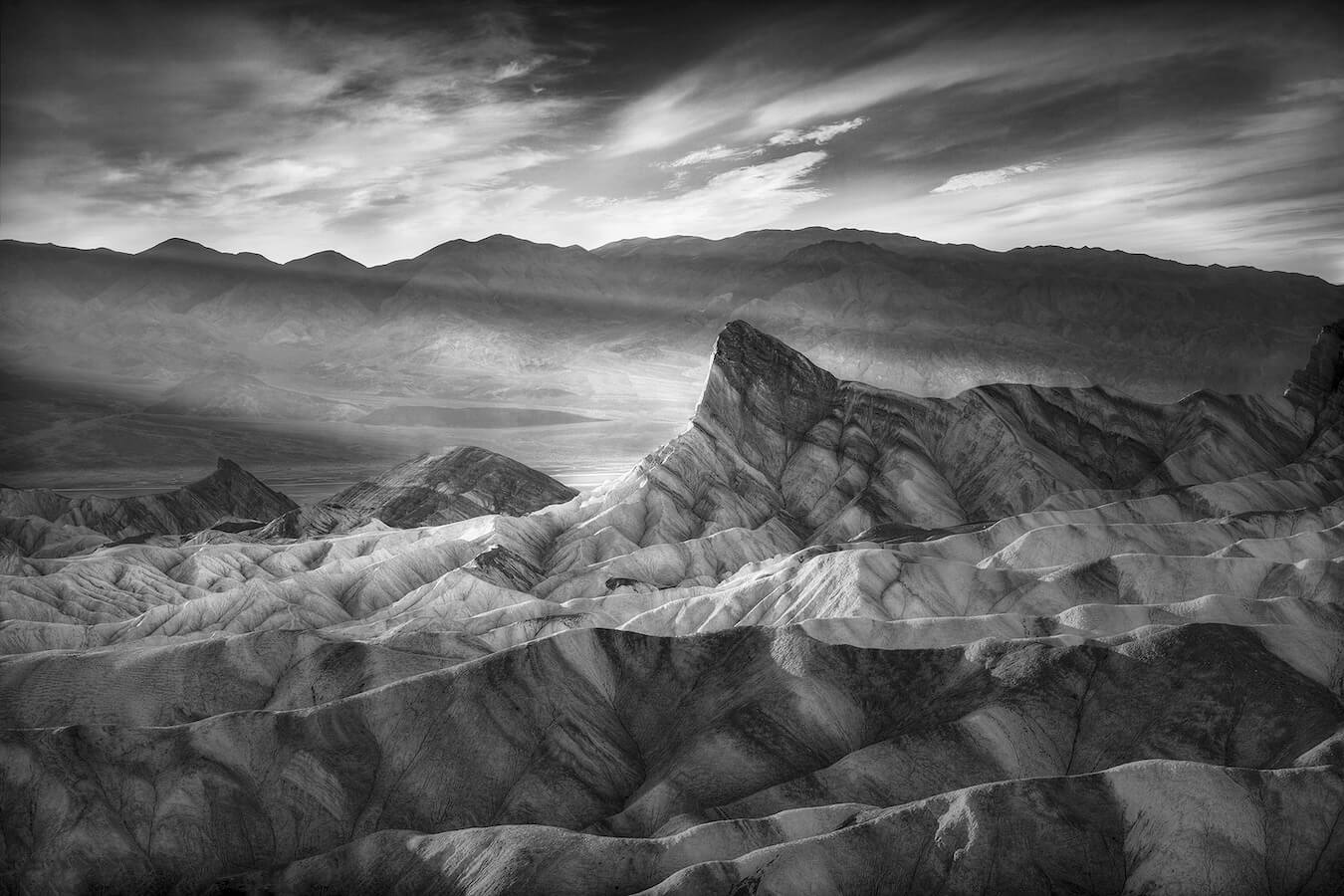
Light is one of the most important elements in photography, and in black-and-white photography, it can make all the difference. As photographers, we need to look beyond the subject itself and pay attention to how light illuminates the landscape, reveals texture, creates shadows, and defines shapes.
Ask yourself: Where is the light coming from? Is it harsh or soft? Does it create strong contrasts, or does it gently illuminate the scene? Understanding the quality and direction of light will help you determine how best to use it to strengthen your photograph.
Midday sunlight can create strong contrasts between light and shadow, emphasizing textures and bold forms. Early morning and late afternoon light often arrives from a lower angle, creating long shadows and revealing details that might otherwise go unnoticed. The warm glow of golden hour may be associated with color photography, but its directional light can be equally beautiful when translated into black and white.
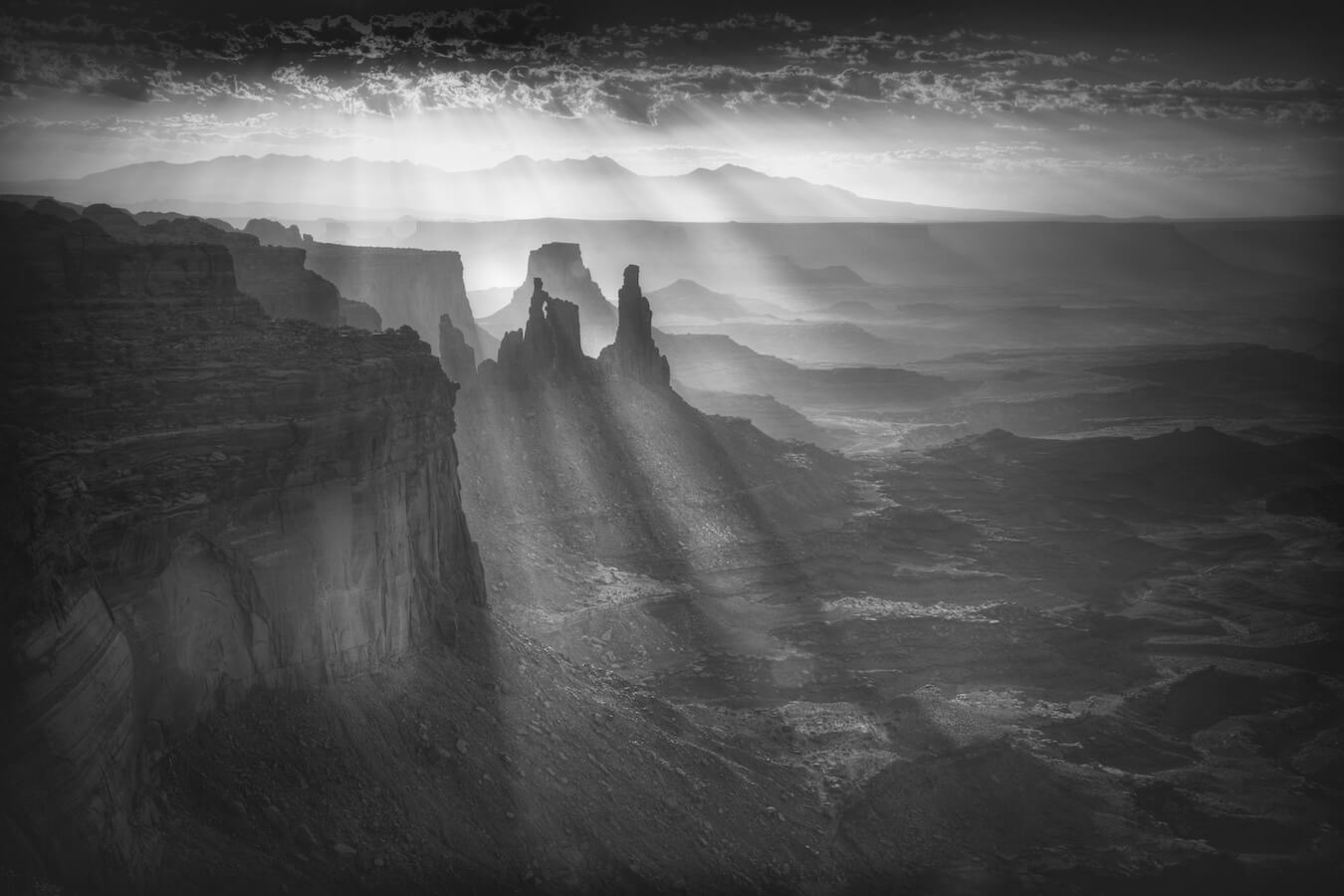
The periods just before sunrise and after sunset can offer another opportunity. The soft, diffused light during these times can simplify a scene, reduce harsh contrasts, and create subtle tonal transitions that work beautifully in monochrome.
Rather than simply photographing a scene because it is beautiful, take time to observe how the light interacts with it. Look for illuminated mountain peaks, shafts of sunlight breaking through clouds, dark shadows sweeping across a valley, or a single tree standing against a softly lit background.
The key is to make the light part of your composition, not simply something that happens to be there.
#2 – Use Atmosphere to Create Mood and Emotion in Your Black-and-White Photography
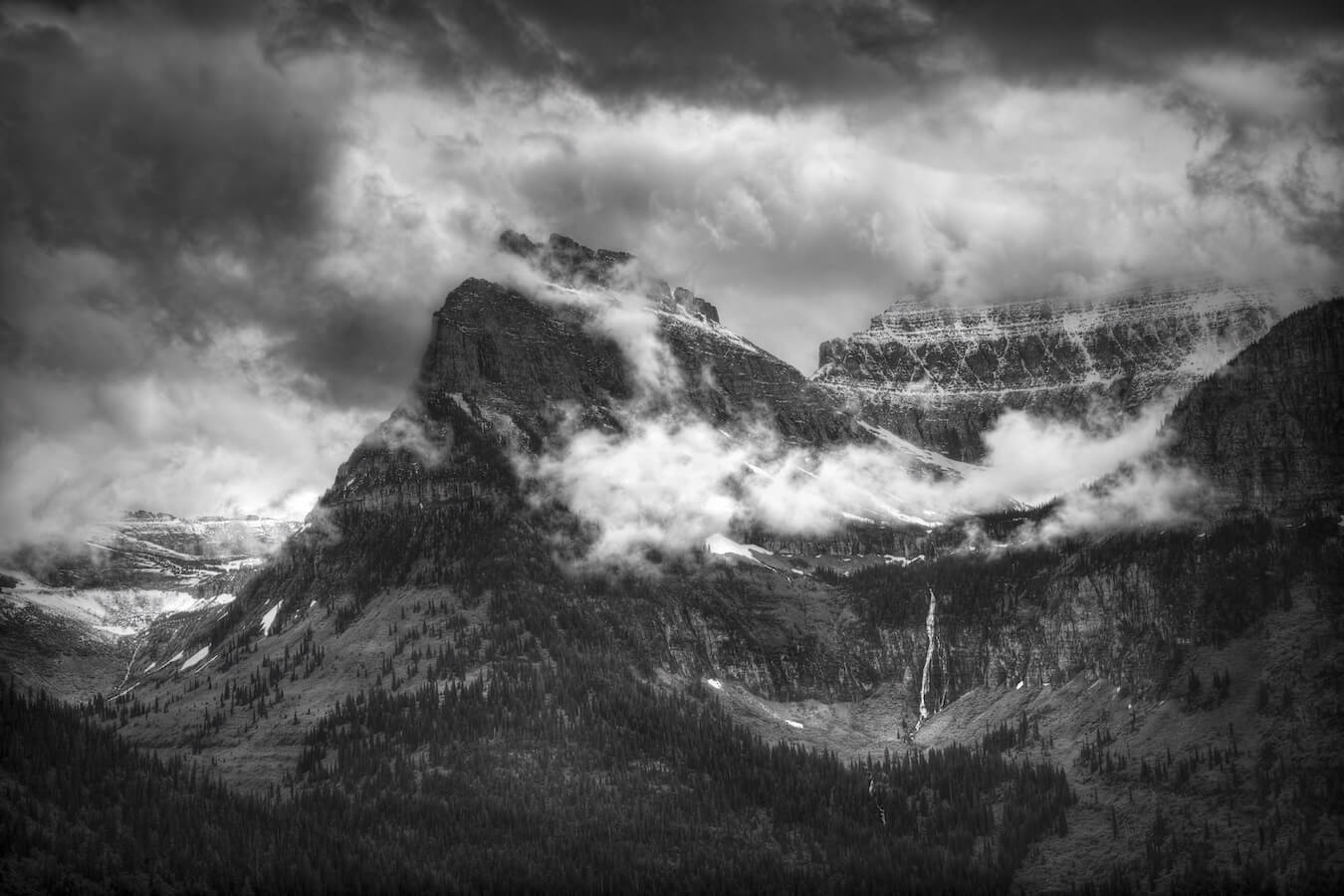
Atmosphere is another powerful ingredient in compelling black-and-white photography. Some of my favorite conditions occur on cloudy, foggy, rainy, or snowy days—times when the landscape takes on a completely different character.
Fog is especially effective in monochrome photography. It can simplify a busy scene, soften distant features, and create a sense of depth as elements gradually disappear into the mist. It can also introduce mystery, quietness, and emotion. A familiar landscape photographed in fog may become an entirely different subject, with layers of trees, mountains, or rocks emerging from the haze.
Clouds can add drama and visual interest to a photograph. A sky filled with textured clouds can balance a strong foreground and give the composition a sense of scale. Overcast conditions, meanwhile, can provide soft, even illumination that reveals subtle details without the harsh shadows of direct sunlight.
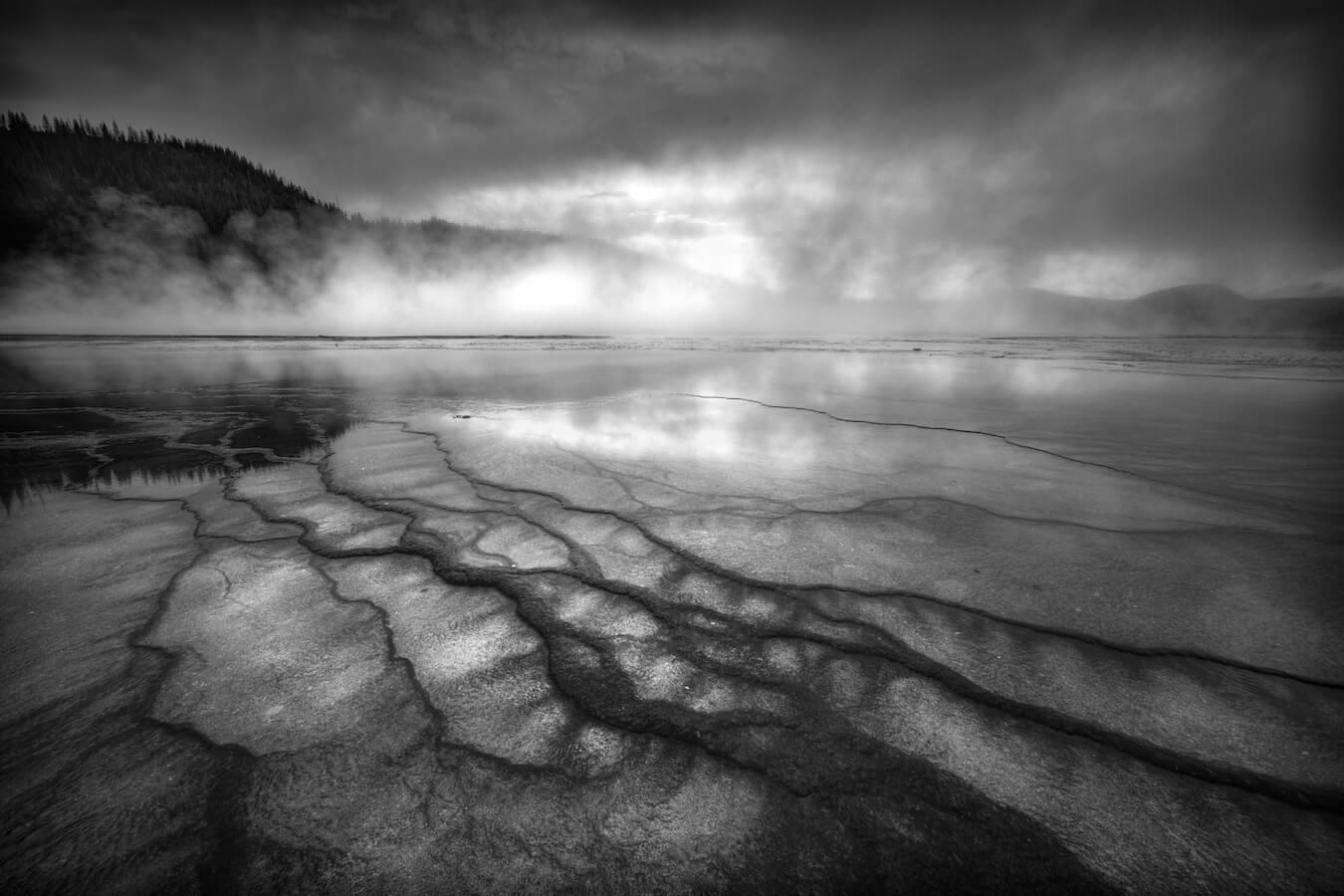
Rain offers its own creative possibilities. Wet rocks, reflective surfaces, and mist rising from the landscape can add texture and depth. Snow is another favorite subject of mine. It simplifies the landscape, creates striking contrasts, and emphasizes the underlying shapes and patterns of the terrain. When wind sweeps snow across an open landscape, it can create flowing lines and sweeping patterns that add energy and movement to the image.
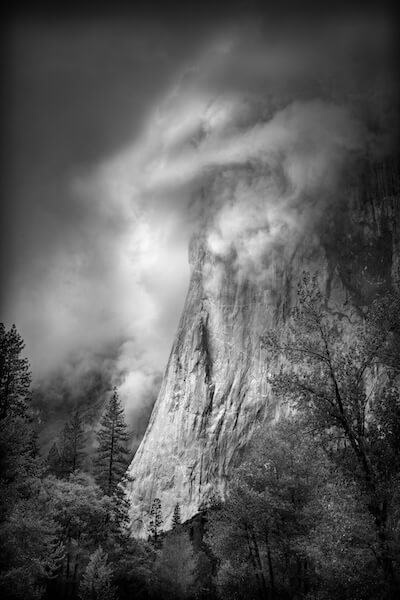
Don’t let changing weather conditions discourage you from photographing. Instead, learn to recognize the creative opportunities they offer. Some of the most memorable landscape photographs are made when conditions are less than perfect or when the weather transforms an ordinary scene into something extraordinary.
Look for atmosphere that adds character, simplifies the composition, or helps communicate the feeling you experienced when you were there.
#3 – Incorporate Motion into Landscape Photographs
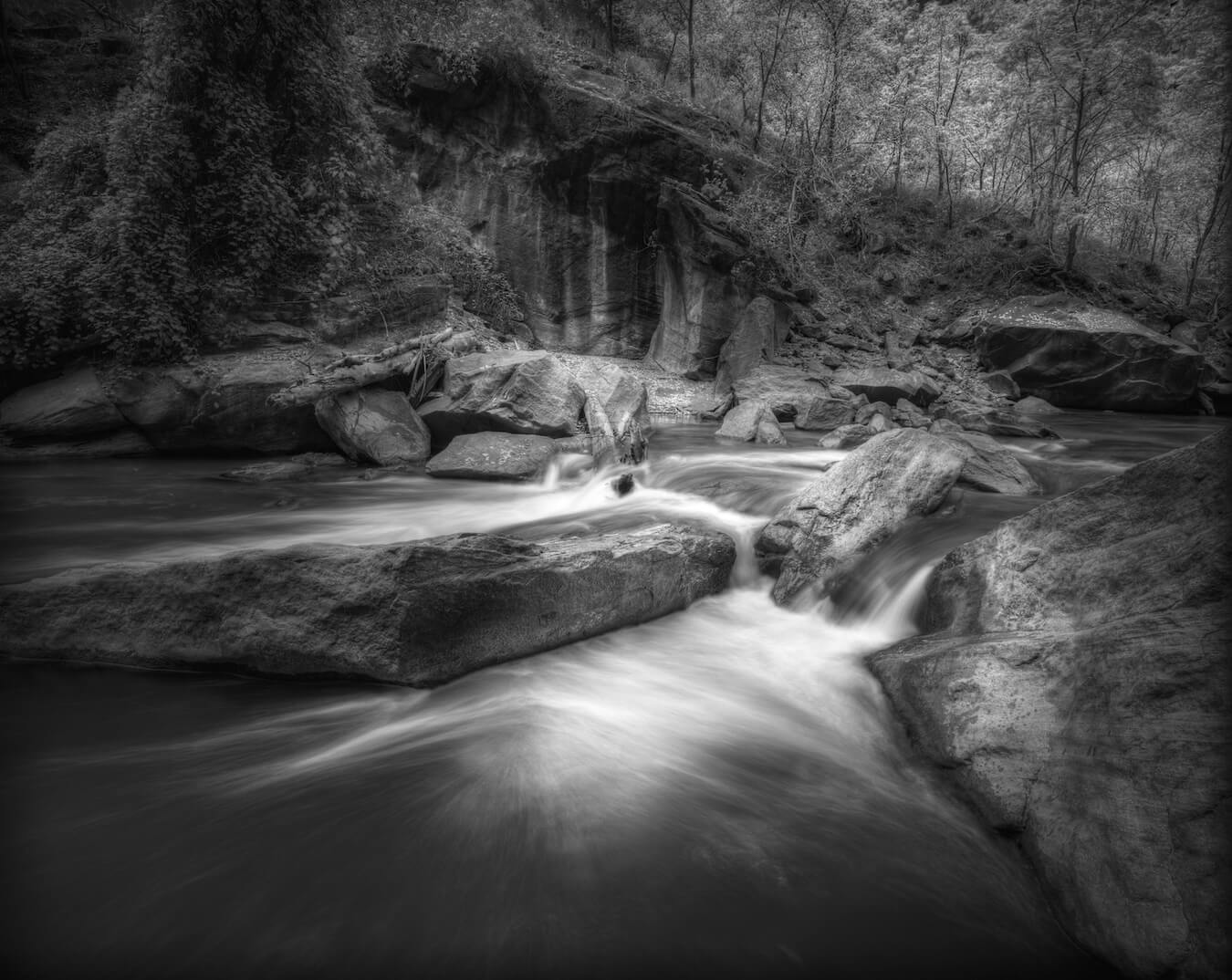
Motion can introduce energy, rhythm, and visual interest into a photograph. Water is one of my favorite subjects for black-and-white photography because it is constantly changing and can be portrayed in so many different ways.
With a fast shutter speed, you can freeze moving water and reveal intricate details that are difficult to appreciate with the naked eye. Individual droplets, splashes, and the texture of a rushing stream can become important elements in your composition.
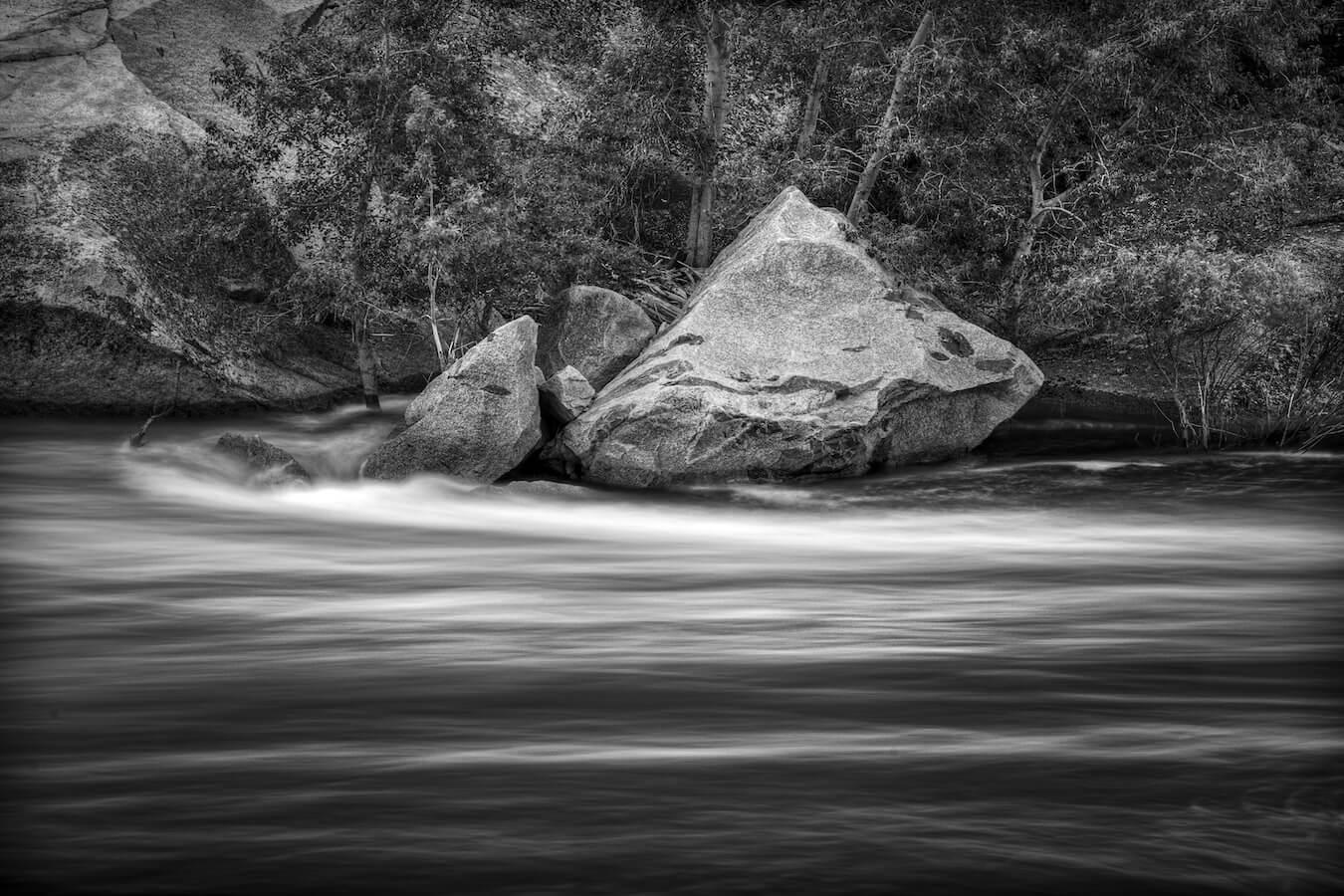
My personal preference, however, is often to use a long exposure with the camera mounted on a tripod. By allowing the shutter to remain open longer, moving water becomes smooth and flowing, creating an interesting contrast with the stationary rocks and surrounding landscape.
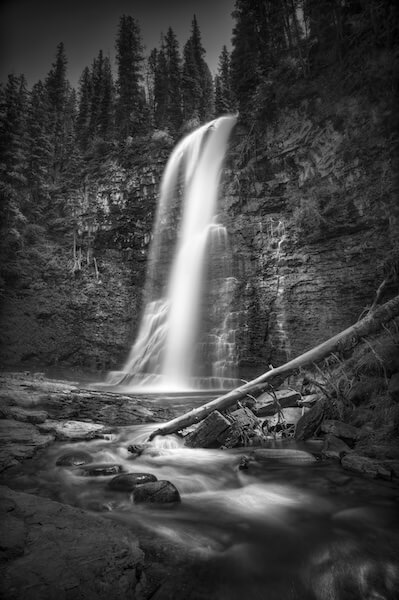
Water cascading over a ledge, swirling around a boulder, or flowing through a rocky stream can produce beautiful patterns and abstract forms. These patterns become especially effective in black and white, where the emphasis shifts to tonal contrasts, lines, and textures.
I often bracket my exposures using several different shutter speeds. This allows me to compare the results later and decide which rendering of the water best complements the composition. Sometimes a moderately long exposure preserves enough detail to show the character of the water, while a much longer exposure creates a softer, more ethereal appearance. There is no single correct approach; the goal is to find the shutter speed that best expresses your creative vision.
Water is not the only subject that benefits from motion. Wind blowing through grasses, leaves drifting across a forest floor, branches moving in a storm, or sand sweeping across a desert can all introduce compelling patterns and a sense of movement.
When you are composing a photograph, look for opportunities to use motion deliberately. Consider whether you want to freeze it, blur it, or combine moving and stationary elements to create a stronger visual relationship.
Motion gives you another way to interpret a scene rather than simply record what it looks like.
Bring These Three Elements Together
There are many ways to create stronger black-and-white photographs, but dramatic lighting, atmosphere, and motion are three excellent places to begin.
The next time you are out photographing a national park, coastline, or wilderness landscape, take a moment to look beyond the obvious subject. Pay attention to the direction and quality of the light. Notice how fog, clouds, rain, or snow might change the mood of the scene. Look for movement that can add energy, rhythm, or beautiful patterns to your composition.
You don’t need all three elements in every photograph. Sometimes dramatic light alone is enough to transform a scene. In other situations, fog combined with moving water can create an image that is both atmospheric and dynamic. The possibilities are endless.
The more you practice recognizing these opportunities, the more naturally they will become part of your photographic vision.
For me, the appeal of black-and-white photography lies in its ability to reveal the underlying character of a landscape through light, atmosphere and motion. By learning to recognize and use these three elements, you can move beyond simply documenting a beautiful place and begin creating photographs that capture its mood, character, and emotional impact.
Do you want to take your black-and-white photography to the next level? You can learn more in my books, “Digital Black & White Landscape Photography: Fine Art Techniques from Camera to Print” and “iPhone Photography for Everybody: Black & White Landscape Techniques.“
Happy Travels!
Gary Wagner, Featured National Park Photographer Ambassador
Want to learn more about Black and White Photography? Check out these guides & books:
- Mastering Black & White Photography
- Black and White Photography: A Basic Manual Third Revised Edition
- The Art of Seeing in Black and White: The complete guide to Black and White photography
- The Experimental Darkroom: Contemporary Uses of Traditional Black & White Photographic Materials
- Ansel Adams: The National Parks Service Photographs
- 52 Assignments: Black & White Photography
- Creative Black and White: Digital Photography Tips and Techniques
Please note, by making purchases through our affiliate links, you are supporting our mission to celebrate and showcase our National Parks and the photographers who frequent them. As an Amazon Associate, National Park Photographer earns from qualifying purchases at no cost to you. We appreciate your support
Do you want to learn more? Check out our Photography Masterclass Series!
Do you want to be featured on National Park Photographer?
Why wait! Contact us today at nationalparkphoto@gmail.com for a chance to be featured as a National Park Photographer!