Standing at the edge of the Grand Canyon, it’s difficult to comprehend the immense scale of the landscape before you. Canyon walls stretch for miles, revealing countless layers of geological history. Sunlight illuminates distant formations, while intricate patterns of erosion and vegetation fill the scene. As photographers, we try to capture that experience. But even today’s excellent digital cameras have limitations when it comes to recording the extraordinary amount of detail in such a vast landscape. That’s where gigapixel photography comes in.
I’ve been involved in photography for more than 60 years, and over the past 15 years I’ve developed techniques for producing extremely high-resolution panoramic photographs. Many of my favorite subjects are found in America’s National Parks, where the combination of expansive landscapes and extraordinary natural detail makes this approach particularly rewarding.
What Is a Gigapixel Photograph?
A gigapixel photograph contains at least one billion pixels. To put that into perspective, my Canon R5 produces individual photographs containing approximately 45 million pixels. A one-gigapixel photograph contains more than 22 times that amount of image information.
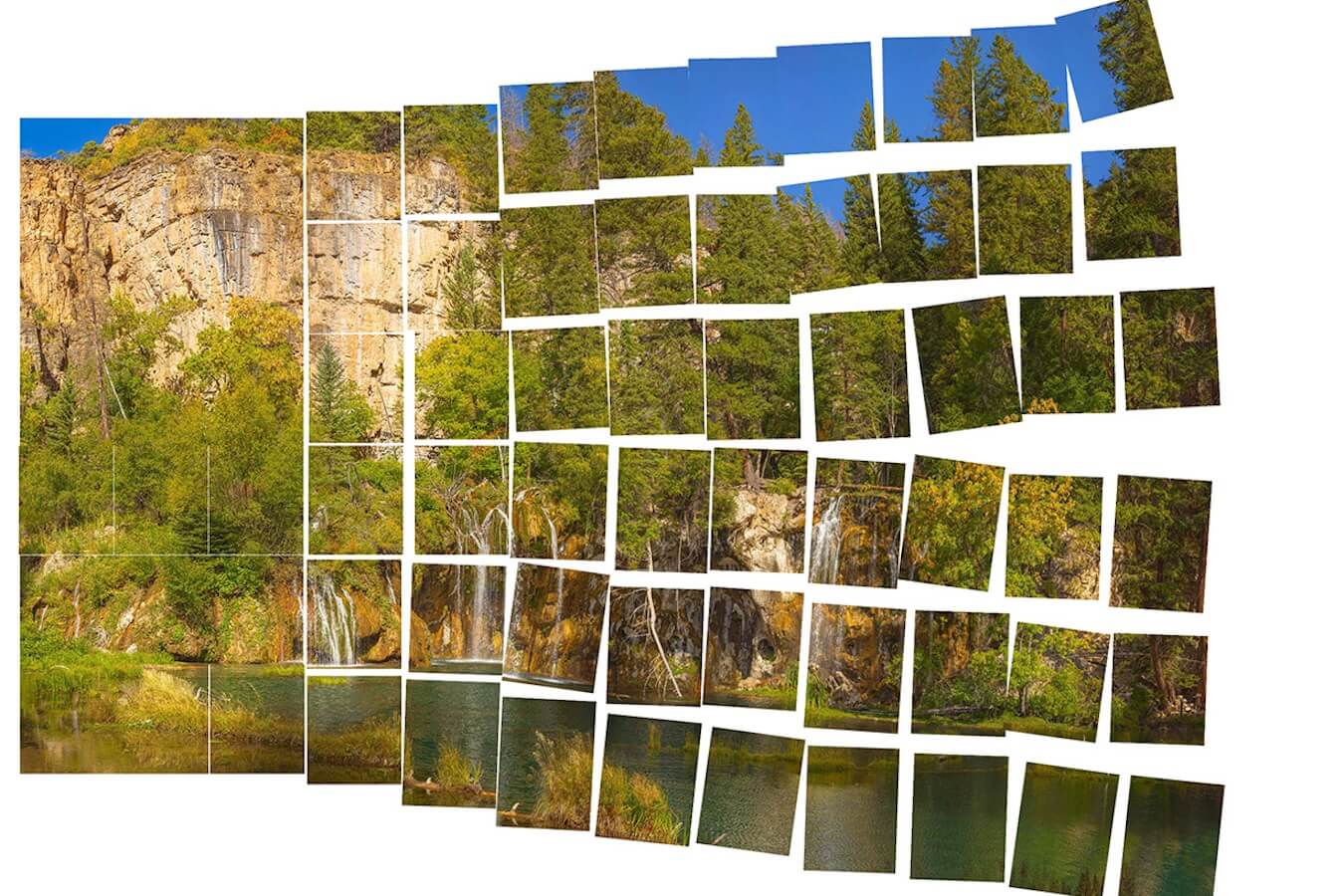
Rather than using a single exposure, I photograph a landscape as a series of overlapping images, typically using a telephoto lens. These individual photographs are then assembled, or stitched, into one seamless panorama using specialized software. The process is somewhat like constructing a giant jigsaw puzzle, except the pieces overlap and the software must precisely align the details in each photograph.
The result is an image that can contain billions of pixels of genuinely captured photographic detail.
This is fundamentally different from enlarging a conventional photograph through software interpolation or AI upscaling. Gigapixel photography records additional detail in the original scene rather than attempting to create it afterward.
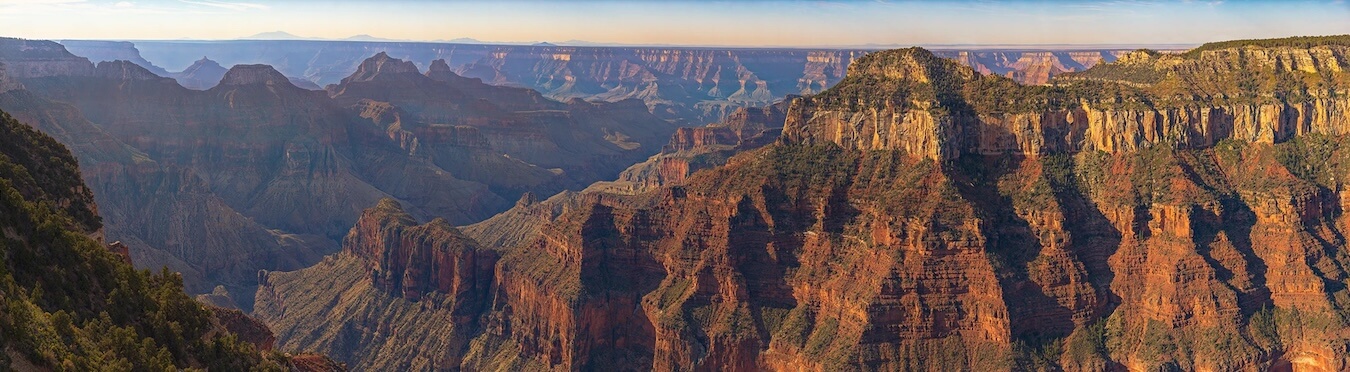
Bright Angel Point: A 10.42-Gigapixel Grand Canyon Panorama
One of my favorite examples is Bright Angel Point in Morning Light, photographed from the North Rim of Grand Canyon National Park. I captured this panorama on October 11, 2024, at approximately 8:30 in the morning.
Although photographers often favor the moments immediately surrounding sunrise and sunset, those aren’t necessarily the best times to photograph deep canyons. At sunrise, much of the canyon can remain in deep shadow. By waiting until later in the morning, I was able to capture sunlight penetrating farther into the canyon and illuminating the intricate formations below.
For this photograph, I used a Canon R5 with a Canon 100–400mm lens set to 400mm. My exposure settings were f/11, 1/640 second, and ISO 400. Using my panoramic equipment, I captured 610 individual photographs in a grid of 10 rows and 61 columns, with approximately 33% overlap between adjacent images. The camera was oriented vertically for each exposure. After stitching, the finished panorama contained 10.42 billion pixels, enough image information to produce an exceptionally large print while retaining remarkable detail.
What makes this photograph special to me isn’t simply its enormous pixel count. It’s the ability to explore the landscape in a way that a conventional photograph cannot provide. Distant rock formations, geological layers, and subtle variations in the canyon walls remain visible when examining small portions of the image.
One of the most fascinating aspects of this photograph is what becomes visible when you begin exploring its 10.42 billion pixels. Looking across the canyon toward the South Rim, you can clearly make out portions of the Bright Angel Trail winding down the canyon walls. (Fig. 1) Turning your attention to the North Rim, you can find hikers descending a trail, their tiny figures providing a striking sense of the canyon’s immense scale. (Fig. 2)
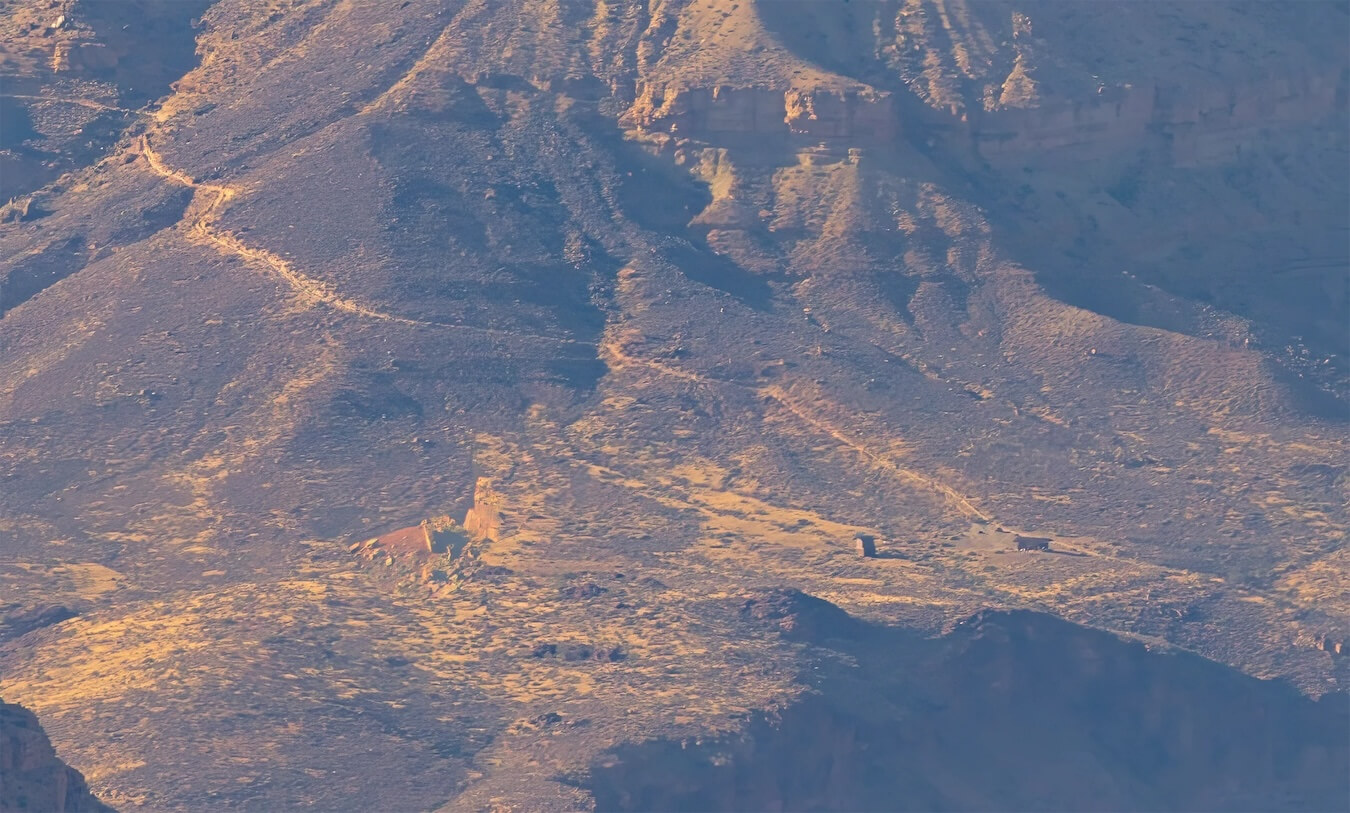
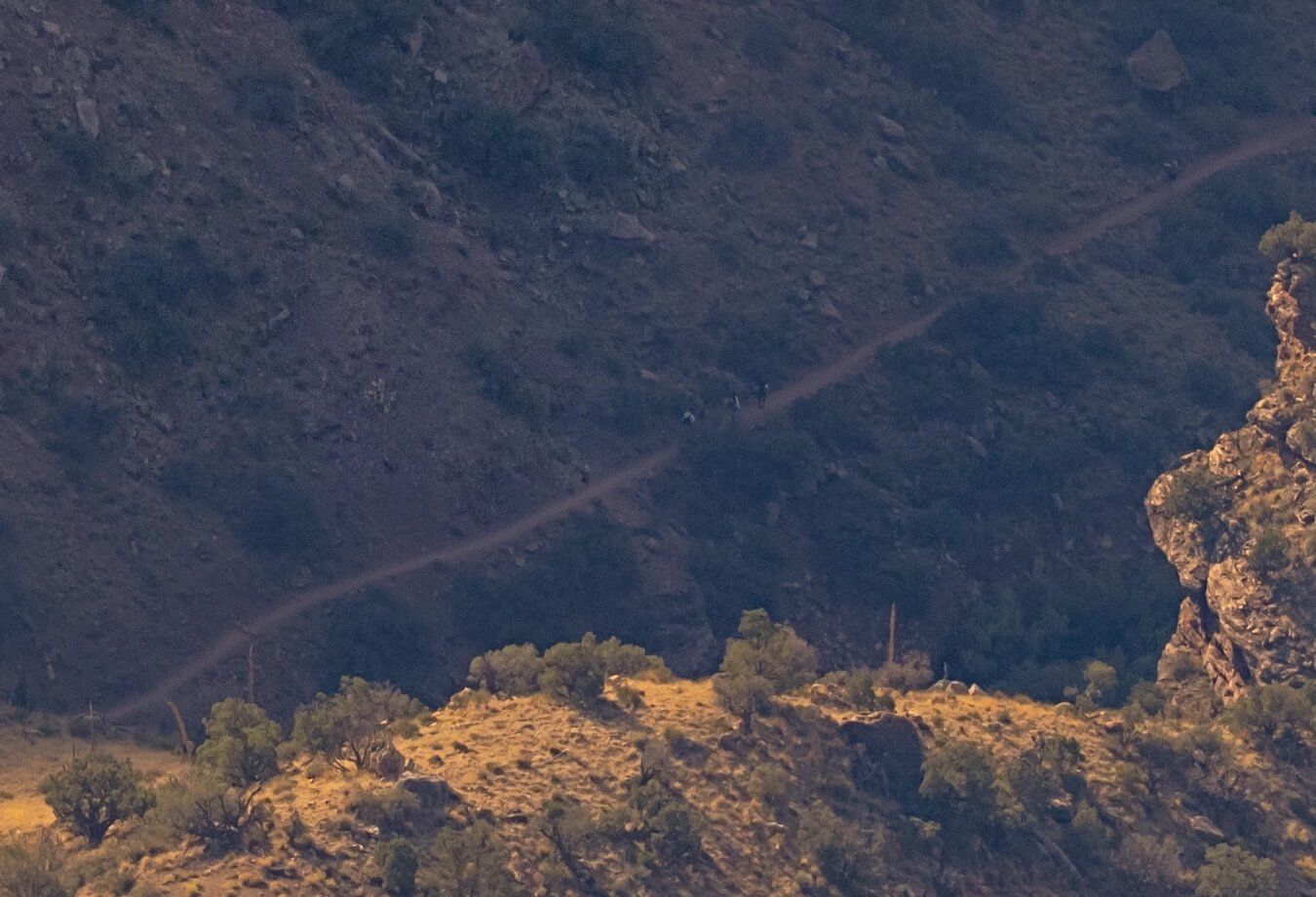
These details occupy only a minute fraction of the complete panorama. Yet they remain recognizable when enlarged because the information was captured photographically using a telephoto lens—not generated afterward through software enlargement. This ability to explore distant details is one of the qualities that makes gigapixel photography so rewarding.
I previously wrote a location guide for National Park Photographer describing the viewpoint, photographic opportunities, and technical details behind this particular image. Readers interested in visiting the location can find it in my article, Bright Angel Point — Grand Canyon National Park.
Why Go to All That Trouble?
One of the primary advantages of gigapixel photography is the ability to produce extremely large prints without sacrificing image quality. A conventional 45-megapixel photograph, assuming a 3:2 aspect ratio, can produce a print approximately 18 × 27 inches at 300 pixels per inch. A one-gigapixel image with the same proportions can produce a print approximately 7 × 11 feet at that resolution. A five-gigapixel photograph can support a print roughly 16 × 24 feet. These are enormous differences.
But large prints aren’t the only benefit. Imagine viewing a photograph of the Grand Canyon on a computer screen. Initially, you see the entire landscape. Then you begin zooming into a distant canyon wall, discovering rock formations and textures that were barely visible in the original view. With a properly captured gigapixel photograph, those details were recorded by the camera. They aren’t simply enlarged pixels.
For me, this ability to preserve and explore the fine details of a landscape is one of the most exciting aspects of gigapixel photography.
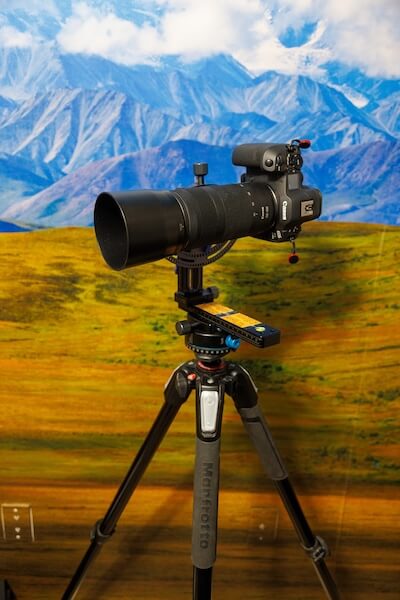
You don’t need an extraordinarily expensive camera to begin experimenting with panoramic photography. When I first started producing high-resolution panoramas, I was using a Canon 5D with a 12-megapixel sensor. Today, I use a Canon R5 with a 45-megapixel sensor, but the underlying principles remain the same.
The key components are a camera, a suitable lens, a sturdy tripod, and a method of precisely rotating the camera between exposures. For my larger panoramas, I use a Nodal Ninja M2 panoramic head. This allows me to move the camera through a carefully controlled grid of overlapping exposures.
An important consideration is parallax, which occurs when foreground and background objects appear to shift relative to one another as the camera rotates. Positioning the camera so that it rotates around the lens’s entrance pupil helps minimize this problem.
I frequently use telephoto lenses in the 200–400mm range. The longer focal length records a relatively small portion of the landscape in each exposure, allowing me to capture far more detail than a single wide-angle photograph would provide. The trade-off is that a large panorama may require hundreds or even thousands of individual exposures.
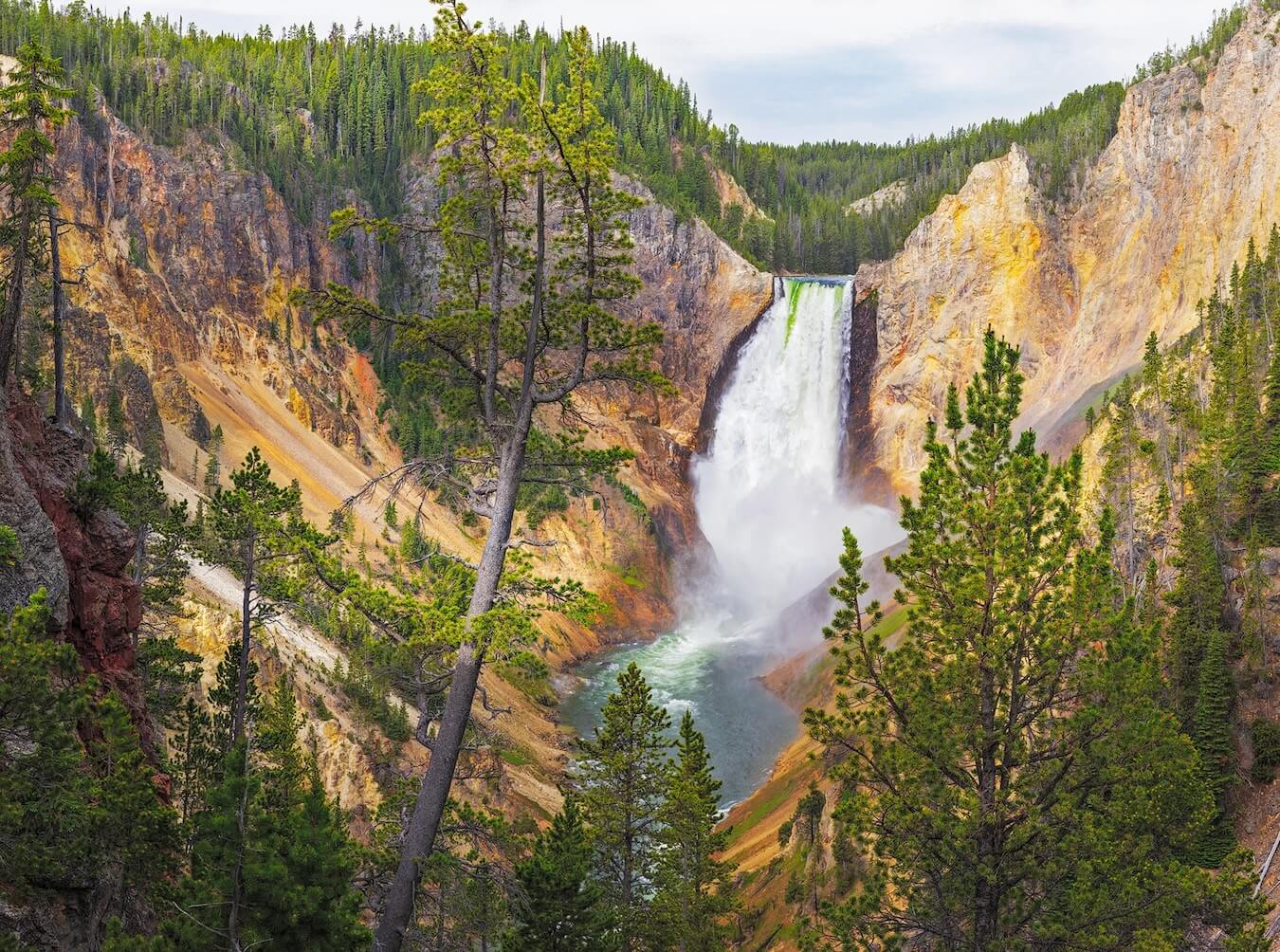
Composition Still Comes First: Yellowstone Falls
With all the technology involved, it’s easy to forget that a gigapixel photograph must first succeed as a photograph.
Composition, lighting, color, and visual balance remain just as important as they are in conventional photography.
One example I discuss in my workshops is a photograph of Yellowstone Falls. The waterfall and river form a strong central subject, while the canyon walls provide a sense of symmetry and lead the viewer’s eye into the scene.
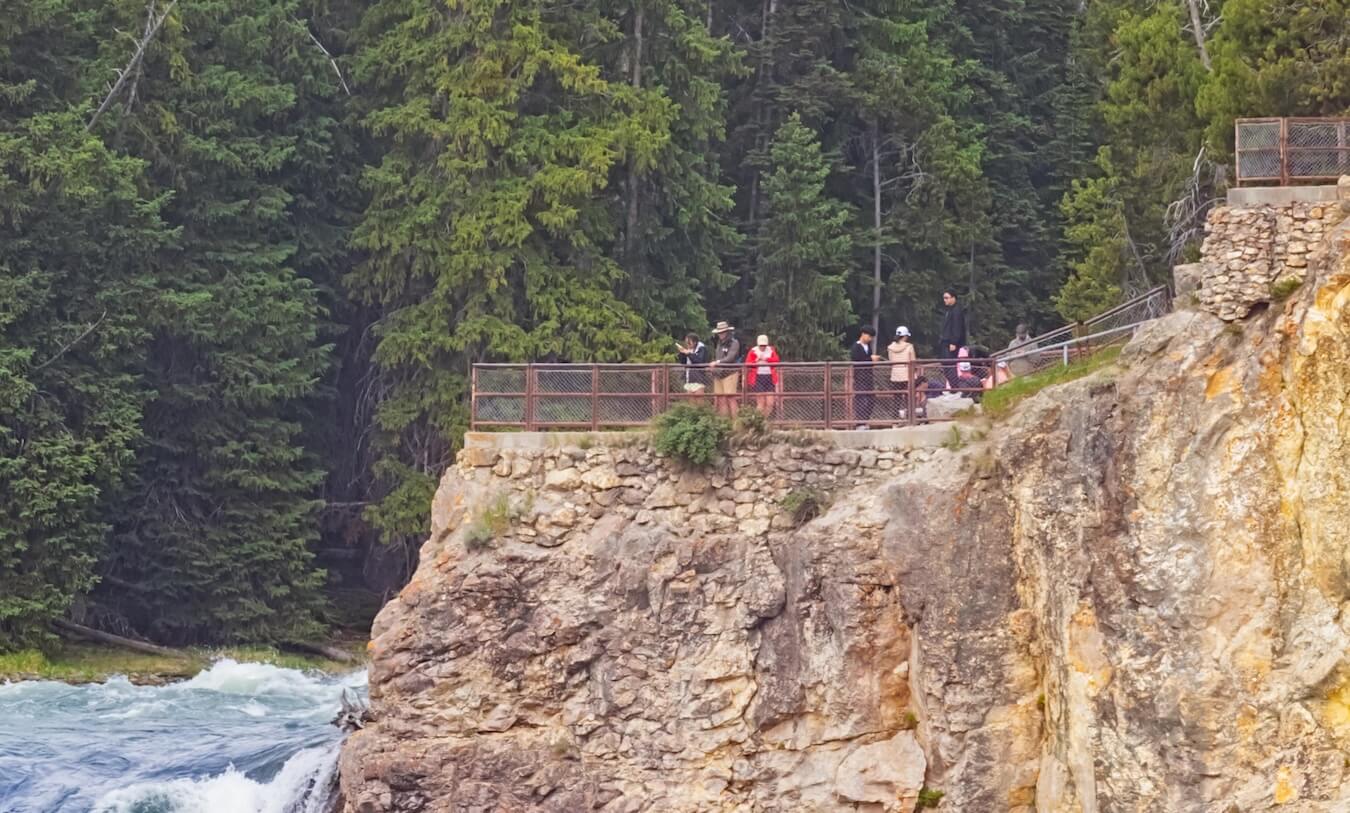
Photographing a landscape with a telephoto lens and stitching multiple exposures can also produce a different visual interpretation than photographing the same scene with an extreme wide-angle lens. A wide-angle lens includes a broad field of view in one exposure, but it can make distant features appear relatively small. By using a longer focal length and assembling multiple images, I can preserve the prominence of distant landscape features while still capturing a wide overall composition.
Gigapixel photography doesn’t replace good composition. It provides another way to achieve it.
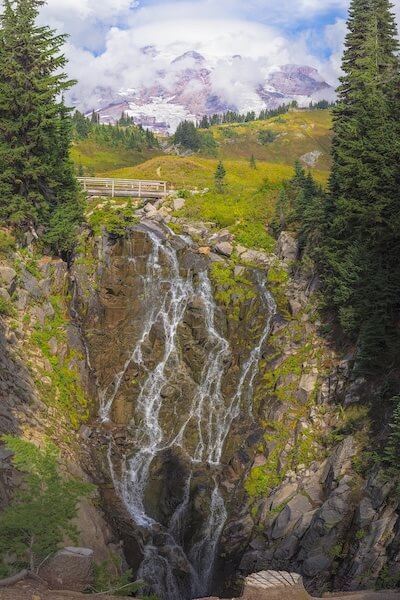
Keeping Everything in Focus: Myrtle Falls
One of the greatest challenges in my work is maintaining sharp focus throughout an entire landscape. Consider a photograph containing flowers or rocks only a few feet from the camera, a waterfall in the middle distance, and mountains miles away. When using a telephoto lens, it may be impossible to keep all those elements acceptably sharp in a single exposure. Stopping the lens down to f/16 or f/22 might seem like the obvious solution. Unfortunately, diffraction at very small apertures can reduce the fine detail we’re trying so hard to capture.
My preferred solution is focus stacking. Rather than taking one photograph at each camera position, I take a series of exposures focused at progressively different distances. Specialized software then combines the sharpest portions of those exposures into a single image with extended depth of field.
My photograph of Myrtle Falls in Mount Rainier National Park provides an excellent example. For this image, I captured 992 individual exposures. Those photographs were organized into groups representing the various camera positions, with multiple focus distances recorded at many of those positions.
I processed the focus-bracketed photographs using Helicon Focus, then stitched the resulting images into the completed panorama using PTGui. This combination of focus stacking and panoramic stitching makes it possible to capture detail across an extraordinary range of distances. It’s also one of the more demanding aspects of the process.
Turning Hundreds of Photographs Into One
Capturing the photographs is only the beginning. My normal processing workflow involves several stages. First, I process the RAW files using Adobe Camera Raw, making consistent adjustments to exposure, white balance, and other settings. Consistency is important because even small differences between neighboring images can become visible in the finished panorama. If the panorama includes focus-bracketed exposures, I combine those photographs into focus-stacked images using Helicon Focus.
Next, I use PTGui to assemble the overlapping photographs into one large panoramic image.
Finally, I bring the stitched image into Adobe Photoshop for detailed inspection and finishing.
Stitching software is remarkably capable, but it isn’t infallible. Moving clouds, blowing vegetation, changing light, and objects that move between exposures can create problems. Occasionally, a bird appears in more than one position because it flew through the scene while I was photographing different sections. These problems require careful inspection and sometimes considerable manual correction. A complex panorama can involve many hours of computer processing and additional time correcting imperfections.
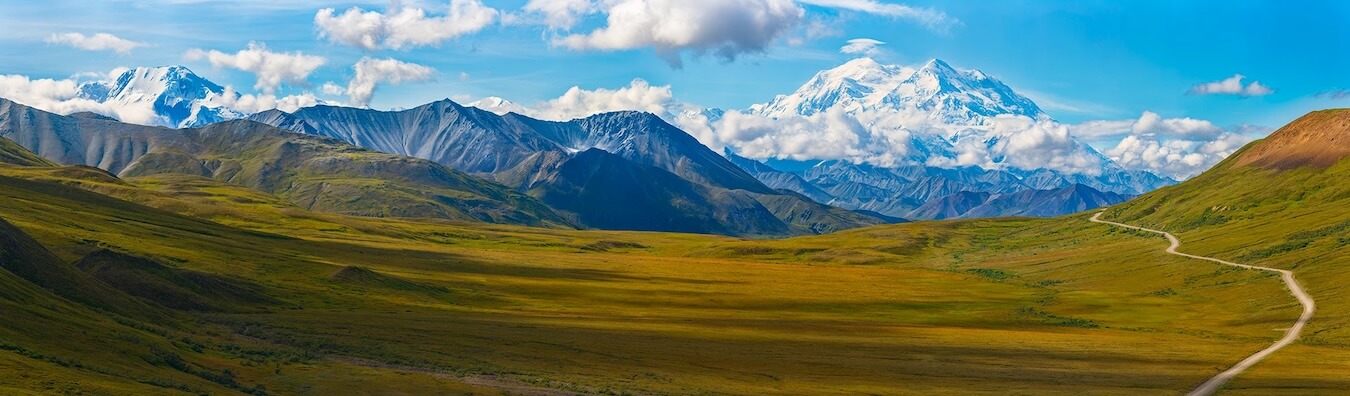
The Artistic Possibilities: Denali with Lenticular Cloud Crown
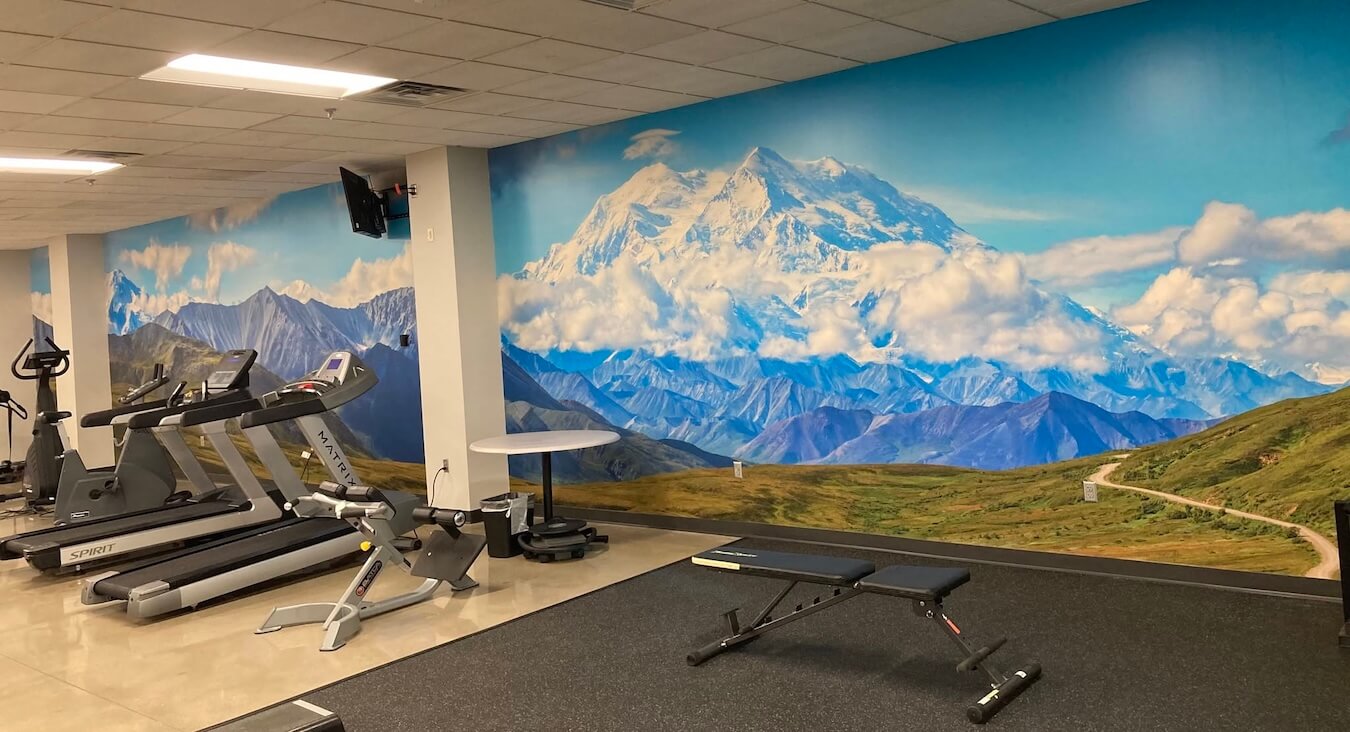
While gigapixel photography involves considerable technical precision, the ultimate objective is still to create a compelling image. One of my favorite photographs is Denali with Lenticular Cloud Crown, captured at the Stony Hill Scenic Overlook in Alaska’s Denali National Park and Preserve. The mountain’s immense scale, the atmosphere surrounding its summit, and the distinctive cloud formation create a scene that is both dramatic and beautiful.
This is the kind of landscape that reminds me why I invest so much effort in capturing extraordinary resolution. The technical process should support the photograph, not become its primary subject. Whether an image is displayed on a computer screen, printed as fine art, or reproduced as a large wall mural, its success ultimately depends on the experience it creates for the viewer.
Getting Started With Panoramic Photography
You don’t need to begin with a billion-pixel photograph. In fact, I recommend starting with a much smaller project to learn the basic techniques. Find a landscape with interesting detail and set up your camera on a sturdy tripod. Use a moderate telephoto focal length rather than an extreme wide-angle lens. Set your exposure, white balance, and focus consistently so they don’t change unexpectedly between photographs.
Now capture a simple grid—perhaps three rows of five photographs—with approximately 30% overlap between adjacent images. Work systematically from one side of the scene to the other, making sure every part of the landscape is covered. Then use panoramic stitching software to assemble the 15 exposures into a single photograph.
Examine the finished image carefully. Look for stitching errors, misaligned objects, exposure variations, and areas that aren’t as sharp as you expected. Once you’re comfortable with a small panorama, try increasing the number of exposures, using a longer focal length, or incorporating focus stacking.
The principles you learn from a 15-image panorama are essentially the same ones used to produce a 10-gigapixel photograph. The difference is the scale of the undertaking and the precision required.
A Different Way of Experiencing Our National Parks
Our National Parks contain some of the most extraordinary landscapes on Earth. From the immense geological formations of the Grand Canyon to the waterfalls of Yellowstone, the mountain scenery of Mount Rainier, and the grandeur of Denali, these places offer almost unlimited opportunities for landscape photography.
Gigapixel photography allows me to record those landscapes in a way that preserves details conventional photographs often cannot. It also opens possibilities beyond traditional prints. High-resolution images can be presented through interactive viewers that allow people to explore the landscape by zooming into individual features.
For museums, visitor centers, educational institutions, and other public spaces, this can create opportunities to share the remarkable detail of our National Parks with people who may never have the opportunity to visit them in person. But whether I’m photographing a sweeping canyon or a quiet mountain landscape, my objective remains the same: to create an image that captures not only the appearance of a place, but also something of the experience of standing there. That’s what continues to make gigapixel photography so rewarding for me.
Happy Travels!
John Freeman, Featured National Park Photographer Ambassador
About the Photographer
John Freeman is a Colorado-based landscape photographer and owner of Abba’s Creations Photography. With more than six decades of photographic experience, he specializes in ultra-high-resolution panoramic photography, focus stacking, and large-format landscape imagery.
He is a Featured Photographer with National Park Photographer and teaches an online Gigapixel Panoramic Photography Workshop covering the equipment, field techniques, and processing methods used to create these photographs.
Explore more of his work at Abba’s Creations Photography.
Please note, by making purchases through our affiliate links, you are supporting our mission to celebrate and showcase our National Parks and the photographers who frequent them. As an Amazon Associate, National Park Photographer earns from qualifying purchases at no cost to you. We appreciate your support
Do you want to learn more? Check out our Photography Masterclass Series!
Do you want to be featured on National Park Photographer?
Why wait! Contact us today at nationalparkphoto@gmail.com for a chance to be featured as a National Park Photographer!