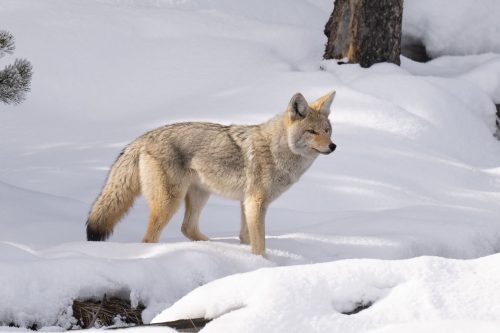
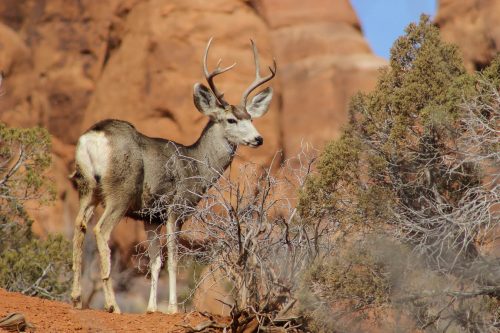
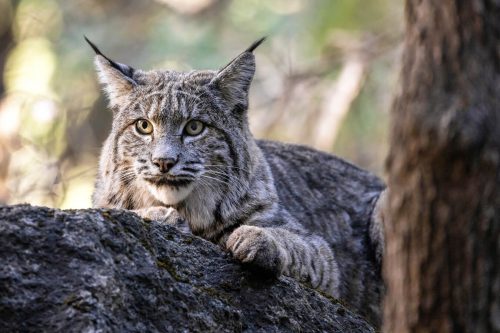
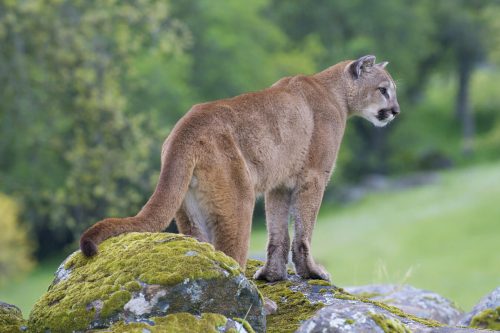
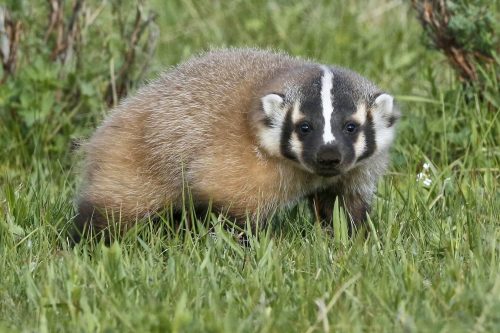
Pinnacles National Park is a mosaic of chaparral, oak and pine woodlands, grasslands, rocky spires and seasonal streams, and that variety of habitats makes it a haven for wildlife in a part of California that is increasingly surrounded by development. The park is the only remaining habitat for several sensitive species, including the big-eared kangaroo rat and the Gabilan slender salamander. More than 48 species of mammals live here. Visitors and staff most often see black-tailed deer, bobcats, gray foxes, raccoons, jackrabbits, brush rabbits, ground squirrels, chipmunks and bats, while badgers, coyotes and mountain lions are present but less commonly seen. Fourteen of California’s 23 bat species are known to live in the park, and the caves shelter a colony of Townsend’s big-eared bats in Bear Gulch Cave and a colony of western mastiff bats in the Balconies area. Pinnacles also has eight lizard species, fourteen snake species and one turtle species. Western whiptails, coast horned lizards, western fence lizards, striped racers, gopher snakes and western rattlesnakes are among the most commonly encountered reptiles, and the secretive desert night lizard is sometimes seen at night near the porch light of the Bear Gulch Nature Center.
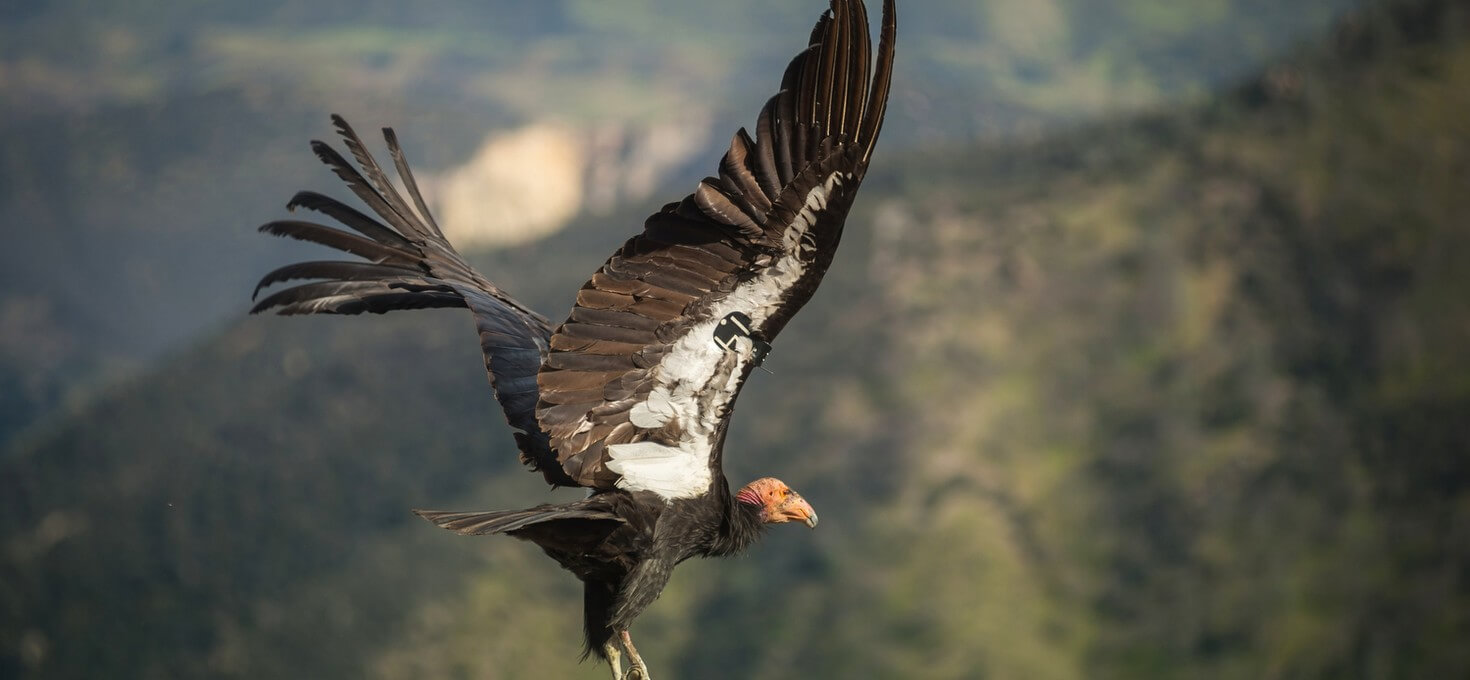
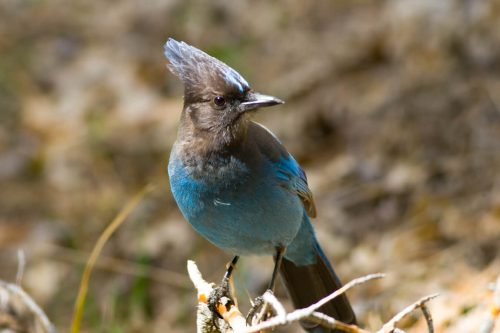
More than 160 bird species have been documented at Pinnacles since 1908. Since 2003 the park has been a release and management site for the California Condor Recovery Program, and it co-manages all wild condors in central California with the Ventana Wildlife Society. Over 20 species of raptors have been recorded here, with 10 species nesting each year, and the rocky spires and cliffs support the highest density of nesting prairie falcons in the country. Turkey vultures circle overhead, acorn woodpeckers and Steller’s jays call from the pines and oaks near the visitor centers, and the calls of great horned owls echo off the cliffs at night. Eight species of amphibians live in this land of hot, dry summers and about sixteen inches of rain a year. The threatened California red-legged frog has been re-established at Bear Gulch Reservoir with positive results, and the three-spined stickleback is the only native fish in the park’s intermittent streams. Keep reading to see featured photos of Pinnacles’ wildlife and to learn more about wildlife photography.
Featured Pinnacles National Park Wildlife Photographs
Have a National Park Wildlife photograph you’d like featured? Contact us today to learn more!
Wildlife Photography Tips
Wildlife photography in the US National Parks offers a unique and enriching experience, as these protected areas are havens for diverse species and pristine natural landscapes. Capturing wildlife in such settings requires preparation and respect for both the environment and its inhabitants. Photographers should familiarize themselves with the specific animals and ecosystems of the park they are visiting, as each park hosts different species and behaviors. Early mornings and late afternoons, known as the golden hours, provide the best light and increased wildlife activity. Different seasons also offer different wildlife viewing opportunities. Patience and stillness are key, as the best moments often come to those who wait quietly.
If wildlife does present itself, always make sure to maintain a safe distance. Using a telephoto lens allows for close-up shots without intruding on the animals’ space. If you already own or want to own a professional grade mirrored camera like the Canon EOS 5D Mark IV Full Frame Digital SLR, we recommend using a Canon EF 100-400mm f/4.5-5.6L IS II USM Lens zoom lens for wildlife photography. If you have or are interested in a newer mirrorless model like the Canon EOS R5 Full-Frame Mirrorless Camera, we recommend using a Canon RF100-400mm F5.6-8 IS USM Black for long distance shots.
Not quite ready to invest in traditional professional-grade camera equipment but want to enhance the quality of your cell phone photographs? Consider using a Moment Tele 58mm Mobile Lens II for improved reach, and use a Moment camera case with a lens mount to attach it to your phone. Since cell phones generally cannot provide the same reach as a dedicated telephoto camera lens, never compensate by moving dangerously close to wildlife. As with any visit to a national park, it’s important to follow park regulations, practice “Leave No Trace” principles, and prioritize safety while photographing wildlife.
Want to take your wildlife photos further? Featured photographer Vella Torvik shares her field-tested advice on gear, camera settings, light, composition and safely approaching wildlife in our Wildlife Photography 101: Insider Tips From the Field masterclass.
Pinnacles Wildlife Education and Resources
Want to learn more about Pinnacles National Park and the wildlife that inhabits it? Check out these guides & books:
- Peterson Field Guide To Mammals Of North America: Fourth Edition (Peterson Field Guides)
- Peterson Field Guide To Birds Of Western North America, Fifth Edition (Peterson Field Guides)
- Bird Songs: 250 North American Birds in Song
- Peterson Field Guide To Western Reptiles & Amphibians, Fourth Edition (Peterson Field Guides)
- Peterson Field Guide to Freshwater Fishes, Second Edition (Peterson Field Guides)
- Animal Tracks: A Folding Pocket Guide to the Tracks & Signs of Familiar North American Species (Wildlife and Nature Identification)
Please note, by making purchases through our affiliate links, you are supporting our mission to celebrate and showcase our National Parks and the photographers who frequent them. As an Amazon Associate, National Park Photographer earns from qualifying purchases at no cost to you. We appreciate your support.
Pinnacles National Park Species List
The wildlife at Pinnacles National Park is beautiful and diverse. There are a variety of mammals, birds, reptiles, amphibians and fish to view. Check out all the incredible species this park has to offer! Click on the links below to see the different animal species that inhabit Pinnacles National Park:
Species Spotlight
Photo posts of animals you’ll find in Pinnacles.
Pinnacles National Park Mammals
49 species
- American Badger Photo post(Taxidea taxus)
- Big Brown Bat(Eptesicus fuscus)
- Black-tailed Jackrabbit(Lepus californicus)
- Bobcat Photo post(Lynx rufus)
- Brazilian Free-tailed Bat(Tadarida brasiliensis)
- Broad-footed Mole(Scapanus latimanus)
- Brush Mouse(Peromyscus boylii)
- Brush Rabbit(Sylvilagus bachmani)
- California Deermouse(Peromyscus californicus)
- California Ground Squirrel(Spermophilus beecheyi)
- California Myotis(Myotis californicus)
- California Pocket Mouse(Chaetodipus californicus)
- California Vole(Microtus californicus)
- Coyote Photo post(Canis latrans)
- Deer Mouse(Peromyscus maniculatus)
- Desert Cottontail(Sylvilagus audubonii)
- Desert Woodrat(Neotoma lepida)
- Domestic Cat(Felis silvestris)
- Domestic Cattle(Bos taurus)
- Domestic Goat(Capra hircus)
- Dusky-footed Woodrat(Neotoma fuscipes)
- Elephant-eared Kangaroo Rat(Dipodomys elephantinus)
- Feral Pig(Sus scrofa)
- Fringed Myotis(Myotis thysanodes)
- Gray Fox(Urocyon cinereoargenteus)
- Heermann’s Kangaroo Rat(Dipodomys heermanni)
- Hoary Bat(Lasiurus cinereus)
- House Mouse(Mus musculus)
- Long-eared Myotis(Myotis evotis)
- Long-legged Myotis(Myotis volans)
- Long-tailed Weasel(Mustela frenata)
- Merriam’s Chipmunk(Tamias merriami)
- Mountain Lion Photo post(Puma concolor)
- Mule Deer (including Black-tailed Deer) Photo post(Odocoileus hemionus)
- Narrow-faced Kangaroo Rat(Dipodomys venustus)
- Ornate Shrew(Sorex ornatus)
- Pallid Bat(Antrozous pallidus)
- Pinyon Mouse(Peromyscus truei)
- Raccoon(Procyon lotor)
- Striped Skunk(Mephitis mephitis)
- Townsend’s Big-eared Bat(Corynorhinus townsendii)
- Valley Pocket Gopher(Thomomys bottae)
- Virginia Opossum(Didelphis virginiana)
- Western Harvest Mouse(Reithrodontomys megalotis)
- Western Mastiff Bat(Eumops perotis)
- Western Pipistrelle(Pipistrellus hesperus)
- Western Red Bat(Lasiurus blossevillii)
- Western Small-footed Myotis(Myotis ciliolabrum)
- Yuma Myotis(Myotis yumanensis)
No mammals match.
Pinnacles National Park Birds
159 species
- Acorn Woodpecker(Melanerpes formicivorus)
- Allen’s Hummingbird(Selasphorus sasin)
- American Coot(Fulica americana)
- American Crow(Corvus brachyrhynchos)
- American Dipper(Cinclus mexicanus)
- American Goldfinch(Carduelis tristis)
- American Kestrel(Falco sparverius)
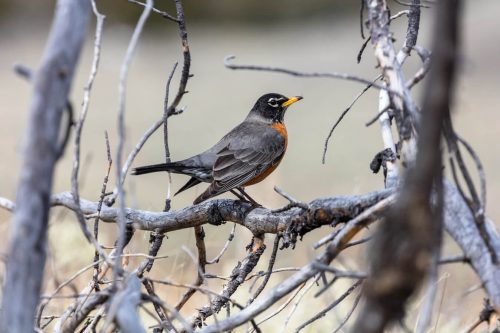
- American Robin Photo post(Turdus migratorius)
- American White Pelican(Pelecanus erythrorhynchos)
- Anna’s Hummingbird(Calypte anna)
- Ash-throated Flycatcher(Myiarchus cinerascens)
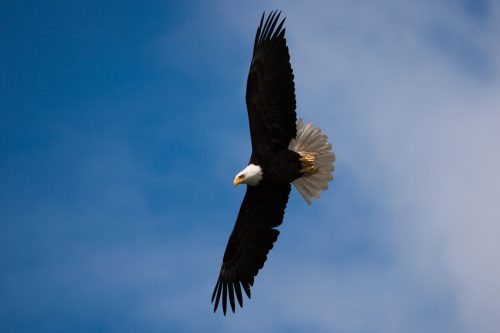
- Bald Eagle Photo post(Haliaeetus leucocephalus)
- Band-tailed Pigeon(Columba fasciata)
- Barn Owl(Tyto alba)
- Barn Swallow(Hirundo rustica)
- Bell’s Sparrow(Amphispiza belli)
- Bell’s Vireo(Vireo bellii)
- Belted Kingfisher(Ceryle alcyon)
- Bewick’s Wren(Thryomanes bewickii)
- Black Phoebe(Sayornis nigricans)
- Black Swift(Cypseloides niger)
- Black-chinned Hummingbird(Archilochus alexandri)
- Black-chinned Sparrow(Spizella atrogularis)
- Black-headed Grosbeak(Pheucticus melanocephalus)
- Black-throated Gray Warbler(Dendroica nigrescens)
- Blue-gray Gnatcatcher(Polioptila caerulea)
- Blue-headed Vireo(Vireo solitarius)
- Brewer’s Blackbird(Euphagus cyanocephalus)
- Brown Creeper(Certhia americana)
- Brown-headed Cowbird(Molothrus ater)
- Bullock’s Oriole(Icterus bullockii)
- Bushtit(Psaltriparus minimus)
- California Condor(Gymnogyps californianus)
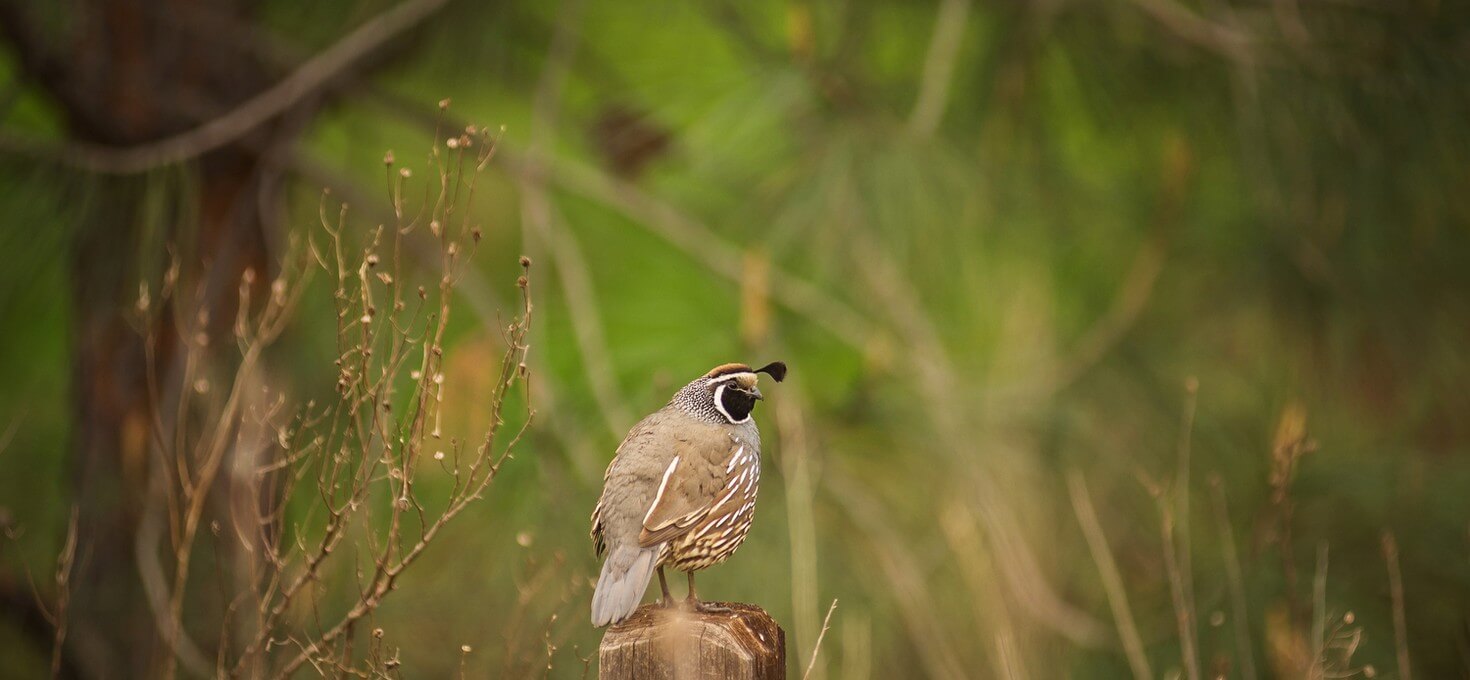
- California Quail(Callipepla californica)
- California Scrub-Jay(Aphelocoma californica)
- California Thrasher(Toxostoma redivivum)
- California Towhee(Pipilo crissalis)
- Calliope Hummingbird(Stellula calliope)
- Canyon Wren(Catherpes mexicanus)
- Cassin’s Finch(Carpodacus cassinii)
- Cassin’s Vireo(Vireo cassinii)
- Cedar Waxwing(Bombycilla cedrorum)
- Chestnut-backed Chickadee(Poecile rufescens)
- Chukar(Alectoris chukar)
- Clark’s Nutcracker(Nucifraga columbiana)
- Cliff Swallow(Petrochelidon pyrrhonota)
- Common Merganser(Mergus merganser)
- Common Poorwill(Phalaenoptilus nuttallii)
- Common Raven(Corvus corax)
- Common Yellowthroat(Geothlypis trichas)
- Cooper’s Hawk(Accipiter cooperii)
- Costa’s Hummingbird(Calypte costae)
- Dark-eyed Junco(Junco hyemalis)
- Downy Woodpecker(Picoides pubescens)
- European Starling(Sturnus vulgaris)
- Ferruginous Hawk(Buteo regalis)
- Fox Sparrow(Passerella iliaca)
- Golden Eagle(Aquila chrysaetos)
- Golden-crowned Kinglet(Regulus satrapa)
- Golden-crowned Sparrow(Zonotrichia atricapilla)
- Gray Vireo(Vireo vicinior)
- Great Blue Heron(Ardea herodias)
- Great Horned Owl(Bubo virginianus)
- Greater Roadrunner(Geococcyx californianus)
- Greater Yellowlegs(Tringa melanoleuca)
- Green Heron(Butorides virescens)
- Hairy Woodpecker(Picoides villosus)
- Hammond’s Flycatcher(Empidonax hammondii)
- Hermit Thrush(Catharus guttatus)
- Hermit Warbler(Dendroica occidentalis)
- Hooded Warbler(Wilsonia citrina)
- House Finch(Carpodacus mexicanus)
- House Sparrow(Passer domesticus)
- House Wren(Troglodytes aedon)
- Hutton’s Vireo(Vireo huttoni)
- Killdeer(Charadrius vociferus)
- Lark Sparrow(Chondestes grammacus)
- Lawrence’s Goldfinch(Carduelis lawrencei)
- Lazuli Bunting(Passerina amoena)
- Least Sandpiper(Calidris minutilla)
- Lesser Goldfinch(Carduelis psaltria)
- Lesser Yellowlegs(Tringa flavipes)
- Lewis’s Woodpecker(Melanerpes lewis)
- Lincoln’s Sparrow(Melospiza lincolnii)
- Loggerhead Shrike(Lanius ludovicianus)
- Long-eared Owl(Asio otus)
- MacGillivray’s Warbler(Oporornis tolmiei)
- Mallard(Anas platyrhynchos)
- Merlin(Falco columbarius)
- Mountain Bluebird(Sialia currucoides)
- Mountain Quail(Oreortyx pictus)
- Mourning Dove(Zenaida macroura)
- Nashville Warbler(Vermivora ruficapilla)
- Northern Flicker(Colaptes auratus)
- Northern Harrier(Circus cyaneus)
- Northern Mockingbird(Mimus polyglottos)
- Northern Pygmy-Owl(Glaucidium gnoma)
- Northern Rough-winged Swallow(Stelgidopteryx serripennis)
- Northern Saw-whet Owl(Aegolius acadicus)
- Nuttall’s Woodpecker(Picoides nuttallii)
- Oak Titmouse(Baeolophus inornatus)
- Olive-sided Flycatcher(Contopus cooperi)
- Orange-crowned Warbler(Vermivora celata)
- Osprey(Pandion haliaetus)
- Pacific Wren(Troglodytes troglodytes)
- Pacific-slope Flycatcher(Empidonax difficilis)
- Peregrine Falcon(Falco peregrinus)
- Phainopepla(Phainopepla nitens)
- Pied-billed Grebe(Podilymbus podiceps)
- Pine Siskin(Carduelis pinus)
- Prairie Falcon(Falco mexicanus)
- Purple Finch(Carpodacus purpureus)
- Red-breasted Nuthatch(Sitta canadensis)
- Red-breasted Sapsucker(Sphyrapicus ruber)
- Red-shouldered Hawk(Buteo lineatus)
- Red-tailed Hawk(Buteo jamaicensis)
- Red-winged Blackbird(Agelaius phoeniceus)
- Rock Pigeon(Columba livia)
- Rock Wren(Salpinctes obsoletus)
- Rough-legged Hawk(Buteo lagopus)
- Ruby-crowned Kinglet(Regulus calendula)
- Rufous Hummingbird(Selasphorus rufus)
- Rufous-crowned Sparrow(Aimophila ruficeps)
- Say’s Phoebe(Sayornis saya)
- Sharp-shinned Hawk(Accipiter striatus)
- Song Sparrow(Melospiza melodia)
- Spotted Sandpiper(Actitis macularia)
- Spotted Towhee(Pipilo maculatus)
- Steller’s Jay Photo post(Cyanocitta stelleri)
- Swainson’s Hawk(Buteo swainsoni)
- Swainson’s Thrush(Catharus ustulatus)
- Townsend’s Solitaire(Myadestes townsendi)
- Townsend’s Warbler(Dendroica townsendi)
- Tree Swallow(Tachycineta bicolor)
- Turkey Vulture(Cathartes aura)
- Varied Thrush(Ixoreus naevius)
- Violet-green Swallow(Tachycineta thalassina)
- Warbling Vireo(Vireo gilvus)
- Western Bluebird(Sialia mexicana)
- Western Kingbird(Tyrannus verticalis)
- Western Meadowlark(Sturnella neglecta)
- Western Sandpiper(Calidris mauri)
- Western Screech-Owl(Otus kennicottii)
- Western Tanager(Piranga ludoviciana)
- Western Wood-Pewee(Contopus sordidulus)
- White-breasted Nuthatch(Sitta carolinensis)
- White-crowned Sparrow(Zonotrichia leucophrys)
- White-tailed Kite(Elanus leucurus)
- White-throated Sparrow(Zonotrichia albicollis)
- White-throated Swift(Aeronautes saxatalis)
- White-winged Dove(Zenaida asiatica)
- Wild Turkey(Meleagris gallopavo)
- Wilson’s Snipe(Gallinago gallinago)
- Wilson’s Warbler(Wilsonia pusilla)
- Wrentit(Chamaea fasciata)
- Yellow Warbler(Dendroica petechia)
- Yellow-billed Magpie(Pica nuttalli)
- Yellow-breasted Chat(Icteria virens)
- Yellow-rumped Warbler(Dendroica coronata)
No birds match.
Pinnacles National Park Reptiles
21 species
- California Kingsnake(Lampropeltis getula)
- Coast Horned Lizard(Phrynosoma coronatum)
- Common Gartersnake(Thamnophis sirtalis)
- Desert Night Lizard(Xantusia vigilis)
- Diablo Range Garter Snake(Thamnophis atratus zaxanthus)
- Gilbert’s Skink(Eumeces gilberti)
- Gophersnake(Pituophis catenifer)
- Longnose Snake(Rhinocheilus lecontei)
- Night Snake(Hypsiglena torquata)
- Ringneck Snake(Diadophis punctatus)
- San Joaquin Coachwhip(Masticophis flagellum)
- Sharp-tailed Snake(Contia tenuis)
- Side-blotched Lizard(Uta stansburiana)
- Silvery Legless Lizard(Anniella pulchra)
- Southern Alligator Lizard(Elgaria multicarinata)
- Striped Racer(Masticophis lateralis)
- Western Black-headed Snake(Tantilla planiceps)
- Western Fence Lizard(Sceloporus occidentalis)
- Western Pond Turtle(Clemmys marmorata)
- Western Rattlesnake(Crotalus oreganus)
- Western Whiptail(Cnemidophorus tigris)
No reptiles match.
Pinnacles National Park Amphibians
7 species
- Arboreal Salamander(Aneides lugubris)
- California Red-legged Frog(Rana aurora draytonii)
- Ensatina(Ensatina eschscholtzii)
- Gabilan Mountains Slender Salamander(Batrachoseps gavilanensis)
- Pacific Tree Frog(Hyla regilla)
- Western Spadefoot(Spea hammondii)
- Western Toad(Bufo boreas)
No amphibians match.
Pinnacles National Park Fish
2 species
- Threespine Stickleback(Gasterosteus aculeatus)
- Western Mosquitofish(Gambusia affinis)
No fish match.
Note: The wildlife species included in the lists above have been confirmed with the National Park Service to be present in Pinnacles National Park. Other species may exist in the park that are currently under review or not yet known.
Do you want to be featured on National Park Photographer?
Why wait! Contact us today at nationalparkphoto@gmail.com for more information!
References:
- National Park Species List
- NPS: Animals, Pinnacles
- NPS: Mammals of Pinnacles
- NPS: Bats, Pinnacles
- NPS: Birds of Pinnacles National Park
- NPS: California Condors at Pinnacles
- NPS: Raptors of Pinnacles National Park
- NPS: Reptiles of Pinnacles National Park
- NPS: Amphibians, Pinnacles
- NPS: Fish of Pinnacles National Park