Length: Variable, .2 – 2.5 mi (.3 km – 4 km)
Elevation Gain: 50 ft (15 m)
Route Type: Out and Back
Difficulty: Moderate
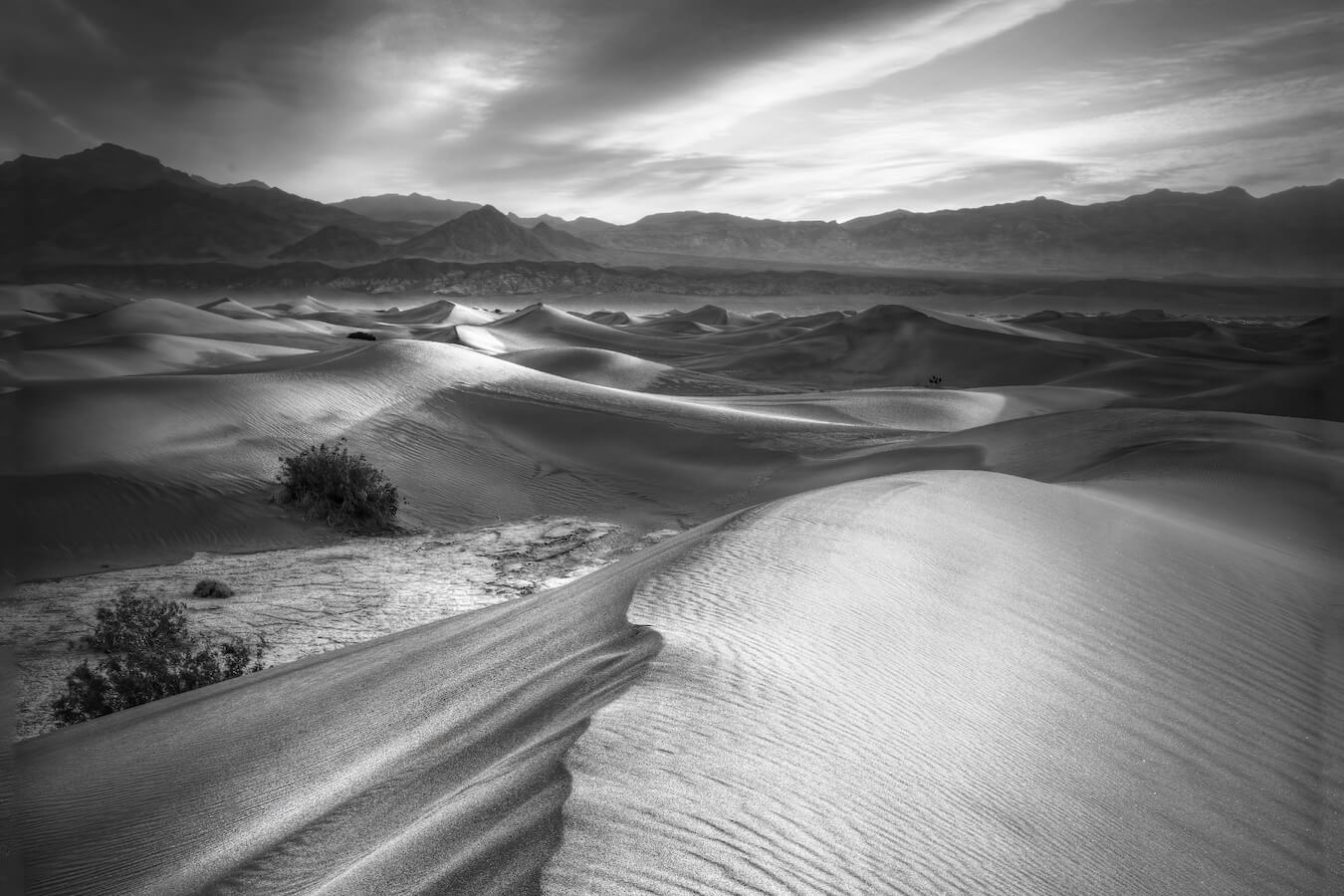
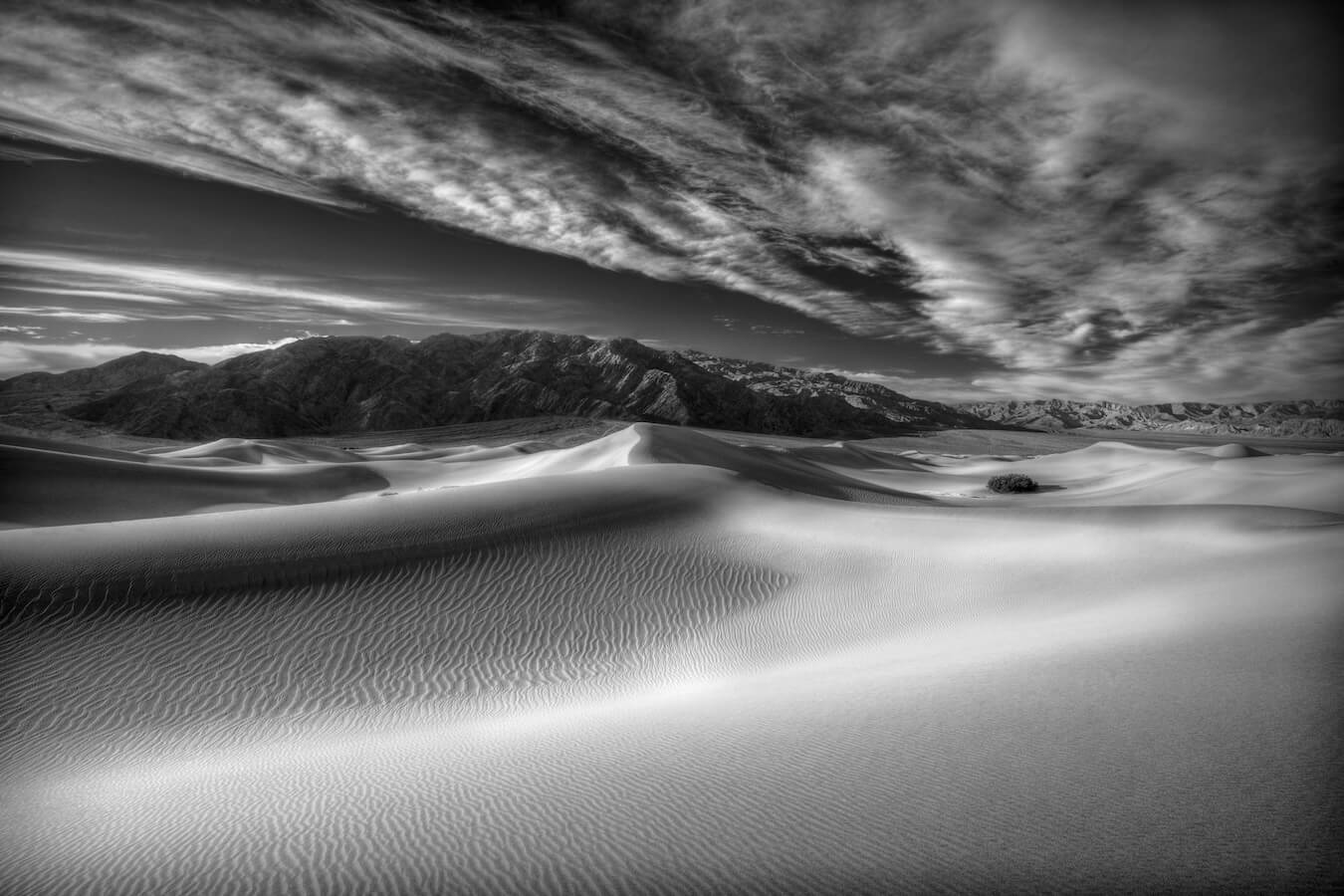
The Mesquite Flat Sand Dunes, located in Death Valley National Park, cover approximately 14 square miles and feature dunes rising as high as 100 feet. With no designated trails crossing the dunes, photographers are free to explore in any direction, discovering an ever-changing landscape of rolling sand, graceful curves, and sweeping patterns.
I have photographed these dunes more than a dozen times, and I never tire of hiking across them and discovering new compositions. Wind constantly reshapes the sand, creating fresh patterns, ridge lines, and shadows that make each visit a unique photographic experience.
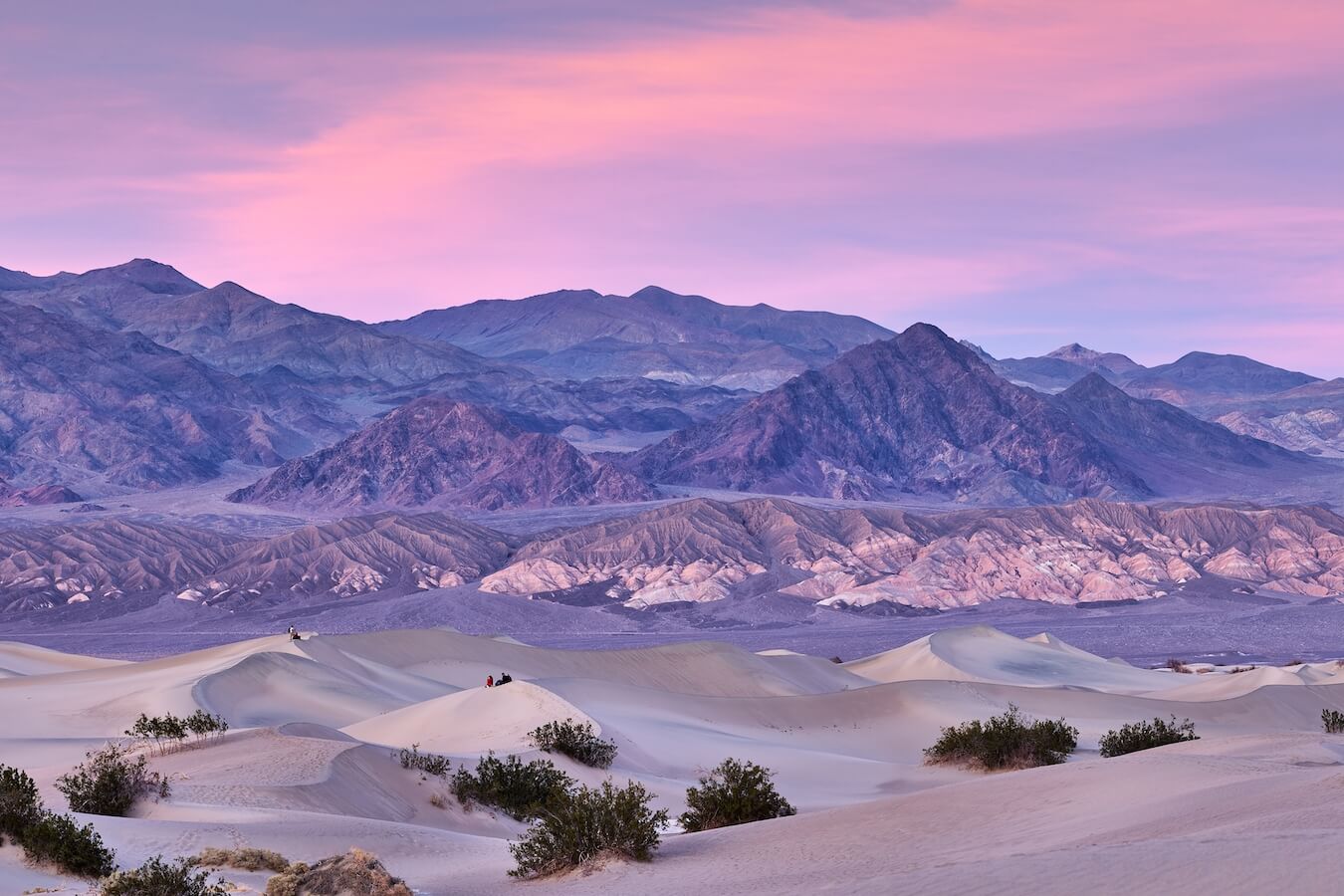
One of the great advantages of the Mesquite Flat Sand Dunes is their accessibility. The parking area is right next to the dunes, and the site is only a short drive from the Stovepipe Wells Hotel. The dunes are beautiful in both color and black-and-white photography, but they are especially rewarding just after sunrise and shortly before sunset, when the low-angle light reveals the contours and textures of the sand.
Walking across the dunes can be challenging because of the soft sand and steep slopes, but the effort is well worth it. You don’t have to hike far to find compelling images, either. Some wonderful photographic opportunities can be found just a short distance from the parking area, making Mesquite Sand Dunes a rewarding destination for photographers of all experience levels.
Accessing the Mesquite Flat Sand Dunes in Death Valley National Park
Starting Location: Mesquite Flat Sand Dunes parking area, CA-190, Death Valley
GPS (DD): 36.60618, -117.114996
The Mesquite Flat Sand Dunes are conveniently located alongside California State Route 190, one of the main roads running through Death Valley National Park. A paved parking area sits directly beside the dunes, providing easy access for photographers and visitors. The parking area is about 1.9 miles east of Stove Pipe Wells Hotel.
From the parking area, you can reach the edge of the dunes in about five minutes on foot, crossing relatively flat, open ground that may be bare or sandy. You can begin photographing almost immediately or venture farther into the dunes to explore the many ridges, curves, and patterns created by the wind.
The dunes are accessible year-round, although extreme weather conditions can make visiting unsafe or temporarily limit access. Before your visit, check current park conditions, especially during periods of extreme heat, when hiking across the exposed sand can be strenuous. For photographers, arriving early in the morning or late in the afternoon offers the best opportunity to enjoy cooler temperatures and the beautiful low-angle light that brings the dunes to life.
Hiking Tips for the Mesquite Flat Sand Dunes
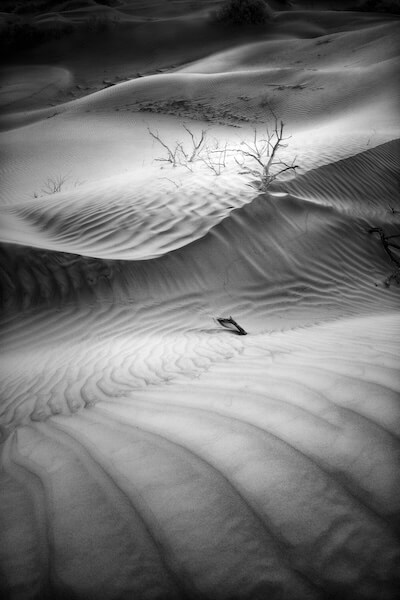
Mesquite Sand Dunes are easy to access, and many visitors explore only the areas closest to the parking lot. However, if you want to discover more secluded locations and find fresh patterns in the sand, you’ll need to hike farther into the dunes, climbing over and around large sandy ridges. This can be strenuous, particularly when walking up steep slopes or traveling through soft sand.
Footwear is a matter of personal preference. Many visitors hike in lightweight shoes, while I prefer heavier boots that provide additional ankle and leg support. Whatever you choose, be prepared for the physical demands of walking on sand.
Be especially careful during the summer months. Daytime temperatures in Death Valley can approach 120°F, making hiking across the exposed dunes dangerous. Always carry plenty of water, and consider bringing a few snacks to maintain your energy. Avoid strenuous hiking during the hottest part of the day, and plan your photography around the cooler hours near sunrise and sunset. Even during winter, temperatures can drop close to freezing overnight, so I recommend bringing a light jacket and flashlight for early-morning photography.
When I photograph Mesquite Sand Dunes, I often hike a mile or more into the dunes to find areas with fewer footprints and less evidence of recent visitors. The farther you venture from the parking area, the better your chances of finding undisturbed sand and creating clean, uncluttered compositions. Remember that hiking distances over soft sand can feel much longer than walking the same distance on a firm trail.
One final tip: Scout the dunes the day before your planned photo session. Walk around the area and look for promising ridge lines, sweeping curves, and patterns that might work well in your compositions. Pay attention to the direction of the light and consider how the rising or setting sun might illuminate the dunes. Planning ahead will help you make the most of the limited time when the light is at its best and allow you to head directly toward the locations you want to photograph.
Recommended Emergency Supplies in Death Valley National Park
Whenever you are traveling, it is always a good idea to bring extra emergency supplies. This is especially true if you will be hiking to more remote locations during your stay. Here are some highly recommended supplies to bring with you on your journey:
- Water
- Food
- Sun Protection (sunscreen SPF 30+, hat, sunglasses)
- Insect Repellent
- First Aid Kit
- Map (NPS trail map or offline GPS app)
- Flashlight/Headlamp (with batteries)
- Emergency Shelter (space blanket or poncho)
- Whistle/Signaling Device
- Extra Clothing
- Multi-Tool or Knife
- Additional Emergency Supplies (Click here for a complete list of our recommended photography and hiking gear)
Be Prepared for Limited Cell Service
National parks often have limited or spotty cell service, so it is always helpful to have some sort of map or GPS-tracking device handy to assist with trail and road navigation. Even when you don’t think you will get lost, if the trails or roads are poorly marked, it is a possibility. Some GPS trackers, like the Garmin inReach and the Garmin inReach Mini, can also communicate your location to others. At a minimum, have a printed copy of the park maps or download them to your phone via the NPS app or website.
Best Time of Year to Visit the Mesquite Flat Sand Dunes
Death Valley National Park is open year-round, and the Mesquite Sand Dunes can be photographed during every season, provided weather and park conditions allow access. Occasional extreme weather events or flooding can affect access, so it’s always a good idea to check current park conditions before your visit.
I have photographed the dunes in all seasons, and spring and fall are my favorite times for sunrise photography. Temperatures are generally more comfortable than during the summer, making it easier to hike a mile or more into the dunes and explore different locations before the sun rises.
Summer can also be a rewarding time to photograph the dunes, but there are two important considerations. First, sunrise comes very early, around 5 a.m. near the summer solstice, which means getting up early and arriving at the dunes well before sunrise. Second, temperatures can rise rapidly once the sun appears. This can make even an early-morning photo session uncomfortable, particularly if you are hiking across the soft sand. Afternoon and sunset photography can be especially challenging during the hottest months because of the extreme temperatures.
Winter offers another opportunity to photograph the dunes, with cooler temperatures that can make hiking more comfortable. However, winter weather and cloud cover can affect your chances of capturing the dramatic lighting that makes these dunes so appealing. Since my preferred photographs depend on the first direct sunlight striking the sand, cloudy mornings can limit the contrast and shadows I look for. On the other hand, changing weather and softer light can provide opportunities for a different photographic approach.
Ultimately, there is no bad season to photograph Mesquite Sand Dunes. Each time of year offers its own advantages, and the conditions can vary considerably from one visit to the next. I encourage you to photograph the dunes in different seasons and discover which conditions best suit your photographic style. The combination of constantly changing sand patterns, shifting light, and distinctive dune shapes ensures that there is always something new to explore and photograph.
Photography Tips for the Mesquite Flat Sand Dunes
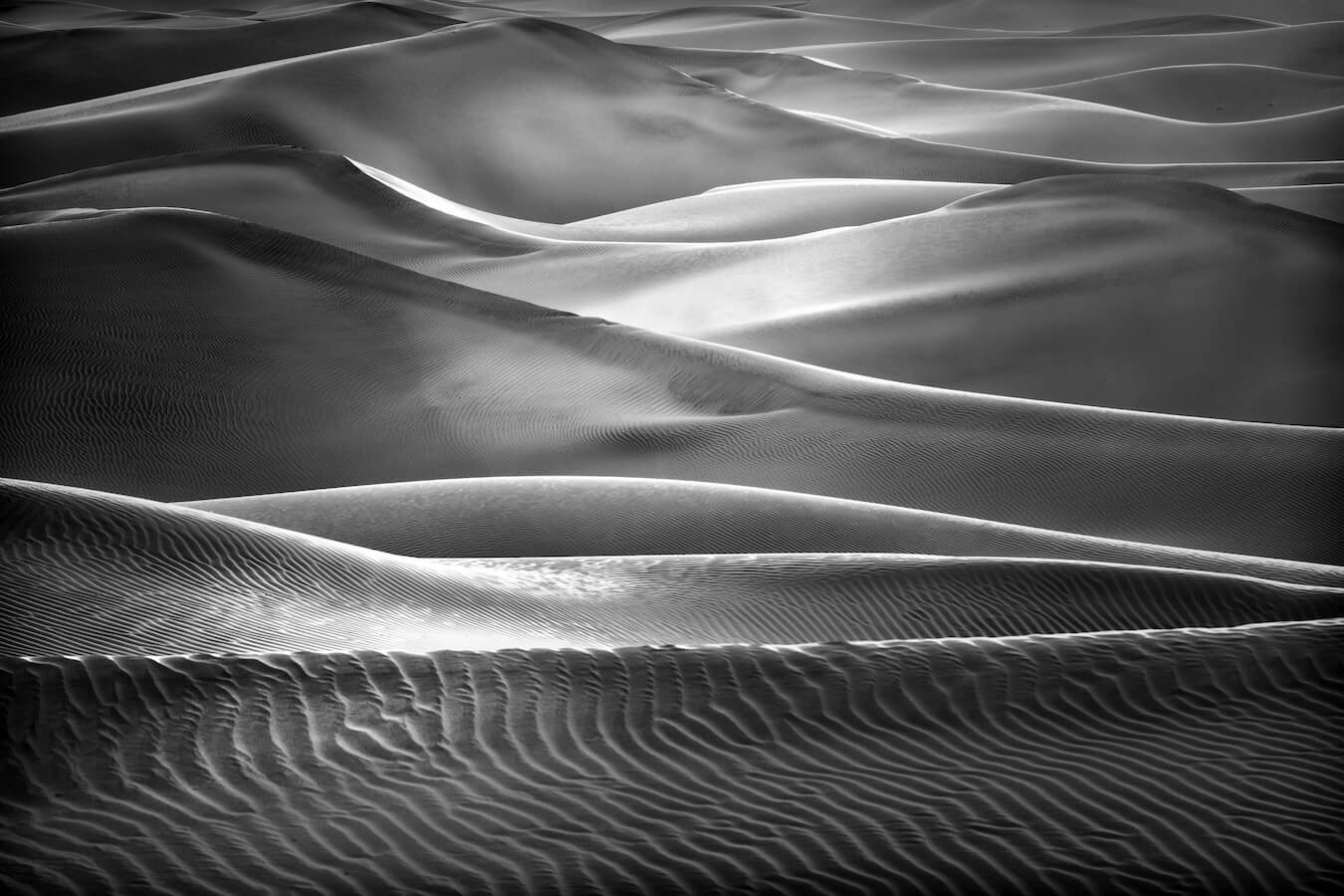
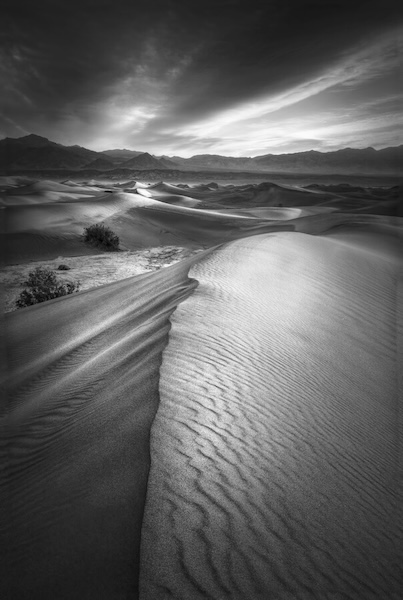
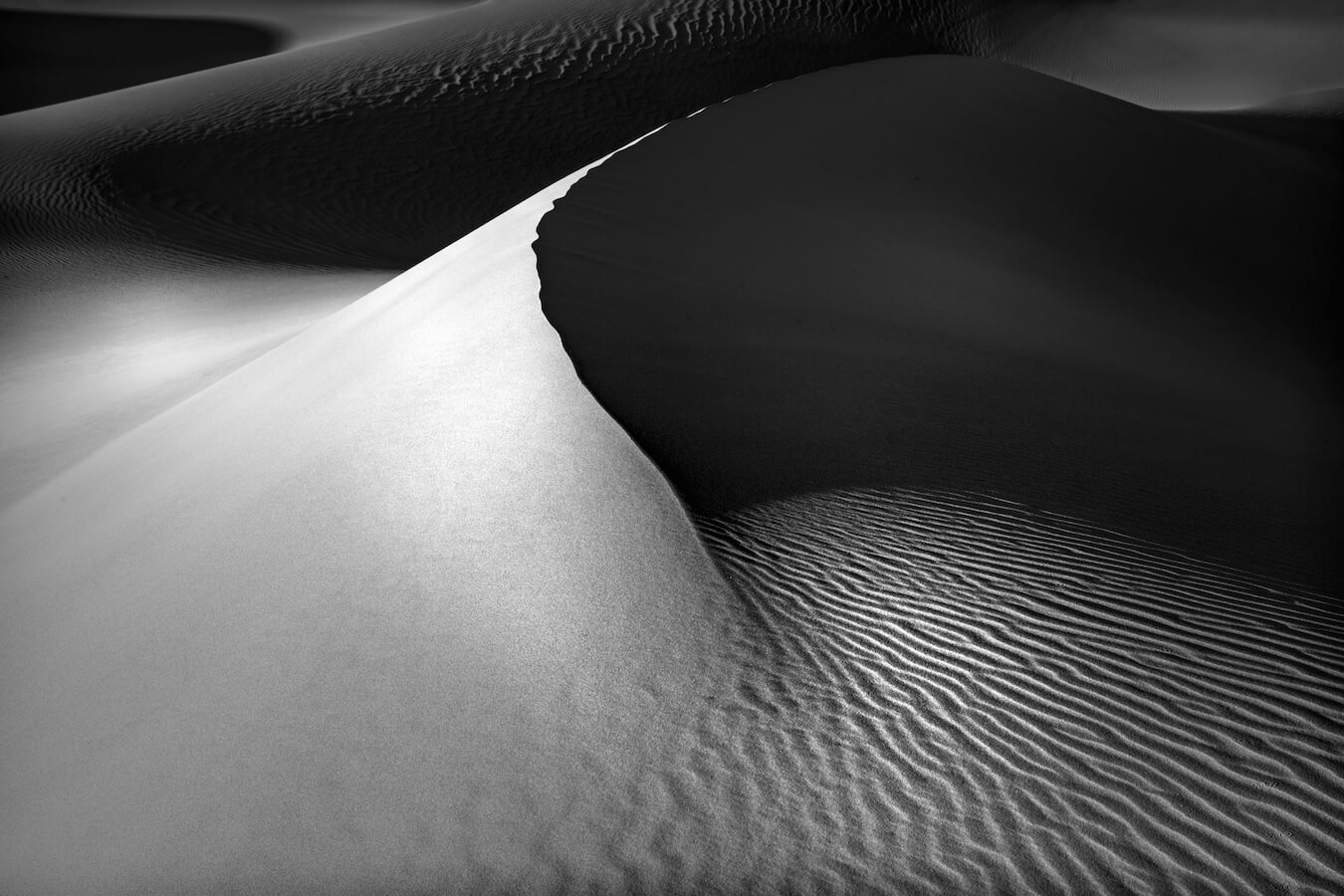
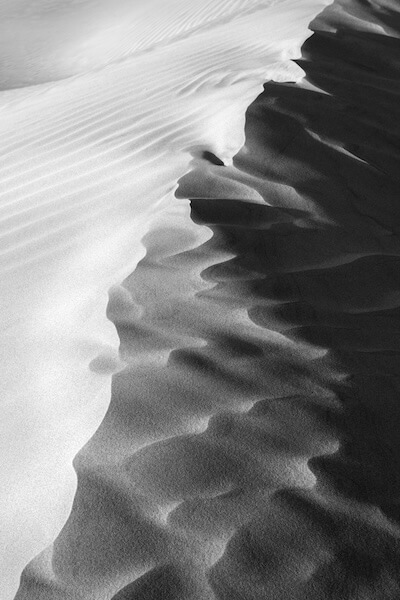
To create interesting and dramatic photographs of sand dunes, you need strong cross-lighting that emphasizes the curves, ridge lines, and shadows in the sand. My preferred time to photograph the Mesquite Sand Dunes is at sunrise and during the following hour. As the sun rises higher in the sky, the shadows become less pronounced, and the dunes lose some of the contrast that makes them so appealing to photograph.
I usually arrive 30 to 45 minutes before official sunrise. My goal is to begin hiking as soon as possible so I can reach locations a mile or more from the parking area, where I have a better chance of finding clean ridge lines without footprints. Although some footprints can be removed in Photoshop, those along the tops of the dunes can be particularly difficult to eliminate because they interrupt the smooth, flowing lines that make these compositions so appealing.
By the time I reach my preferred locations, there is usually enough light to explore the ridge lines and identify promising compositions. I like to have my camera set up and ready before the sun appears so I can begin photographing as soon as the first light reaches the dunes.
My approach is to keep moving, photographing one ridge after another as the sun rises. The changing angle of the light continually alters the patterns and shadows, creating new photographic opportunities within a relatively short period. I want to make the most of that first hour by capturing as many strong images as possible, with a wide variety of compositions.
For my photography, I use a 24–120mm zoom lens. This versatile focal length allows me to capture the sweeping lines and textures of the sand immediately in front of me while also framing tighter compositions of nearby dunes. It provides the flexibility I need to work quickly without constantly changing lenses.
I take all my photographs using a sturdy tripod. I typically set my aperture to f/16 to achieve substantial depth of field, allowing the shutter speed to adjust to the available light. A tripod also helps me compose carefully and maintain consistent framing as I work through different compositions.
What About Sunset Photography?
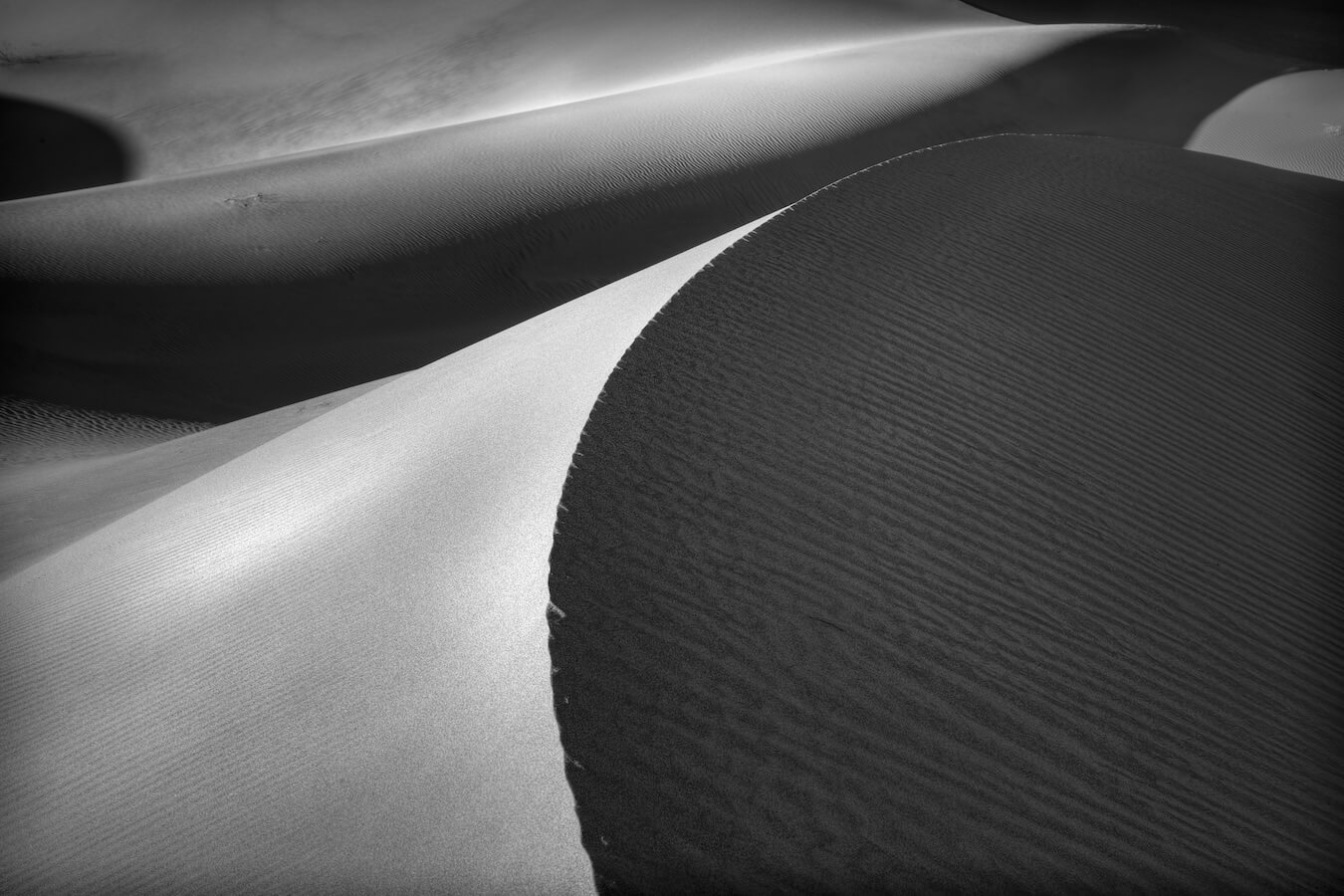
Sunset can also provide wonderful opportunities to photograph the Mesquite Flat Sand Dunes, but there are two factors I consider. First, the dunes tend to attract more visitors later in the day, while sunrise often brings only a handful of photographers. Fewer people mean a better chance of finding undisturbed sand without footprints. Second, during the summer months, evening temperatures can remain extremely high, making hiking across the dunes less comfortable than it is in the early morning.
ADVERTISEMENT
Plan Ahead for Better Photographs
The Mesquite Sand Dunes are an extraordinary place to explore and photograph. Before your visit, spend some time looking at photographs made by other photographers. This can help you identify the types of compositions you find most appealing and give you ideas about the ridge lines, curves, and patterns you want to seek out.
If you have several days in Death Valley National Park, consider returning to the dunes for a second sunrise. After your first visit, you’ll have a better understanding of the landscape, the direction of the light, and the locations that offer the greatest potential. A second visit can be especially rewarding because you’ll know where to concentrate your efforts and can spend more time creating photographs rather than searching for locations.
Shifting Dunes and Changing Light at the Mesquite Flat Sand Dunes
The Mesquite Flat Sand Dunes are an extraordinary landscape to explore and photograph. One of the things I enjoy most about this location is that the dunes are constantly changing shape as the wind moves sand across their ridges and slopes. Footprints left behind one day may disappear overnight if the wind is strong enough, revealing fresh patterns and undisturbed sand for the next morning’s photography.
Wind can also create wonderful photographic opportunities by blowing sand across the dune ridges, adding atmosphere and a sense of movement to your images. However, blowing sand can be damaging to camera equipment, so take precautions when conditions become windy. Keep your camera covered when you aren’t photographing, and be especially careful when changing lenses. Protecting your equipment from blowing sand is essential.
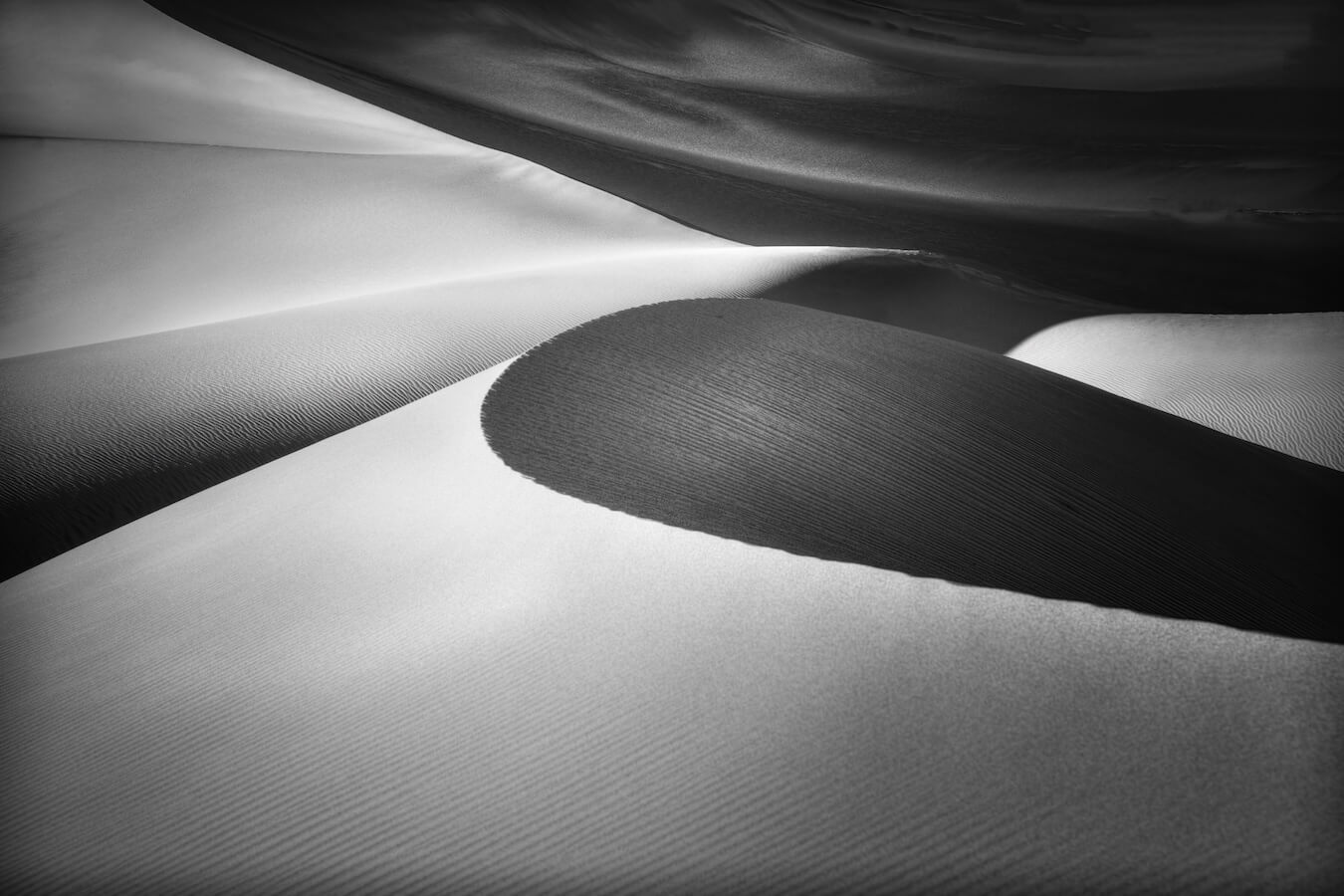
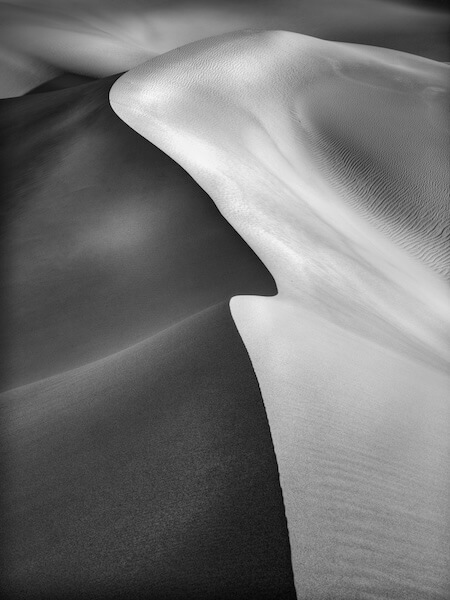
When you arrive at the dunes, you may be drawn to the tallest peaks in the distance, but don’t assume you need to climb to the top of them to make your best photographs. In my experience, some of the most interesting compositions can be found among the smaller dunes. As the morning sun illuminates these dunes, it reveals beautiful curves, flowing lines, and intricate patterns of light and shadow. These smaller formations offer countless photographic possibilities and are often easier to explore.
Look in every direction as you photograph. An interesting composition may be behind you, off to one side, or right at your feet. The changing light can transform an ordinary-looking ridge into a compelling photograph in just a few minutes. Rather than concentrating on a single large dune, take your time exploring the surrounding landscape and look for the shapes, lines, and patterns that catch your eye.
Most importantly, enjoy the experience. Photographing the Mesquite Sand Dunes is about more than capturing images. It’s also about exploring a remarkable landscape, watching the light change, and discovering the endless variety of shapes created by the wind. I have returned to these dunes many times and continue to find them exciting and inspiring. I hope you will enjoy photographing them as much as I do.
Closing Remarks
The Mesquite Flat Sand Dunes are one of the most fascinating landscapes in Death Valley National Park and a wonderful destination for photographers. Covering approximately 14 square miles, the dunes are a prominent feature of the park and are easily accessible to visitors. Whether you spend an hour exploring the dunes near the parking area or hike farther into the landscape in search of undisturbed sand, you’ll find countless opportunities to create compelling photographs.
Although the dunes cover a substantial area, they represent only a small part of the approximately 3.4 million acres that make up Death Valley National Park. As the largest national park in the contiguous United States, Death Valley offers an extraordinary variety of landscapes to explore, from salt flats and colorful mountains to deep canyons, volcanic features, and vast desert valleys. With more than 1,000 miles of roads, there are endless opportunities to discover new locations and photographic subjects. Some areas of the park lie as much as 282 feet below sea level, making Death Valley the lowest point in North America.
If you visit the Mesquite Sand Dunes, I encourage you to make time to explore the rest of the park as well. Travel its scenic roads, discover its many remarkable landscapes, and take advantage of the photographic opportunities that await around every turn. Death Valley is truly a national treasure, and we all share a responsibility to protect its extraordinary natural beauty for future generations.
Enjoy your time exploring and photographing Death Valley National Park. I hope your visit to the Mesquite Flat Sand Dunes is as rewarding and inspiring as mine have been.
Happy Travels!
Gary Wagner, Featured National Park Photographer
Find Your Favorite Location
No matter where you go in Death Valley National Park, be sure to take your time and find your favorite location along the way. If you are lucky, you may even spot some wildlife! Don’t forget to add detailed macro shots, change your perspective, and most importantly have fun.
Before making your trip, consider checking the official Death Valley National Park website or contacting the park’s visitor center for the most up-to-date information on trail conditions, accessibility, and any recent changes. As with any visit to a national park, it’s important to follow park regulations, practice “Leave No Trace” principles, and prioritize safety while exploring this beautiful area.
Want to learn more about Death Valley National Park? Check out these maps, guides & books:
- Death Valley Day Hikes and National Park Map [Map Pack Bundle] Map (National Geographic Trails Illustrated Map)
- Moon Death Valley National Park: Hiking, Scenic Drives, Desert Springs & Hidden Oases (Travel Guide)
- The Explorer’s Guide to Death Valley National Park, Fourth Edition
- Hiking Death Valley National Park: A Guide to the Park’s Greatest Hiking Adventures (Regional Hiking Series)
- Death Valley National Park: A History (America’s National Parks)
Please note, by making purchases through our affiliate links, you are supporting our mission to celebrate and showcase our National Parks and the photographers who frequent them. As an Amazon Associate, National Park Photographer earns from qualifying purchases at no cost to you. We appreciate your support.
References
Want to visit more parks? Check out our complete list of the US National Parks!
Do you want to be featured on National Park Photographer?
Why wait! Contact us today at nationalparkphoto@gmail.com for a chance to be featured as a National Park Photographer!