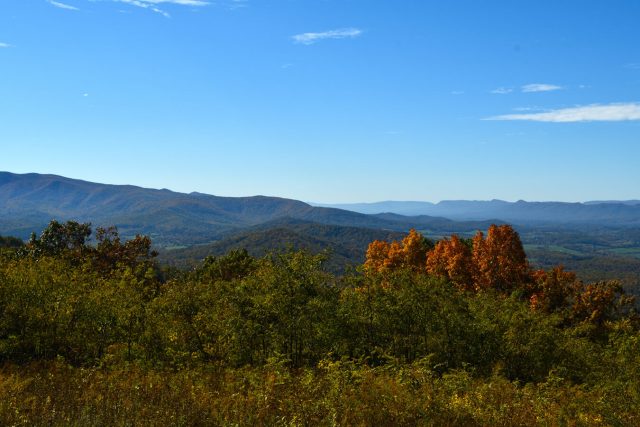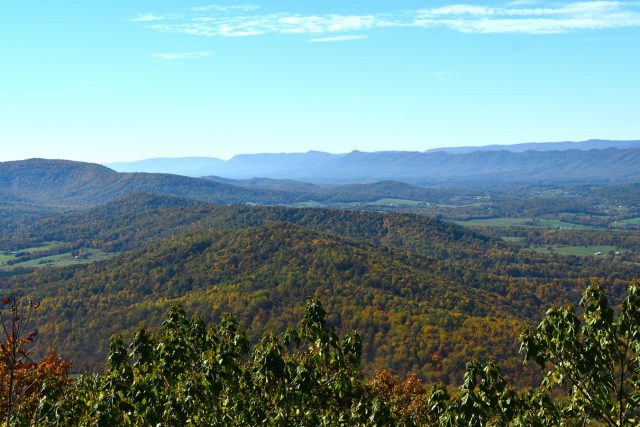
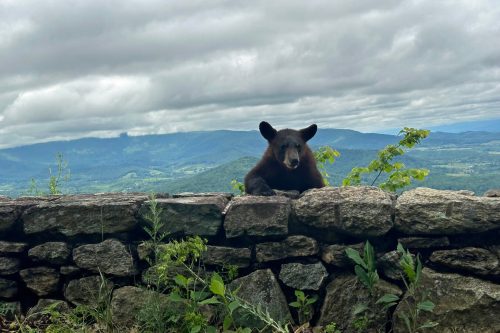
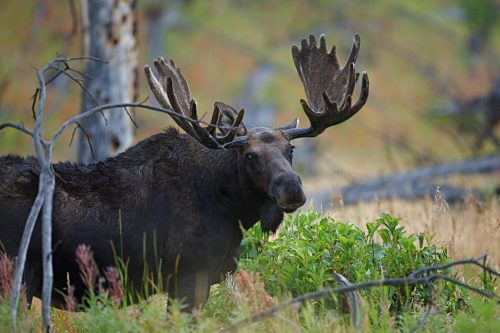
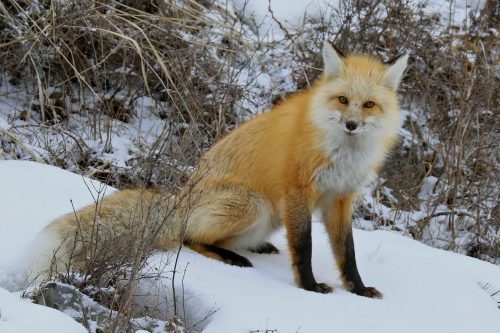
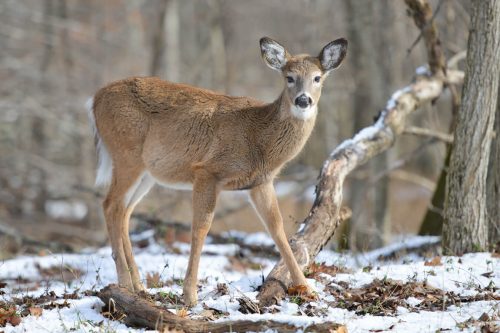
Voyageurs National Park sits where the southern edge of the boreal forest meets the northern hardwood forest, and about 40 percent of the park is water. More than 50 kinds of mammals live here, and wolves, bears, deer and moose are good swimmers that sometimes cross open water to the islands. Moose are the park’s largest mammals, and Voyageurs is one of only a few national parks in the lower 48 states where you have a chance to see one. About 40 to 50 live in the park, mostly on the Kabetogama Peninsula. Gray wolves are the top predator, and roughly 30 to 50 of them, in six to nine packs, hunt white-tailed deer, moose and beavers. American beavers are the engineers of the landscape: the park has hundreds of beaver ponds, and the last full count, in 2000, estimated about 3,000 beavers. American black bears, red foxes, river otters and red squirrels also live in the forests and along the shores.
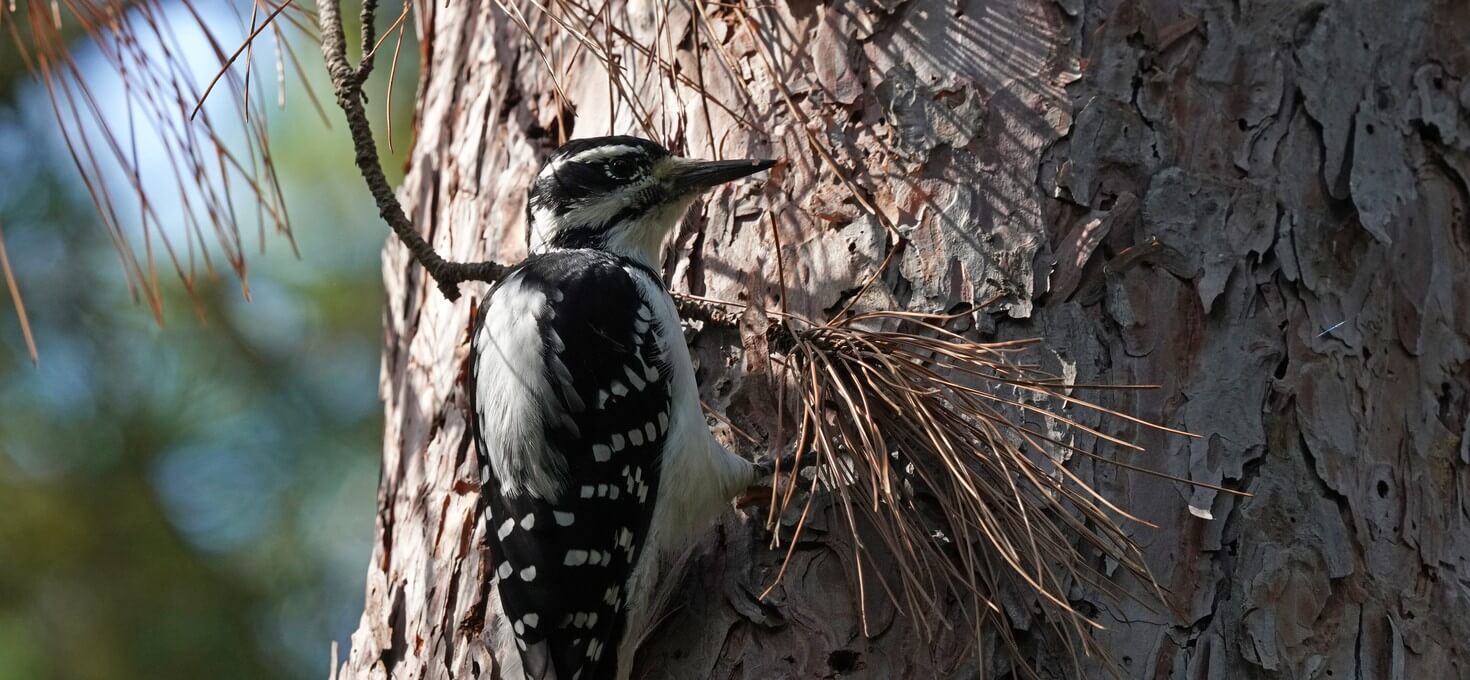
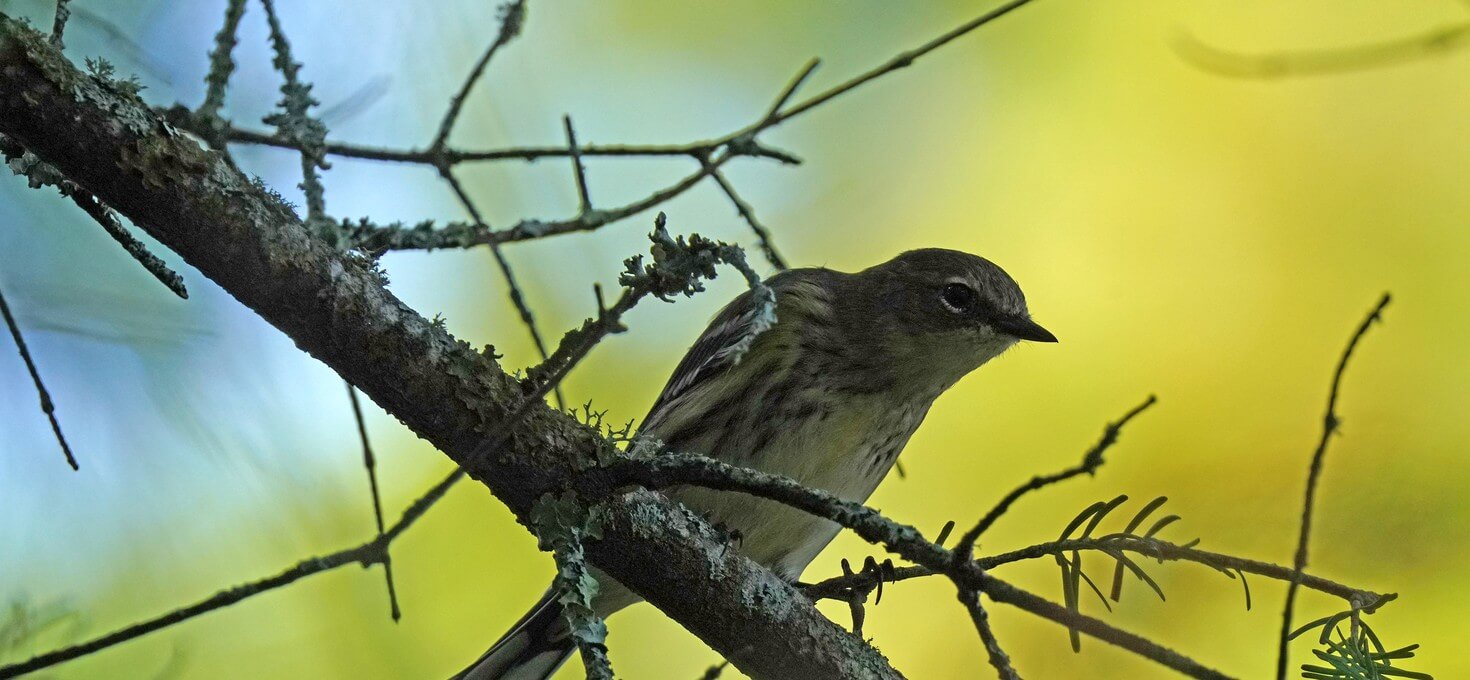
More than 240 bird species have been recorded at Voyageurs, and the park is an Audubon Important Bird Area. Northern Minnesota has the highest density of breeding warblers on the continent, with 24 warbler species calling Voyageurs home, and the eerie wail of common loons drifts across the lakes. The park’s wetlands support 10 kinds of amphibians, and spring peepers and wood frogs start singing in spring, sometimes while snow is still on the ground. Long, cold winters keep reptiles few, and none of them are venomous. The lakes hold 54 fish species, including lake sturgeon, which can grow over six feet long and weigh over 200 pounds, and Shoepack Lake has its own genetically distinct population of muskellunge. Keep reading to see featured photos of Voyageurs’ wildlife and to learn more about wildlife photography.
Featured Voyageurs National Park Wildlife Photographs
Have a National Park Wildlife photograph you’d like featured? Contact us today to learn more!
Wildlife Photography Tips
Wildlife photography in the US National Parks offers a unique and enriching experience, as these protected areas are havens for diverse species and pristine natural landscapes. Capturing wildlife in such settings requires preparation and respect for both the environment and its inhabitants. Photographers should familiarize themselves with the specific animals and ecosystems of the park they are visiting, as each park hosts different species and behaviors. Early mornings and late afternoons, known as the golden hours, provide the best light and increased wildlife activity. Different seasons also offer different wildlife viewing opportunities. Patience and stillness are key, as the best moments often come to those who wait quietly.
If wildlife does present itself, always make sure to maintain a safe distance. Using a telephoto lens allows for close-up shots without intruding on the animals’ space. If you already own or want to own a professional grade mirrored camera like the Canon EOS 5D Mark IV Full Frame Digital SLR, we recommend using a Canon EF 100-400mm f/4.5-5.6L IS II USM Lens zoom lens for wildlife photography. If you have or are interested in a newer mirrorless model like the Canon EOS R5 Full-Frame Mirrorless Camera, we recommend using a Canon RF100-400mm F5.6-8 IS USM Black for long distance shots.
Not quite ready to invest in traditional professional-grade camera equipment but want to enhance the quality of your cell phone photographs? Consider using a Moment Tele 58mm Mobile Lens II for improved reach, and use a Moment camera case with a lens mount to attach it to your phone. Since cell phones generally cannot provide the same reach as a dedicated telephoto camera lens, never compensate by moving dangerously close to wildlife. As with any visit to a national park, it’s important to follow park regulations, practice “Leave No Trace” principles, and prioritize safety while photographing wildlife.
Want to take your wildlife photos further? Featured photographer Vella Torvik shares her field-tested advice on gear, camera settings, light, composition and safely approaching wildlife in our Wildlife Photography 101: Insider Tips From the Field masterclass.
Voyageurs Wildlife Education and Resources
Want to learn more about Voyageurs National Park and the wildlife that inhabits it? Check out these guides & books:
- Peterson Field Guide To Mammals Of North America: Fourth Edition (Peterson Field Guides)
- Peterson Field Guide to Birds of Eastern and Central North America, Seventh Edition (Peterson Field Guides)
- Bird Songs: 250 North American Birds in Song
- Peterson Field Guide to Reptiles and Amphibians of Eastern and Central North America, Fourth Edition (Peterson Field Guides)
- Peterson Field Guide to Freshwater Fishes, Second Edition (Peterson Field Guides)
- Animal Tracks: A Folding Pocket Guide to the Tracks & Signs of Familiar North American Species (Wildlife and Nature Identification)
Please note, by making purchases through our affiliate links, you are supporting our mission to celebrate and showcase our National Parks and the photographers who frequent them. As an Amazon Associate, National Park Photographer earns from qualifying purchases at no cost to you. We appreciate your support.
Voyageurs National Park Species List
The wildlife at Voyageurs National Park is beautiful and diverse. There are a variety of mammals, birds, reptiles, amphibians and fish to view. Check out all the incredible species this park has to offer! Click on the links below to see the different animal species that inhabit Voyageurs National Park:
Species Spotlight
Photo posts of animals you’ll find in Voyageurs.
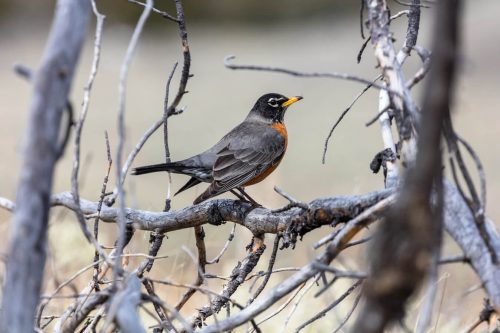
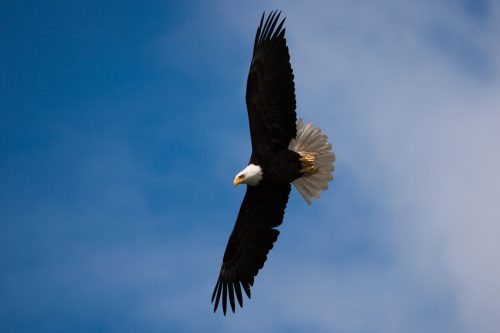
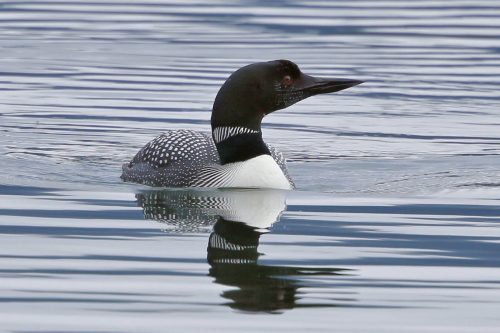
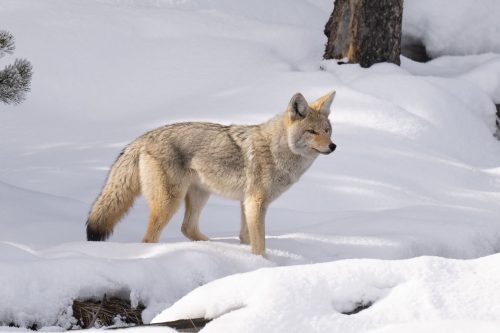
Voyageurs National Park Mammals
41 species
- American Beaver(Castor canadensis)
- American Black Bear Photo post(Ursus americanus)
- American Marten(Martes americana)
- American Mink(Mustela vison)
- Arctic Shrew(Sorex arcticus)
- Canada Lynx(Lynx canadensis)
- Coyote Photo post(Canis latrans)
- Deer Mouse(Peromyscus maniculatus)
- Eastern Chipmunk(Tamias striatus)
- Ermine(Mustela erminea)
- Fisher(Martes pennanti)
- Franklin’s Ground Squirrel(Spermophilus franklinii)
- Gray Wolf(Canis lupus)
- Least Chipmunk(Tamias minimus)
- Little Brown Bat(Myotis lucifugus)
- Masked Shrew(Sorex cinereus)
- Meadow Jumping Mouse(Zapus hudsonius)
- Meadow Vole(Microtus pennsylvanicus)
- Moose Photo post(Alces alces)
- Muskrat(Ondatra zibethicus)
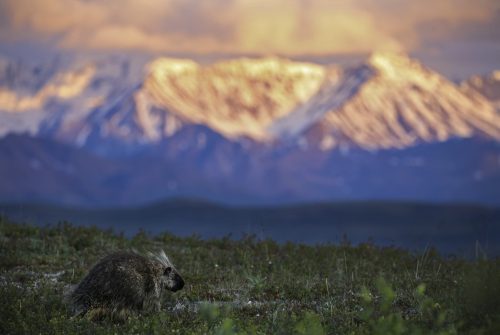
- North American Porcupine Photo post(Erethizon dorsatum)
- Northern Flying Squirrel(Glaucomys sabrinus sabrinus)
- Northern Long-eared Bat(Myotis septentrionalis)
- Northern Raccoon(Procyon lotor)
- Northern Short-tailed Shrew(Blarina brevicauda)
- Northern Water Shrew(Sorex palustris)
- Pygmy Shrew(Sorex hoyi)
- Red Fox Photo post(Vulpes vulpes)
- Red Squirrel(Tamiasciurus hudsonicus)
- River Otter(Lontra canadensis)
- Rock Vole(Microtus chrotorrhinus)
- Silver-haired Bat(Lasionycteris noctivagans)
- Snowshoe Hare(Lepus americanus)
- Southern Bog Lemming(Synaptomys cooperi)
- Southern Red-backed Vole(Clethrionomys gapperi)
- Star-nosed Mole(Condylura cristata)
- Striped Skunk(Mephitis mephitis)
- White-footed Mouse(Peromyscus leucopus)
- White-tailed Deer Photo post(Odocoileus virginianus)
- Woodchuck(Marmota monax)
- Woodland Jumping Mouse(Napaeozapus insignis)
No mammals match.
Voyageurs National Park Birds
233 species
- Alder Flycatcher(Empidonax alnorum)
- American Bittern(Botaurus lentiginosus)
- American Black Duck(Anas rubripes)
- American Coot(Fulica americana)
- American Crow(Corvus brachyrhynchos)
- American Golden Plover(Pluvialis dominica)
- American Goldfinch(Carduelis tristis)
- American Kestrel(Falco sparverius)
- American Pipit(Anthus rubescens)
- American Redstart(Setophaga ruticilla)
- American Robin Photo post(Turdus migratorius)
- American Three-toed Woodpecker(Picoides tridactylus)
- American Tree Sparrow(Spizella arborea)
- American White Pelican(Pelecanus erythrorhynchos)
- American Wigeon(Anas americana)
- American Woodcock(Scolopax minor)
- Baird’s Sandpiper(Calidris bairdii)
- Bald Eagle Photo post(Haliaeetus leucocephalus)
- Baltimore Oriole(Icterus galbula)
- Bank Swallow(Riparia riparia)
- Barn Swallow(Hirundo rustica)
- Barred Owl(Strix varia)
- Bay-breasted Warbler(Dendroica castanea)
- Belted Kingfisher(Ceryle alcyon)
- Black Tern(Chlidonias niger)
- Black-and-white Warbler(Mniotilta varia)
- Black-backed Woodpecker(Picoides arcticus)
- Black-billed Cuckoo(Coccyzus erythropthalmus)
- Black-billed Magpie(Pica hudsonia)
- Black-capped Chickadee(Poecile atricapilla)
- Black-throated Blue Warbler(Dendroica caerulescens)
- Black-throated Green Warbler(Dendroica virens)
- Blackburnian Warbler(Dendroica fusca)
- Blackpoll Warbler(Dendroica striata)
- Blue Jay(Cyanocitta cristata)
- Blue-headed Vireo(Vireo solitarius)
- Blue-winged Teal(Anas discors)
- Bobolink(Dolichonyx oryzivorus)
- Bohemian Waxwing(Bombycilla garrulus)
- Bonaparte’s Gull(Larus philadelphia)
- Boreal Chickadee(Poecile hudsonica)
- Boreal Owl(Aegolius funereus)
- Brewer’s Blackbird(Euphagus cyanocephalus)
- Broad-winged Hawk(Buteo platypterus)
- Brown Creeper(Certhia americana)
- Brown Thrasher(Toxostoma rufum)
- Brown-headed Cowbird(Molothrus ater)
- Bufflehead(Bucephala albeola)
- Canada Goose(Branta canadensis)
- Canada Jay(Perisoreus canadensis)
- Canada Warbler(Wilsonia canadensis)
- Canvasback(Aythya valisineria)
- Cape May Warbler(Dendroica tigrina)
- Caspian Tern(Sterna caspia)
- Cedar Waxwing(Bombycilla cedrorum)
- Chestnut-sided Warbler(Dendroica pensylvanica)
- Chimney Swift(Chaetura pelagica)
- Chipping Sparrow(Spizella passerina)
- Clay-colored Sparrow(Spizella pallida)
- Cliff Swallow(Hirundo pyrrhonota)
- Common Goldeneye(Bucephala clangula)
- Common Grackle(Quiscalus quiscula)
- Common Loon Photo post(Gavia immer)
- Common Merganser(Mergus merganser)
- Common Nighthawk(Chordeiles minor)
- Common Raven(Corvus corax)
- Common Redpoll(Carduelis flammea)
- Common Tern(Sterna hirundo)
- Common Yellowthroat(Geothlypis trichas)
- Connecticut Warbler(Oporornis agilis)
- Cooper’s Hawk(Accipiter cooperii)
- Dark-eyed Junco(Junco hyemalis)
- Double-crested Cormorant(Phalacrocorax auritus)
- Downy Woodpecker(Picoides pubescens)
- Dunlin(Calidris alpina)
- Eastern Bluebird(Sialia sialis)
- Eastern Kingbird(Tyrannus tyrannus)
- Eastern Meadowlark(Sturnella magna)
- Eastern Phoebe(Sayornis phoebe)
- Eastern Towhee(Pipilo erythrophthalmus)
- Eastern Whip-poor-will(Caprimulgus vociferus)
- Eastern Wood-Pewee(Contopus virens)
- Eurasian Collared Dove(Streptopelia decaocto)
- European Starling(Sturnus vulgaris)
- Evening Grosbeak(Coccothraustes vespertinus)
- Feral Pigeon(Columba livia)
- Fox Sparrow(Passerella iliaca)
- Franklin’s Gull(Larus pipixcan)
- Gadwall(Anas strepera)
- Golden Eagle(Aquila chrysaetos)
- Golden-crowned Kinglet(Regulus satrapa)
- Golden-winged Warbler(Vermivora chrysoptera)
- Gray Catbird(Dumetella carolinensis)
- Gray-cheeked Thrush(Catharus minimus)
- Great Blue Heron(Ardea herodias)
- Great Crested Flycatcher(Myiarchus crinitus)
- Great Gray Owl(Strix nebulosa)
- Great Horned Owl(Bubo virginianus)
- Greater Scaup(Aythya marila)
- Greater Yellowlegs(Tringa melanoleuca)
- Green-winged Teal(Anas crecca)
- Gyrfalcon(Falco rusticolus)
- Hairy Woodpecker(Picoides villosus)
- Harris’s Sparrow(Zonotrichia querula)
- Hermit Thrush(Catharus guttatus)
- Herring Gull(Larus argentatus)
- Hoary Redpoll(Carduelis hornemanni)
- Hooded Merganser(Lophodytes cucullatus)
- Horned Grebe(Podiceps auritus)
- Horned Lark(Eremophila alpestris)
- House Wren(Troglodytes aedon)
- Hudsonian Godwit(Limosa haemastica)
- Indigo Bunting(Passerina cyanea)
- Killdeer(Charadrius vociferus)
- Lapland Longspur(Calcarius lapponicus)
- Le Conte’s Sparrow(Ammodramus leconteii)
- Least Flycatcher(Empidonax minimus)
- Least Sandpiper(Calidris minutilla)
- Lesser Scaup(Aythya affinis)
- Lesser Yellowlegs(Tringa flavipes)
- Lincoln’s Sparrow(Melospiza lincolnii)
- Long-billed Dowitcher(Limnodromus scolopaceus)
- Long-eared Owl(Asio otus)
- Long-tailed Duck(Clangula hyemalis)
- Magnolia Warbler(Dendroica magnolia)
- Mallard(Anas platyrhynchos)
- Marbled Godwit(Limosa fedoa)
- Marsh Wren(Cistothorus palustris)
- Merlin(Falco columbarius)
- Mourning Dove(Zenaida macroura)
- Mourning Warbler(Oporornis philadelphia)
- Nashville Warbler(Vermivora ruficapilla)
- Northern Flicker(Colaptes auratus)
- Northern Goshawk(Accipiter gentilis)
- Northern Harrier(Circus cyaneus)
- Northern Hawk Owl(Surnia ulula)
- Northern Mockingbird(Mimus polyglottos)
- Northern Parula(Parula americana)
- Northern Pintail(Anas acuta)
- Northern Rough-winged Swallow(Stelgidopteryx serripennis)
- Northern Saw-whet Owl(Aegolius acadicus)
- Northern Shoveler(Anas clypeata)
- Northern Shrike(Lanius excubitor)
- Northern Waterthrush(Seiurus noveboracensis)
- Olive-sided Flycatcher(Contopus cooperi)
- Orange-crowned Warbler(Vermivora celata)
- Osprey(Pandion haliaetus)
- Ovenbird(Seiurus aurocapillus)
- Palm Warbler(Dendroica palmarum)
- Pectoral Sandpiper(Calidris melanotos)
- Peregrine Falcon(Falco peregrinus)
- Philadelphia Vireo(Vireo philadelphicus)
- Pied-billed Grebe(Podilymbus podiceps)
- Pileated Woodpecker(Dryocopus pileatus)
- Pine Grosbeak(Pinicola enucleator)
- Pine Siskin(Carduelis pinus)
- Pine Warbler(Dendroica pinus)
- Piping Plover(Charadrius melodus)
- Purple Finch(Carpodacus purpureus)
- Purple Martin(Progne subis)
- Red Crossbill(Loxia curvirostra)
- Red-breasted Merganser(Mergus serrator)
- Red-breasted Nuthatch(Sitta canadensis)
- Red-eyed Vireo(Vireo olivaceus)
- Red-headed Woodpecker(Melanerpes erythrocephalus)
- Red-necked Grebe(Podiceps grisegena)
- Red-tailed Hawk(Buteo jamaicensis)
- Red-throated Loon(Gavia stellata)
- Red-winged Blackbird(Agelaius phoeniceus)
- Ring-billed Gull(Larus delawarensis)
- Ring-necked Duck(Aythya collaris)
- Rose-breasted Grosbeak(Pheucticus ludovicianus)
- Rough-legged Hawk(Buteo lagopus)
- Ruby-crowned Kinglet(Regulus calendula)
- Ruby-throated Hummingbird(Archilochus colubris)
- Ruddy Duck(Oxyura jamaicensis)
- Ruddy Turnstone(Arenaria interpres)
- Ruffed Grouse(Bonasa umbellus)
- Rusty Blackbird(Euphagus carolinus)
- Sanderling(Calidris alba)
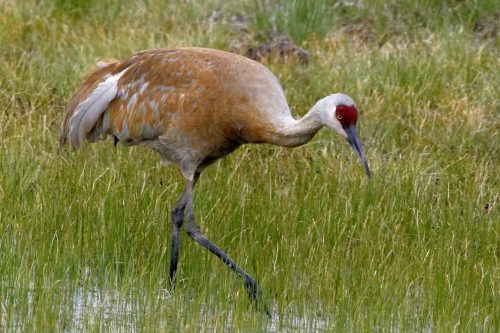
- Sandhill Crane Photo post(Grus canadensis)
- Savannah Sparrow(Passerculus sandwichensis)
- Scarlet Tanager(Piranga olivacea)
- Sedge Wren(Cistothorus platensis)
- Semipalmated Plover(Charadrius semipalmatus)
- Semipalmated Sandpiper(Calidris pusilla)
- Sharp-shinned Hawk(Accipiter striatus)
- Sharp-tailed Grouse(Tympanuchus phasianellus)
- Short-eared Owl(Asio flammeus)
- Snow Bunting(Plectrophenax nivalis)
- Snow Goose(Chen caerulescens)
- Snowy Owl(Nyctea scandiaca)
- Solitary Sandpiper(Tringa solitaria)
- Song Sparrow(Melospiza melodia)
- Sora(Porzana carolina)
- Spotted Sandpiper(Actitis macularia)
- Spruce Grouse(Falcipennis canadensis)
- Surf Scoter(Melanitta perspicillata)
- Swainson’s Thrush(Catharus ustulatus)
- Swamp Sparrow(Melospiza georgiana)
- Tennessee Warbler(Vermivora peregrina)
- Tree Swallow(Tachycineta bicolor)
- Trumpeter Swan(Cygnus buccinator)
- Tundra Swan(Cygnus columbianus)
- Turkey Vulture(Cathartes aura)
- Upland Sandpiper(Bartramia longicauda)
- Veery(Catharus fuscescens)
- Vesper Sparrow(Pooecetes gramineus)
- Virginia Rail(Rallus limicola)
- Warbling Vireo(Vireo gilvus)
- Western Grebe(Aechmophorus occidentalis)
- Western Meadowlark(Sturnella neglecta)
- Western Sandpiper(Calidris mauri)
- White-breasted Nuthatch(Sitta carolinensis)
- White-crowned Sparrow(Zonotrichia leucophrys)
- White-rumped Sandpiper(Calidris fuscicollis)
- White-throated Sparrow(Zonotrichia albicollis)
- White-winged Crossbill(Loxia leucoptera)
- White-winged Scoter(Melanitta fusca)
- Willet(Catoptrophorus semipalmatus)
- Wilson’s Phalarope(Phalaropus tricolor)
- Wilson’s Snipe(Gallinago gallinago)
- Wilson’s Warbler(Wilsonia pusilla)
- Winter Wren(Troglodytes troglodytes)
- Wood Duck(Aix sponsa)
- Wood Thrush(Hylocichla mustelina)
- Yellow Rail(Coturnicops noveboracensis)
- Yellow Warbler(Dendroica petechia)
- Yellow-bellied Flycatcher(Empidonax flaviventris)
- Yellow-bellied Sapsucker(Sphyrapicus varius)
- Yellow-billed Cuckoo(Coccyzus americanus)
- Yellow-headed Blackbird(Xanthocephalus xanthocephalus)
- Yellow-rumped Warbler(Dendroica coronata)
No birds match.
Voyageurs National Park Reptiles
4 species
- Common Snapping Turtle(Chelydra serpentina serpentina)
- Eastern Garter Snake(Thamnophis sirtalis sirtalis)
- Northern Red-bellied Snake(Storeria occipitomaculata occipitomaculata)
- Western Painted Turtle(Chrysemys picta bellii)
No reptiles match.
Voyageurs National Park Amphibians
10 species
- American Toad(Bufo americanus americanus)
- Blue-spotted Salamander(Ambystoma laterale)
- Boreal Chorus Frog(Pseudacris maculata)
- Central Newt(Notophthalmus viridescens louisianensis)
- Gray Treefrog(Hyla versicolor)
- Mink Frog(Rana septentrionalis)
- Northern Green Frog(Rana clamitans melanota)
- Northern Leopard Frog(Rana pipiens)
- Northern Spring Peeper(Pseudacris crucifer crucifer)
- Wood Frog(Rana sylvatica)
No amphibians match.
Voyageurs National Park Fish
54 species
- Black Bullhead(Ameiurus melas)
- Black Crappie(Pomoxis nigromaculatus)
- Blackchin Shiner(Notropis heterodon)
- Blacknose Dace(Rhinichthys atratulus)
- Blacknose Shiner(Notropis heterolepis)
- Bluegill(Lepomis macrochirus)
- Bluntnose Minnow(Pimephales notatus)
- Brassy Minnow(Hybognathus hankinsoni)
- Brook Stickleback(Culaea inconstans)
- Brown Bullhead(Ameiurus nebulosus)
- Burbot(Lota lota)
- Central Mudminnow(Umbra limi)
- Cisco(Coregonus artedii)
- Common Shiner(Luxilus cornutus)
- Creek Chub(Semotilus atromaculatus)
- Emerald Shiner(Notropis atherinoides)
- Fathead Minnow(Pimephales promelas)
- Finescale Dace(Phoxinus neogaeus)
- Golden Shiner(Notemigonus crysoleucas)
- Hornyhead Chub(Nocomis biguttatus)
- Iowa Darter(Etheostoma exile)
- Johnny Darter(Etheostoma nigrum)
- Lake Sturgeon(Acipenser fulvescens)
- Lake Trout(Salvelinus namaycush)
- Lake Whitefish(Coregonus clupeaformis)
- Largemouth Bass(Micropterus salmoides)
- Logperch(Percina caprodes)
- Longear Sunfish(Lepomis megalotis)
- Longnose Dace(Rhinichthys cataractae)
- Longnose Sucker(Catostomus catostomus)
- Mimic Shiner(Notropis volucellus)
- Mooneye(Hiodon tergisus)
- Mottled Sculpin(Cottus bairdii)
- Muskellunge(Esox masquinongy)
- Ninespine Stickleback(Pungitius pungitius)
- Northern Pike(Esox lucius)
- Northern Redbelly Dace(Phoxinus eos)
- Pearl Dace(Margariscus margarita)
- Pumpkinseed(Lepomis gibbosus)
- Rainbow Smelt(Osmerus mordax)
- River Darter(Percina shumardi)
- Rock Bass(Ambloplites rupestris)
- Sauger(Stizostedion canadense)
- Shorthead Redhorse(Moxostoma macrolepidotum)
- Silver Lamprey(Ichthyomyzon unicuspis)
- Silver Redhorse(Moxostoma anisurum)
- Slimy Sculpin(Cottus cognatus)
- Smallmouth Bass(Micropterus dolomieu)
- Spottail Shiner(Notropis hudsonius)
- Tadpole Madtom(Noturus gyrinus)
- Trout-perch(Percopsis omiscomaycus)
- Walleye(Stizostedion vitreum)
- White Sucker(Catostomus commersoni)
- Yellow Perch(Perca flavescens)
No fish match.
Note: The wildlife species included in the lists above have been confirmed with the National Park Service to be present in Voyageurs National Park. Other species may exist in the park that are currently under review or not yet known.
Do you want to be featured on National Park Photographer?
Why wait! Contact us today at nationalparkphoto@gmail.com for more information!